Clinic Communication Boards
Enhancing Patient Engagement with Clinic Communication Boards
Whether you’re working with children who are just beginning to explore language or individuals who use AAC daily, these boards becomes a go-to resource for meaningful interaction.
Why Every Practice Needs Dedicated Clinic Communication Boards
In the fast-paced environment of a busy therapy center, communication shouldn’t depend on a battery life or a Wi-Fi signal. While high-tech AAC devices are incredible tools, they are not always accessible. They can be left in a parent’s car, run out of charge or be undergoing a software update right when a client needs to speak.
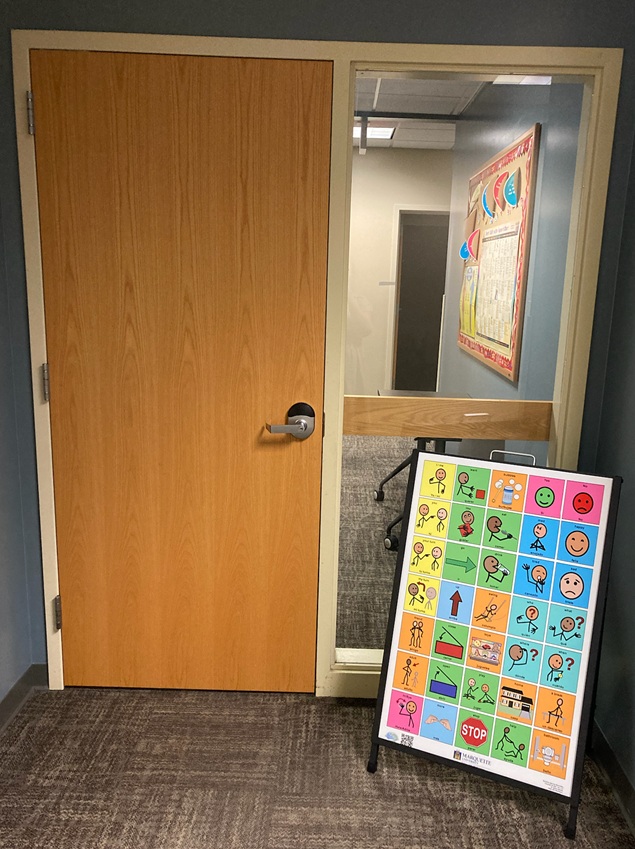
Clinic communication boards solve this “access gap” by providing a permanent, indestructible and universal language anchor. By installing these boards in high-traffic areas, you are making a public commitment to accessibility. Every hallway, treatment room and waiting area becomes a “communication-rich” zone where every client, regardless of their verbal ability, has the power to express their needs, feelings, and choices.
Comparative Analysis: Why Aluminum Clinic Communication Boards Outperform Laminated Options
When clinic directors look for visual supports, they often start with DIY laminated paper. However, there is a massive difference between a temporary classroom tool and professional clinic communication boards.
Infection Control and Sanitization: In modern healthcare, hygiene is non-negotiable. Laminated paper boards trap bacteria in the edges and delaminate when sprayed with medical-grade disinfectants. Our aluminum composite clinic communication boards are non-porous and designed to withstand frequent scrubbing with hospital-grade “purple top” wipes and bleach solutions without fading or peeling.
Durability and Longevity: Therapy can be high-energy. Paper boards are easily torn, bitten or folded. By investing in an aluminum composite board, you are making a one-time purchase that will last for a decade or more, significantly reducing the “hidden cost” of staff time spent constantly re-printing and re-laminating materials.
Visual Clarity: Our boards feature a matte finish designed to reduce glare from overhead clinical lighting. This is essential for clients with visual processing sensitivities or cortical visual impairment (CVI) who may struggle with the “bounce-back” light of plastic lamination.
Detailed Placement Guide: Mapping Your Facility for Success
To get the most out of your clinic communication boards, placement is everything. We recommend a strategic “facility audit” to identify where communication breakdowns are most likely to occur.
The Entrance and Reception Area
The “check-in” process is often the most stressful part of a visit. A clinic communication board located at the front desk allows a child to say “hello,” indicate how they are feeling today or ask “how much longer?” This reduces pre-session anxiety and empowers the child from the moment they walk through the door.
The Sensory Gym and Gross Motor Rooms
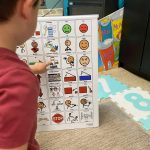
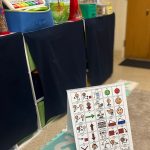
These areas are high-stimulation and high-transition. Using clinic communication boards here allows therapists to model core vocabulary like fast, slow, stop, swing, more, and help in real-time. Because the boards are wall-mounted, the therapist’s hands are free to ensure the client’s physical safety on the equipment.
Transition Hallways and Restrooms
Hallways are where “escapism” or “refusal” often happen. Having a board mounted in the hallway allows a therapist to provide visual cues like “next room” or “walk,” which is often processed more effectively than verbal commands when a client is dysregulated. In the restroom, boards promote dignity and independence by allowing clients to request privacy or specific hygiene needs.
Designed for All Communicators
- Supports nonverbal, minimally verbal, and emerging communicators
- Encourages spontaneous communication in structured or play-based therapy
- Ideal for use with AAC device users – experiences or new
Built for Language Growth
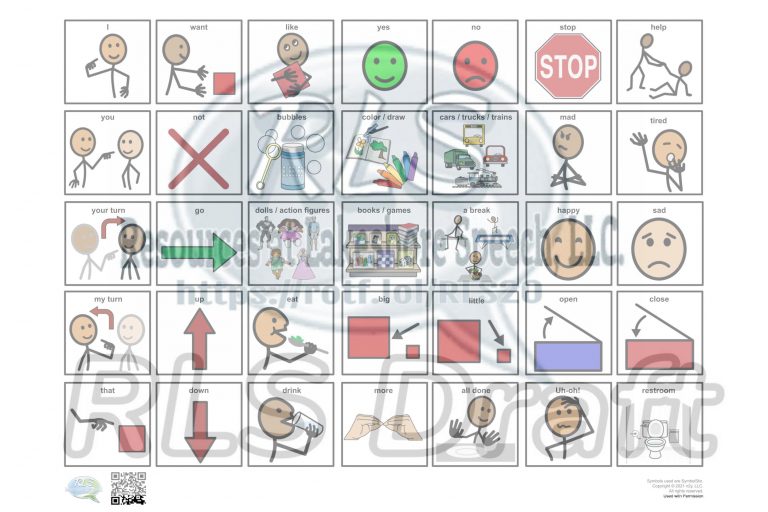
- Features core vocabulary words used across environments and activities
- Standard layout provides common fringe vocabluary
- Perfect for modeling requesting, commenting, greeting, protesting and labeling
- Promotes collaboration and carryover across home and school
Therapist & Caregiver Friendly
- Encourages caregivers, teachers and therapists to model vocabulary naturally
- Promotes collaboration and carryover across home and school
- Eliminates the need for programming or charging – always ready for use
Perfect Fit for Any Therapy Setting
- Lightweight designs makes relocation throughout your clinic simple and easy
- Professional appearance enhances your clinic’s inclusive, accessible design
- Helps fulfill your role as a neurodiversity-affirming provider
- 100% customizable
Frequently Asked Questions About Clinic Communication Boards
Can we add our clinic logo and branding to the board? Absolutely. We can incorporate your clinic’s logo, specific brand colors, and even unique icons that represent specific rooms or therapists in your building.
Are these boards eligible for grant funding? Yes! Many non-profit clinics and private practices have successfully used accessibility grants or “facility improvement” funds to purchase clinic communication boards. They are viewed as permanent accessibility upgrades under the ADA.
What sizes are best for a standard hallway? Our 2’x3′ board is the most popular for hallways as it provides high visibility without obstructing walking paths. For large sensory gyms, we recommend the 4’x2′ board to ensure symbols are large enough to see from across the room.
Evidence-Based Benefits for Diverse Clinical Populations
Clinic communication boards are not just for children with Autism. They are a “Universal Design” tool that benefits a wide range of diagnoses:
Childhood Apraxia of Speech: Provides a way to communicate when the motor planning for speech is failing.
Aphasia and TBI: High-contrast, large-format icons help adults with neurological challenges find their words more easily.
Social Anxiety: Reduces the “pressure to perform” verbally, allowing the client to engage at their own pace.
By integrating clinic communication boards into your practice, you aren’t just buying a sign—you are building a bridge to more meaningful connections between your therapists and your clients.
Aluminum Composite
$550 - $675
Coroplast (Corrigated Plastic)
$200
Magnetic Tile
$200
- Available in 3 sizes : 2’x3′, 4’x2′ and 3’x2′
- 100% customizable
- Availalbe with Boardmaker or SymbolStix symbol systems.
- Color code system available: Modified Fitzgerald or Gossens’
- Made to order
- Inventory: In Stock
- Coroplast print includes 2 panels and hinge – creates sandwich sign
- Available in 1 size: 18″x24″
- Standard Vocabulary and Layout
- Availalbe in Boardmaker or SymbolStix icon systems.
- Color code system available: Modified Fitzgerald or Gossens’
- Made to order
- Inventory: In Stock
- Coroplast Assembly Directions
- Magnet print measures 18″x24″
- Standard Vocabulary and Layout
- Availalbe in Boardmaker or SymbolStix icon systems.
- Color code system available: Modified Fitzgerald or Gossens’
- Made to order
- Inventory: In Stock