Clinic Communication Boards Designed by SLPs for Real Therapy Clinics
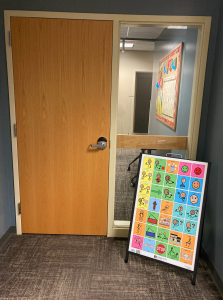
Clinic communication boards are durable, permanently mounted AAC (Augmentative and Alternative Communication) supports designed to improve communication access in therapy clinics, sensory gyms, and healthcare environments.
Unlike paper or laminated materials, these boards are built for daily clinical use, supporting clients who are developing speech, using AAC systems, or experiencing communication challenges due to developmental, neurological, or sensory differences.
Designed by experienced speech-language pathologists, these boards turn clinical environments into communication-rich spaces where every client has access to language.
How Clinic Communication Boards Are Used in Real Therapy Sessions
Clinic communication boards are most effective when they are integrated directly into therapy routines rather than treated as passive signage.
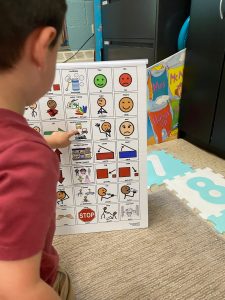
In real clinical use, therapists model language while pointing to the board, allowing clients to associate symbols with functional communication in the moment.
Common real-world uses include:
- A child arriving at the clinic points to “hello” or “I’m here” at the front desk
- During therapy, the clinician models “more,” “help,” or “stop” during activities
- In sensory gyms, clients use “swing,” “push,” or “fast/slow” to guide regulation input
- During transitions, hallway boards support “next,” “go,” or “wait” communication
Clinic communication boards work best when they are always visible, always accessible, and consistently modeled across staff.
Clinic Communication Boards at a Glance
Clinic communication boards provide always-available visual language support in therapy and clinical environments.
They are used to help clients:
- Express needs, feelings, and choices
- Participate more fully in therapy sessions
- Reduce frustration and communication breakdowns
- Support AAC users and emerging communicators
Designed for:
- Private practice SLP clinics
- Occupational and physical therapy clinics
- Pediatric therapy centers
- Sensory gyms and motor rooms
- Multidisciplinary rehabilitation spaces
Key features:
- Fully custom, SLP-designed layouts
- Durable aluminum or indoor material options
- Vocabulary tailored to your clinic population
- High-visibility mounted installation
What Are Clinic Communication Boards?
Clinic communication boards are low-tech AAC tools that provide visual language support in structured clinical environments.
They allow individuals to communicate using symbols, words, and visual choices when verbal speech is limited, inconsistent, or unavailable.
These boards support communication during:
- therapy sessions
- transitions between activities
- sensory regulation moments
- clinical evaluations
- waiting periods
Unlike handheld AAC devices, clinic communication boards are:
- permanently visible
- always accessible
- shared across staff and clients
- integrated into the environment itself
This makes them a powerful tool for communication consistency across an entire clinic.
Why Clinics Use Communication Boards
In busy therapy environments, communication often breaks down when clients are:
- overwhelmed or dysregulated
- transitioning between tasks
- unable to access verbal speech
- learning early communication skills
Clinic communication boards solve this by providing constant visual access to language in every room of the facility.
They are especially effective for:
- autistic individuals
- children with speech and language delays
- clients using AAC systems
- individuals with apraxia or motor speech disorders
- sensory-sensitive populations
By embedding communication into the environment, clinics reduce reliance on verbal prompts and increase independent communication opportunities.
How to Choose the Right Clinic Communication Board
Choosing the right board depends on three factors:
1. Clinic size and layout
- Smaller clinics may need: one central communication board in reception.
- Larger clinics benefit from: multiple boards across therapy rooms, hallways, and sensory spaces
2. Communication demand level
- High-traffic environments require: simplified core vocabulary boards.
- Specialized therapy rooms may require: expanded action + emotional regulation vocabulary
3. Client population
Boards should be adjusted for:
- early communicators
- AAC users
- sensory-sensitive clients
- mixed developmental levels
Clinic communication boards are most effective when they are designed as a system across the entire environment, not a single standalone board.
Fully Custom Clinic Communication Boards
Every communication board is fully customized based on your clinic’s needs, population, and therapy goals.
Customization options include:
- individualized vocabulary selection
- therapy-specific layouts
- room-based versions (gym, hallway, reception)
- clinic branding and logos
- symbol complexity level (core-only or expanded systems)
Unlike generic AAC products, these boards are built from real clinical workflows and SLP decision-making, ensuring functional use in everyday therapy practice.
What’s on a Clinic Communication Board (and How It’s Organized)
Clinic communication boards are designed using a layered communication system, allowing clients to access language at different levels of need, context, and regulation.
Rather than being a random collection of symbols, the board is intentionally structured to support how communication actually happens in clinical environments.
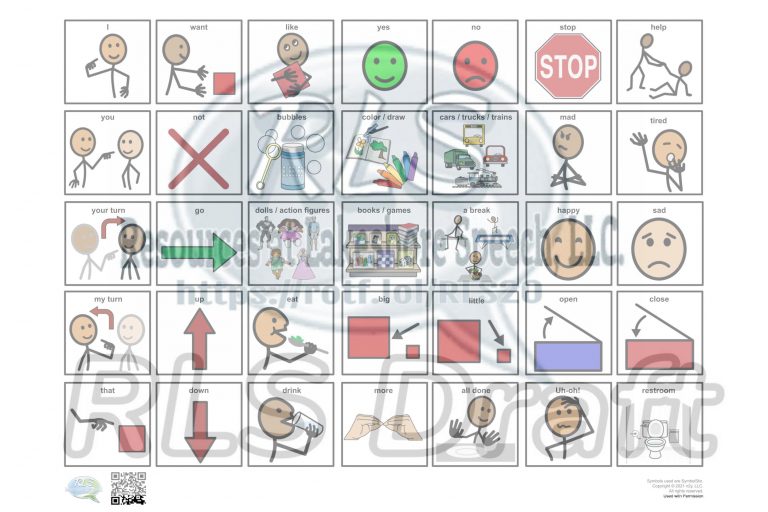
Core Vocabulary Layer (Fast, High-Frequency Communication)
Core words are the foundation of communication:
- go / stop / help / wait
- more / done / again
- yes / no / want / like
Purpose: Supports rapid communication when a client is overwhelmed, transitioning, or newly introduced to AAC.
Action & Therapy Layer (Movement-Based Communication)
Used during movement and sensory-based therapy:
- swing / jump / push / pull
- fast / slow / turn / stop
- sit / stand / walk / go
Purpose: Allows therapists to model language during movement so communication is embedded in physical activity.
Emotional & Regulation Layer (Self-Regulation Support)
Supports emotional expression and regulation:
- happy / sad / tired / mad
- calm / break / help / hurt
- too loud / too much / stop
Purpose:Gives clients a nonverbal way to communicate internal states before behaviors escalate.
Functional Communication Layer (Real-World Requests)
Real-world expressive language:
- I want ___
- I need help
- I don’t like this
- my turn / your turn
Purpose:Builds spontaneous communication and self-advocacy in therapy and clinical settings.
Why This Structure Matters Clinically
This layered design ensures that communication is not overwhelming, but developmentally and functionally accessible across all users.
It allows clinicians to:
- model language at the right level
- scaffold communication over time
- support both emerging and established AAC users
- maintain consistency across therapy environments
Clinic communication boards are most effective when used as a system of communication access, not just a vocabulary display.

What Symbol Systems Do You Use?
Clinic communication boards can be designed using established AAC symbol systems, including:
- Boardmaker
- SymbolStix
This allows seamless integration with:
- school-based AAC systems
- existing therapy materials
- patient communication programs
Symbol consistency is critical for AAC success, especially for clients transitioning between environments.
Where Should Clinic Communication Boards Be Installed?
Strategic placement ensures communication access throughout the entire clinic environment.
Recommended installation areas:
- Front desk / reception area
- Therapy treatment rooms
- Sensory gyms and gross motor spaces
- Hallways and transition zones
- Waiting rooms
Each placement serves a specific communication function:
- requesting help or attention
- supporting transitions
- enabling emotional regulation
- encouraging spontaneous communication
When installed throughout a clinic, communication boards create a consistent, accessible language environment.
The most successful clinic implementations use communication boards as a system of environmental language access, not isolated tools.
When boards are installed across multiple spaces, clients begin to generalize communication skills across therapy sessions, transitions, and social interactions.
Built by Experienced Speech-Language Pathologists
Clinic communication boards are designed by clinicians with over 30 years of experience in:
- pediatric speech-language therapy
- AAC implementation
- clinical communication systems
- sensory-based and neurodiversity-affirming practice
Every board is grounded in real-world therapy application, ensuring functional communication outcomes—not just visual design.
Designed for Real Clinical Environments
Clinic communication boards are built to withstand the demands of high-traffic therapy settings.
Durable construction features:
- aluminum or rigid composite materials
- non-porous, wipeable surfaces
- compatible with hospital-grade disinfectants
- fade-resistant long-term installation
- anti-peel, anti-warp design
Unlike laminated or paper-based materials, these boards are designed as permanent communication infrastructure, not temporary tools.
What Makes Clinic Communication Boards Different From Laminated Boards?
Clinic communication boards are designed as permanent communication infrastructure, not temporary materials.
Key differences include:
- Permanence: mounted and always visible vs removable laminated sheets
- Durability: disinfectant-safe materials vs wear-prone lamination
- Consistency: unified system across clinic vs inconsistent replacements
- Clinical use: designed for real-time therapy modeling vs passive reference tools
Clinic Communication Boards vs Laminated Boards
| Feature | Custom Clinic Boards | Laminated Boards |
|---|---|---|
| Durability | Long-term installation | Short-term use |
| Cleaning | Medical-grade safe | Wears quickly |
| Visibility | Permanent wall-mounted | Portable / inconsistent |
| Cost over time | One-time investment | Repeated replacement |
| Clinical impact | High functional use | Limited consistency |
While laminated boards require constant replacement and redesign, clinic-mounted boards are built for long-term communication consistency across staff and clients.
Funding Options for Clinics
Many clinics successfully fund communication boards through:
- facility improvement budgets
- accessibility grants
- therapy department capital allocations
- nonprofit or community funding
Clinic communication boards are often categorized as:
- accessibility modifications
- environmental communication supports
- clinical infrastructure improvements
Because they improve participation and access, they are frequently eligible for funding support.
Frequently Asked Questions
Can I customize these boards?
Yes. Every board is fully customized based on your clinic population, goals, and environment.
What symbol system do you use?
Boards can be designed using Boardmaker or SymbolStix symbol sets.
Where should we install them?
Common installation areas include therapy rooms, sensory gyms, hallways, and reception areas.
Do you use a color coding system?
Yes. Modified Fitzgerald or Gossins Key color coding or can be included.
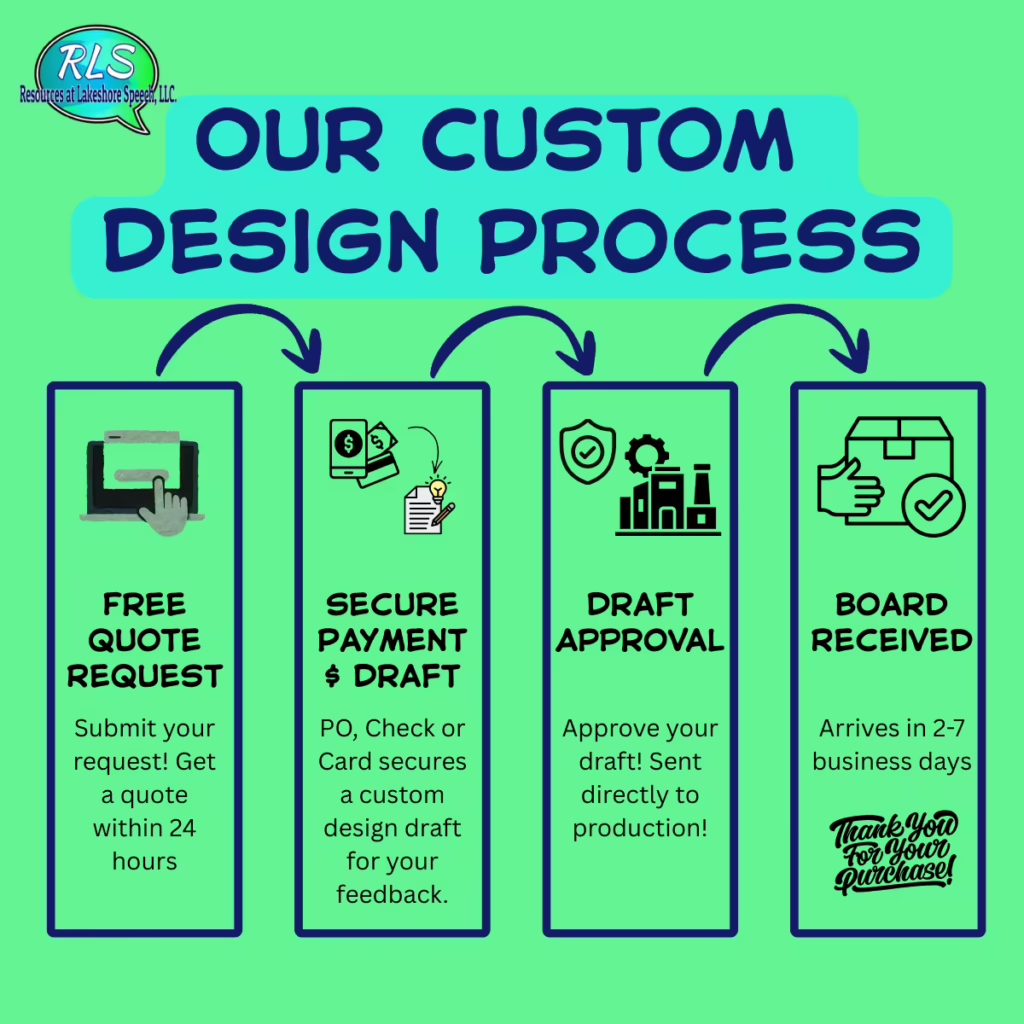
How quickly can they be delivered?
Once in production, it is delivered in 2-7 business days.
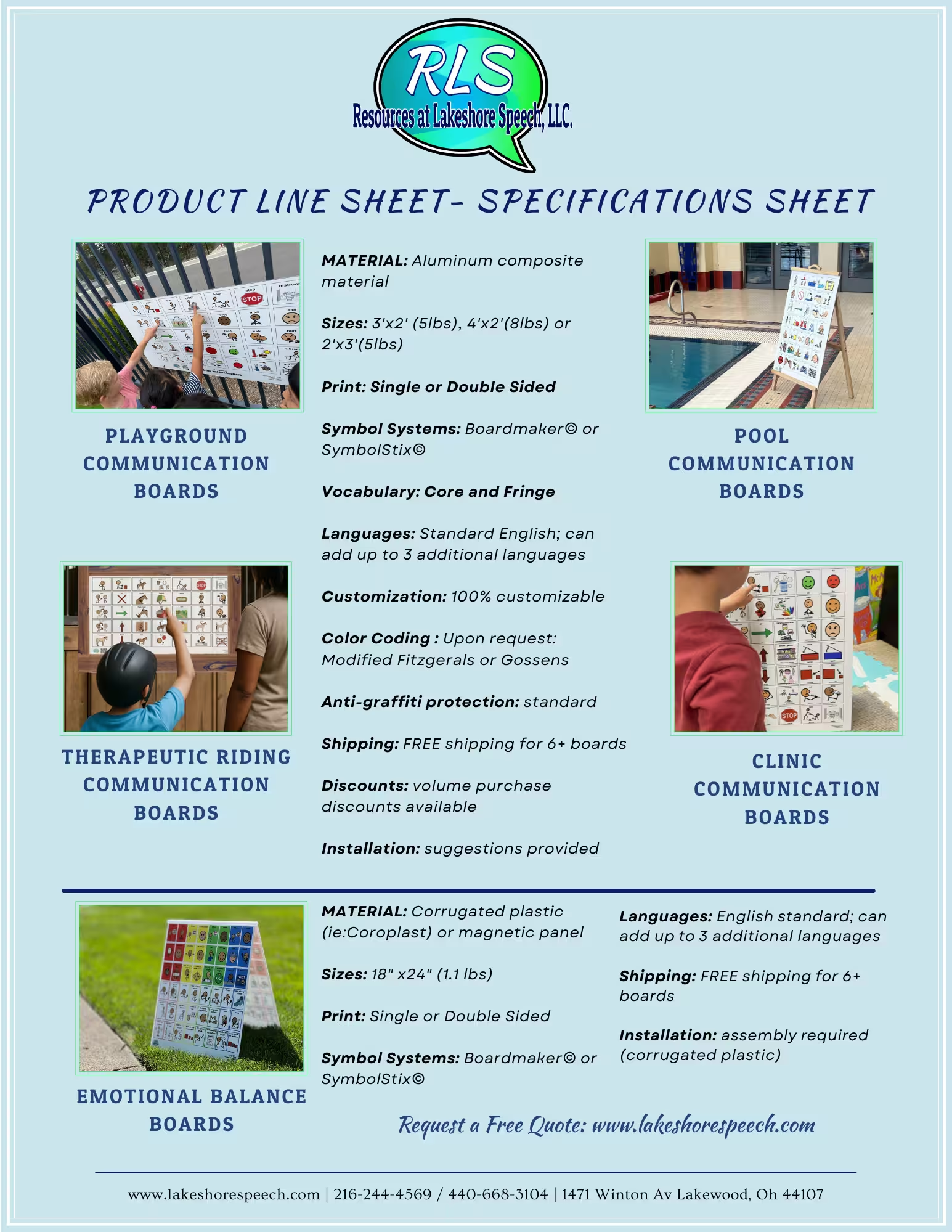
Aluminum Composite
$550 - $675
Coroplast (Corrigated Plastic)
$200
Magnetic Tile
$200
- Available in 3 sizes : 2’x3′, 4’x2′ and 3’x2′
- 100% customizable
- Availalbe with Boardmaker or SymbolStix symbol systems.
- Color code system available: Modified Fitzgerald or Gossens’
- Made to order
- Inventory: In Stock
- Coroplast print includes 2 panels and hinge – creates sandwich sign
- Available in 1 size: 18″x24″
- Standard Vocabulary and Layout
- Availalbe in Boardmaker or SymbolStix icon systems.
- Color code system available: Modified Fitzgerald or Gossens’
- Made to order
- Inventory: In Stock
- Coroplast Assembly Directions
- Magnet print measures 18″x24″
- Standard Vocabulary and Layout
- Availalbe in Boardmaker or SymbolStix icon systems.
- Color code system available: Modified Fitzgerald or Gossens’
- Made to order
- Inventory: In Stock
Build a Communication-Accessible Clinic Environment
Clinic communication boards transform therapy spaces into communication-rich environments where every client has access to language, choice, and participation.
These systems support:
- increased independence
- reduced communication breakdowns
- improved therapy engagement
- consistent communication across staff and settings