


Master Emotional Regulation:
A Visual Guide to Calm and Balance Tools
It is 4:45 PM on a Thursday in the clinic. The hallway carpet is worn, the lighting feels a little too bright, and the air carries that distinct late-afternoon exhaustion. If you are a parent, a caregiver, or a speech-language pathologist, you know this exact window of time. It is the hour when little bodies run out of fuel, young minds hit an absolute wall, and the demands of the day stack up like an unstable tower.
On this particular afternoon, I heard my next client entering the waiting room before I ever saw them. It was not a grand entrance of laughter or energetic steps. It was a long, heavy shuffle followed by a complete body flop onto the floor. This sweet child was utterly spent. The school day had been long, the sensory input had been loud, and coming to speech therapy to work on skills that are inherently difficult was the absolute last thing their tired system wanted to do.
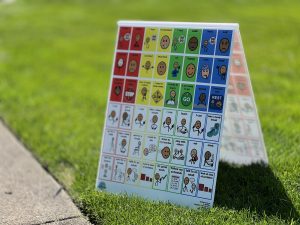
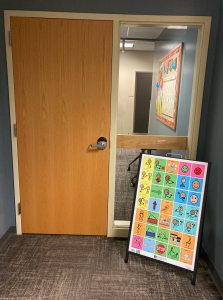
As they lay there on the carpet, whimpering softly, their eyes landed on one of our primary emotional regulation visual tools mounted at kid-level on the wall. Slowing down, without a single word from any adult in the room, the child pushed up off the floor, sat on their heels, and reached out a small hand. They pointed directly to two visual cards: “I feel” + “tired.”
I dropped down to eye level, kept my voice soft, and simply agreed. “I hear you. You are so tired.”
Rather than launching into a verbal conversation about what we should do, I pointed to the next section of the visual board. The child looked at the choices, paused, and pointed to: “I can” + “take a body break.”
I offered to bring a giant beanbag chair into the therapy room and set a five-minute timer. The child stood up, took one handle of the beanbag, and helped me drag it down the hall. We placed it in the corner, turned off the overhead fluorescent lights, set the timer, and sat in calm, restful silence. When the chime rang, the child stood up, helped me flip the light switch back on, transitioned over to the table, and we proceeded to have one of the most productive, connected therapy sessions of the month.
What could have easily spiraled into a 30-minute battle of wills became a profound learning moment for the child, the parent sitting in the waiting room, and even for us as clinicians. It was a quiet reminder of a foundational truth we have seen repeatedly across our combined 60+ years of clinical practice: when a child’s internal system is shorting out, our primary job is to lower the verbal demands and rely on emotional regulation visual tools.
This comprehensive master guide connects directly to our foundational post on emotional regulation and is designed to help you navigate those exact high-stress moments with confidence, clarity, and deep empathy for your child’s developing brain.
Understanding the Overloaded System: Why Meltdowns Happen
When a child experiences an emotional meltdown, it can feel overwhelming, disruptive, and heartbreaking for everyone involved. However, the first mindset shift every parent needs to make is understanding that meltdowns are not acts of defiance, manipulation, or bad behavior. A meltdown is a direct form of communication. It is a sign that somewhere along the line, the typical pathways of communication have broken down because the child’s nervous system has become completely overloaded.
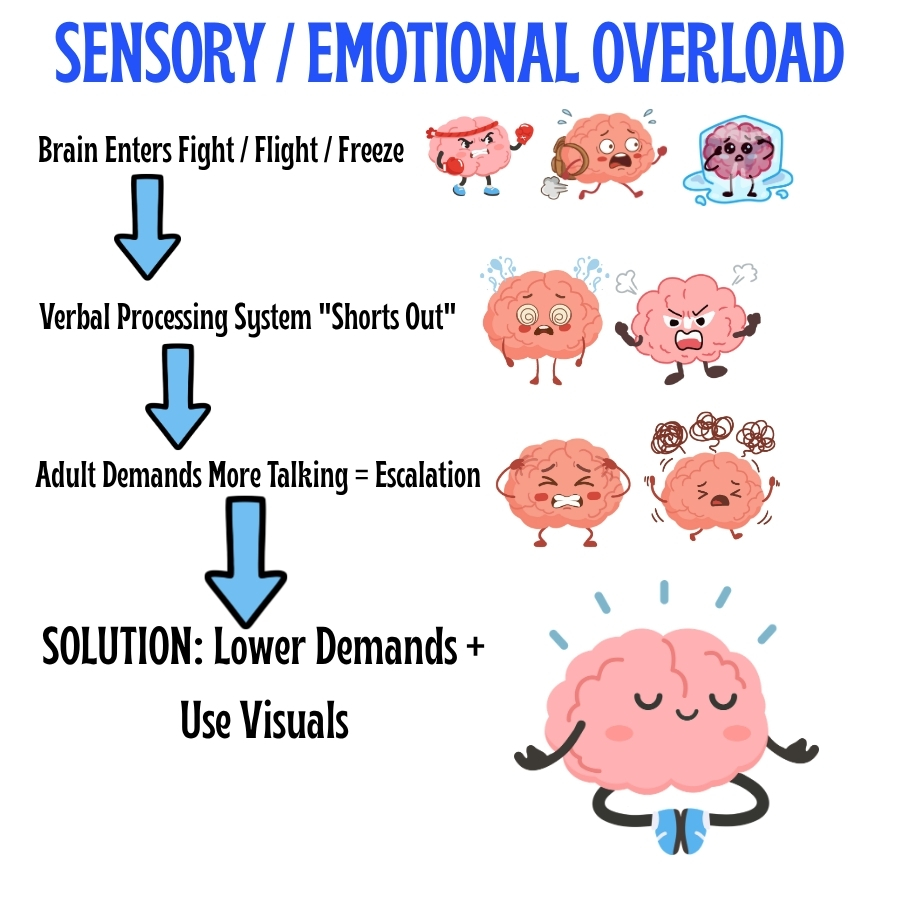
When a toddler or school-aged child is tired, hungry, sensory-overwhelmed, or frustrated, their brain shifts into a protective, survival-oriented state. In neuroscience, we often talk about the difference between the lower, reactive parts of the brain and the upper, logical prefrontal cortex. When a child enters a meltdown state, access to that logical prefrontal cortex, the part that processes complex spoken language, reasons through consequences, and articulates abstract feelings, is temporarily offline.
It does not mean there is something wrong with your child. It simply means their brain’s internal circuit breaker has tripped to protect them from further input. When we, as adults, try to fix the situation by asking endless questions or delivering long explanations, we are essentially throwing more electrical current into a circuit that has already blown.
To truly support your child through these moments, it helps to understand how to avoid emotional meltdowns before the system completely trips, while also having a reliable recovery plan when an overload inevitably occurs.
The Number One Rule in High-Stress Moments: Stop Talking
If there is a single, battle-tested piece of advice from our decades in the clinic that we could hand to every parent as a warm hug and a grounding truth, it is this: When your child is dysregulated, STOP TALKING.
That advice often catches parents off guard. We live in a world that encourages us to talk through our feelings, explain things logically, and talk children through their distress. But when a child’s nervous system is shorting out, spoken language becomes extra noise.
Stopping your verbal output does not mean you stop communicating or abandon your child in their distress. It simply means you shift from noisy, abstract verbal demands to calm, concrete, and quiet modes of connection.
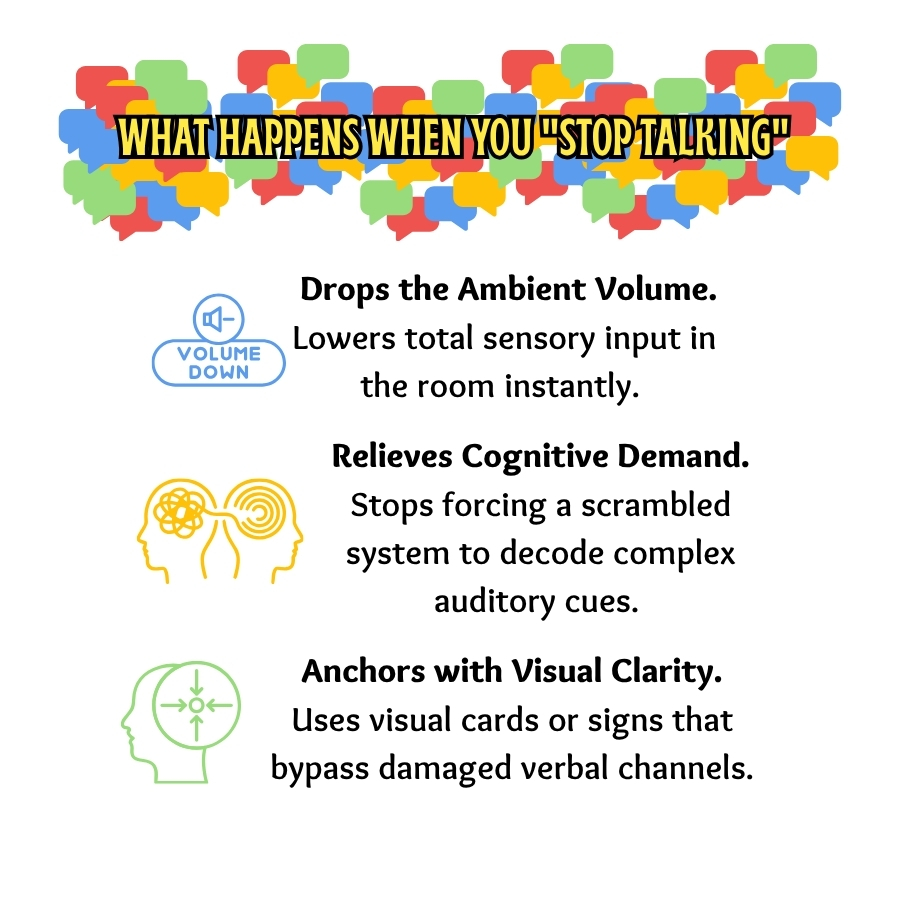
When you pause the verbal chatter, three incredible things happen immediately:
- You drop the overall volume of the room. A quiet adult creates an immediate drop in environmental stimulation.
- You relieve the cognitive burden. Your child no longer has to translate complex sentences while their brain is already scrambled.
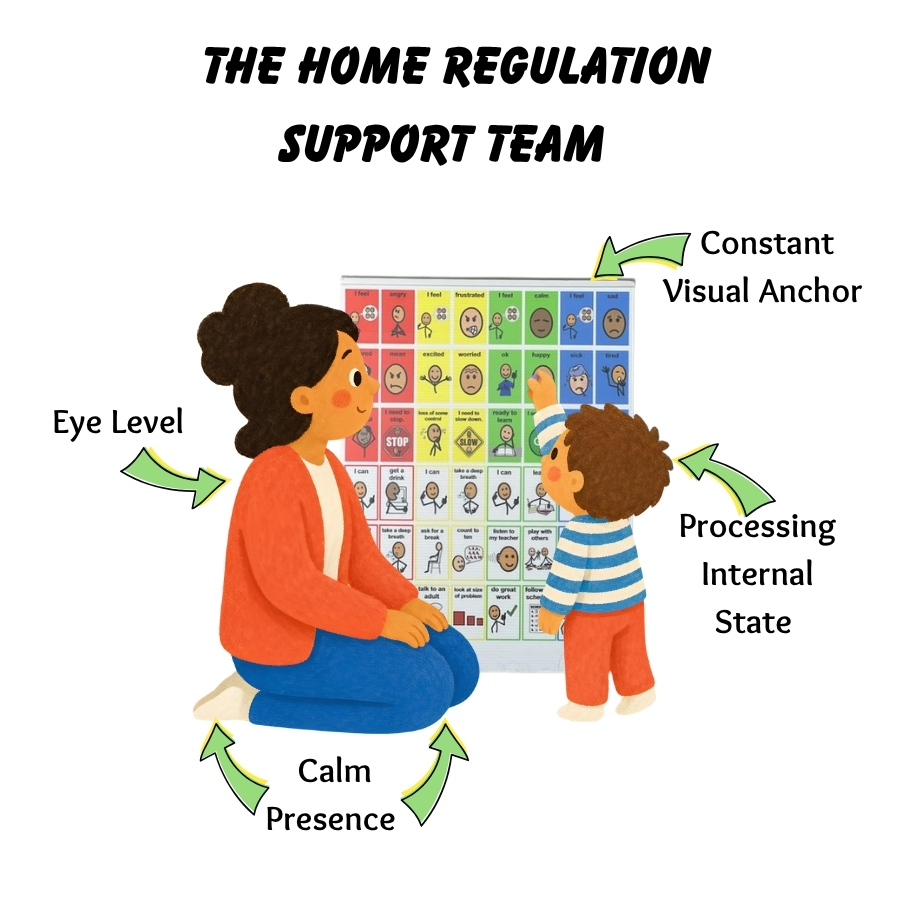
- You establish a calm presence. Getting down to eye level, staying quiet, and using non-verbal visual cues signals to your child’s nervous system that they are safe.
Instead of asking, “Why are you crying? What do you want? Do you need a snack or a break?”, try sitting quietly near them. Point to a familiar picture card, use basic sign language, or simply open your arms. This step-by-step approach to lowering verbal noise forms the core of our clinical philosophy on navigating emotions and big feelings.
Concrete Visuals vs. Abstract Language: The Missing Bridge
Why do emotional regulation visual tools work so remarkably well when words fail? Spoken words are temporary and abstract. Once a word is spoken, it disappears into the air, requiring the listener’s memory to hold onto it, decode its meaning, and form a response. For a dysregulated child, that multi-step processing sequence is nearly impossible.
Visual strategies, on the other hand, are static, permanent, and concrete. A picture of a beanbag chair, a water cup, or a quiet space remains constant on the board. The child does not need to search their brain for vocabulary words; they only need to process the image standing right in front of them.
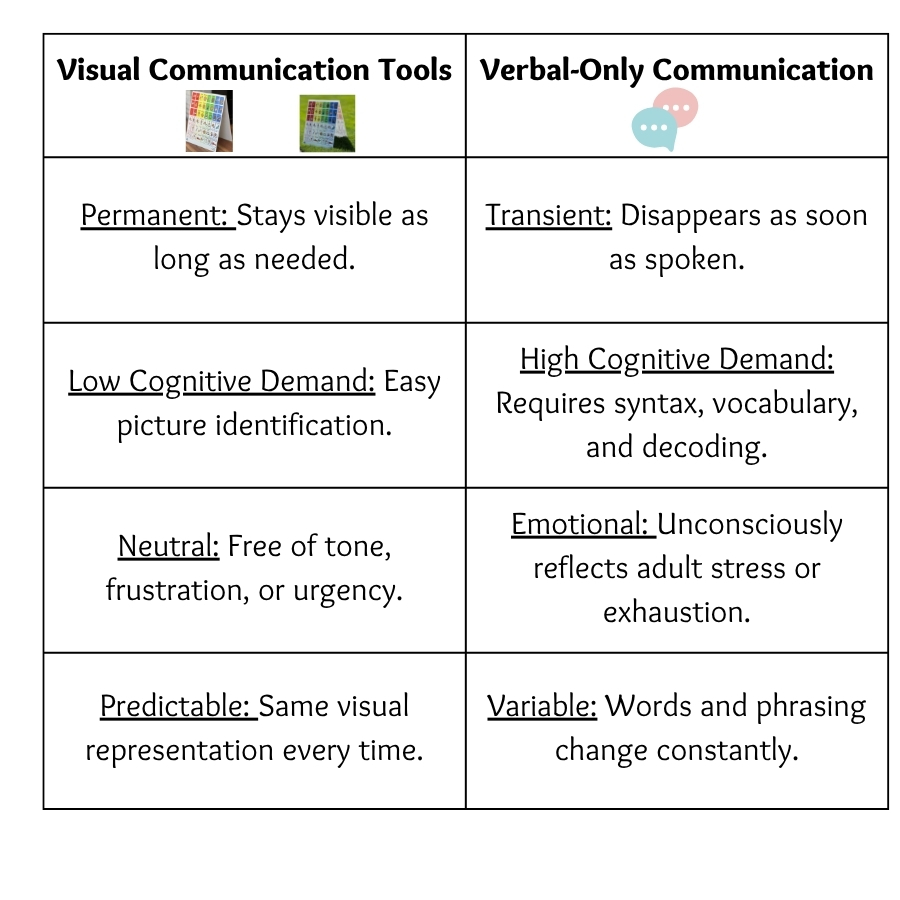
By incorporating structured emotional regulation visual tools into your home, you give your child an alternative pathway to communicate their internal state without having to fight through the mental fog of an emotional overload.
Building Your Home Regulation Team: The Role of Balance Tools
As we move into November—a season dedicated to family, connection, giving, and gratitude—it is helpful to reflect on what true support looks like in a home. Parents are often inundated with advertisements for flashy, electronic toys or complex behavioral systems that promise to solve emotional outbursts overnight.
In our practice, we do not believe in magic bullets, silver-bullet fixes, or high-tech gadgets that take over the process. Real emotional regulation visual tools should not feel like an intimidating clinical intervention; they should feel like a natural, quiet member of your household team.
An effective emotional balance board is designed to be part of the everyday environment—just like the kitchen table or the family couch. When mounted on a refrigerator or set up in a living area, a magnetic board becomes a familiar fixture that everyone in the family uses, normalizes, and turns to throughout the day.
When visual strategies live right on the fridge door, they are:
- Always Ready: No batteries to charge, apps to open, or screens to turn on.
- Accessible to Everyone: Toddlers, older children, parents, and visiting grandparents can all point to the same icons.
- Normalized: It removes the stigma of “working on behavior” and integrates emotional check-ins into daily life.
These tools are not meant to be the star player that solves every challenge single-handedly. Instead, think of them as an evergreen, supporting team member—a quiet anchor standing by to help your child express “I feel” and “I can” when words simply will not come.
If you are looking to bring these clinical-grade, simple emotional regulation visual tools into your home environment, you can explore options directly to find the right setup for your family.
A Practical Guide to Implementing Visual Strategies at Home
Bringing emotional regulation visual tools into your household routine does not require a complete overhaul of your home life. In fact, the simpler you keep the transition, the more effective it will be. Here is a clear, step-by-step roadmap to integrating concrete visual strategies into your daily flow:
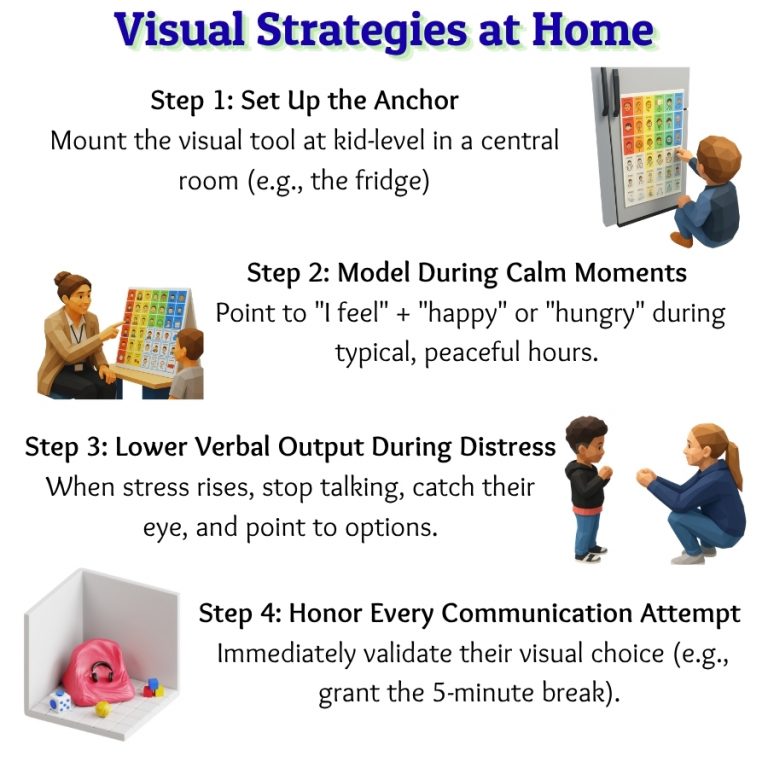
1. Place Tools at Eye Level in High-Traffic Areas
Emotional regulation visual tools only work if they are accessible when dysregulation strikes. Mount your magnetic balance board on the refrigerator or a low hallway wall where your child can comfortably reach, touch, and point to the icons without asking an adult for help.
2. Model Usage During Calm, Peaceful Moments
Do not wait for a full-blown meltdown to introduce visual strategies for the first time. Practice pointing to emotions and choices when everyone is calm, fed, and relaxed. Point to the board yourself and say, “I feel tired after work today. I can drink a glass of water.” When children see adults using visual strategies naturally, they adopt them without resistance.
3. Lower Your Body and Catch Their Eye
When you notice early signs of frustration—clenched fists, heavy sighing, or whining—resist the urge to ask questions from across the room. Walk over, lower your body to their eye level, remain quiet, and gently place a hand nearby or point toward the board. Your calm physical presence communicates safety far better than a raised voice.
4. Respect and Honor Their Selections
If your child points to “I feel overwhelmed” and “I can take a body break,” honor that request immediately, just as we did with the beanbag chair in our clinic. When a child sees that visual communication leads to real, respected action from adults, their trust in the system deepens, and their reliance on meltdowns as a form of communication dramatically decreases.
If your home, school, or practice requires a customized setup or specialized support tailored to specific developmental needs, request a free quote to connect directly with our clinical team.
The Gift of Peace: A November Perspective for Families
As the holiday season approaches, parents often carry an extra layer of stress. Schedules shift, sensory environments become louder, routines are interrupted, and expectations run high. During November—a month centered on gratitude, giving, and honoring the village that surrounds our children—it is worth stepping back to reframe how we view our children’s emotional journeys.

A meltdown is not a sign of parenting failure, nor is it a sign that a child is broken. It is a sign of a young human navigating a world that can sometimes be too loud, too fast, and too demanding for their developing system. Providing your child with predictable, non-verbal emotional regulation visual tools is one of the most compassionate gifts you can offer them.
It is also a wonderful opportunity for the broader family village to step in. Grandparents, aunts, and uncles often ask how they can truly support a family during the holiday season. Rather than adding more loud, battery-operated toys to the playroom, giving the gift of evergreen regulation tools—like a fridge-ready magnetic balance board—is a meaningful way for extended family to invest in a home’s long-term peace and emotional clarity.
Moving Forward Together
Navigating emotional regulation is an ongoing journey filled with small victories, occasional setbacks, and continuous learning. By grounding your approach in proven clinical wisdom, reducing unnecessary verbal demands, and providing clear emotional regulation visual tools, you create an environment where your child feels understood, respected, and empowered.
Remember the golden lessons from our clinic floor:
- Meltdowns are communication, not bad behavior.
- Stop talking and start pointing when the system gets overloaded.
- Emotional Regulation Visual tools are neutral, permanent anchors that make communication safe and accessible.
- You don’t need a magic cure—just reliable, everyday team members to support your family’s village.
As you move through this season, give yourself and your child the grace to slow down, turn down the volume, and embrace the simple, quiet strategies that bring lasting peace to your home.