Playground Communication Boards - SLP Desgined
Welcome to the Future of Inclusive Play
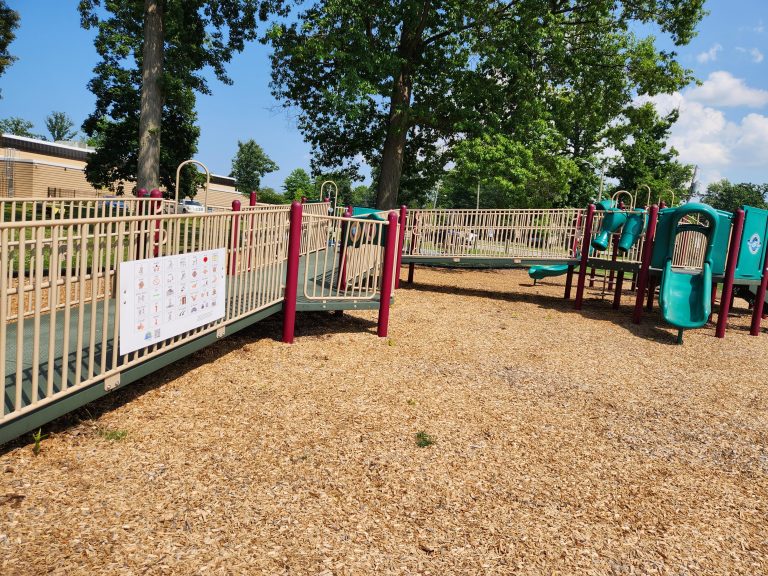
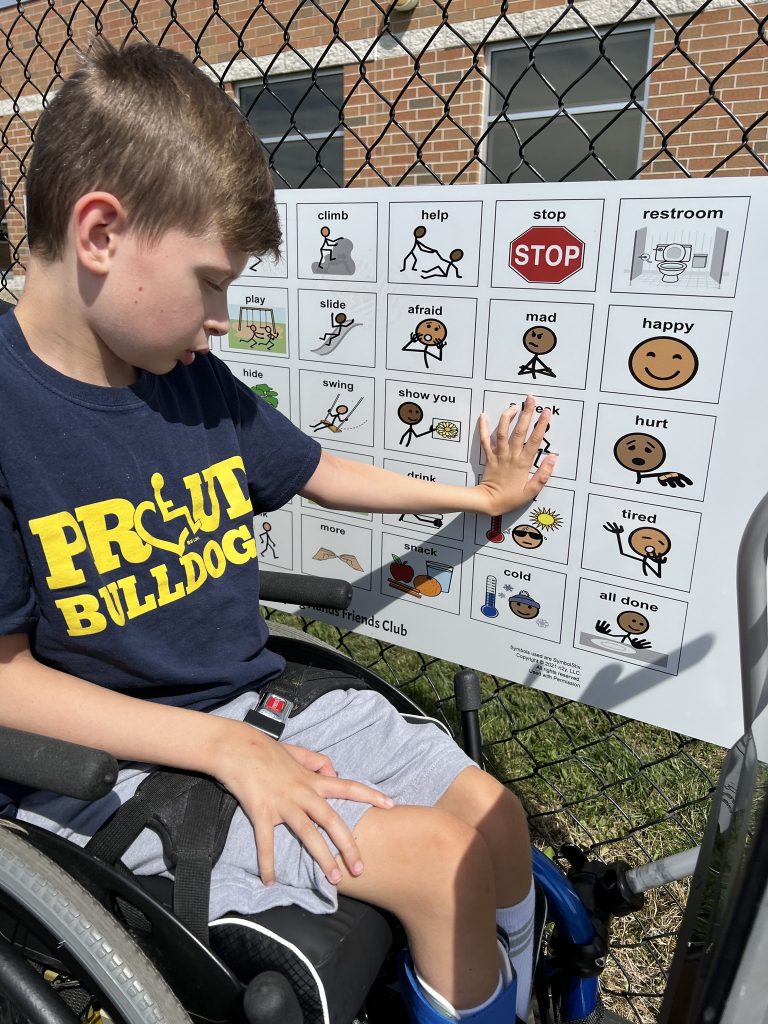
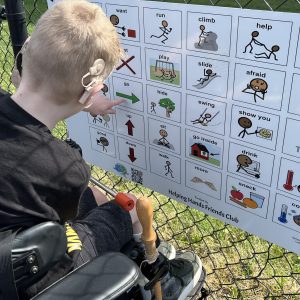
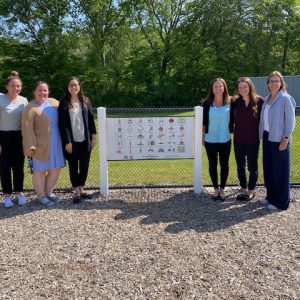
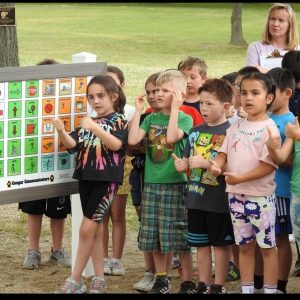
Playground communication boards are powerful tools designed to send a visible message of inclusivity, promoting social interaction among children of all abilities. These innovative boards provide choice and independence, helping to reduce frustration and encourage collaborative play in diverse playground settings. Playground communication boards provide complete accessbility to public spaces – physical access and access to communication.
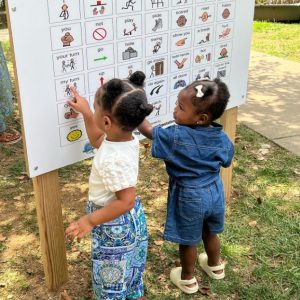
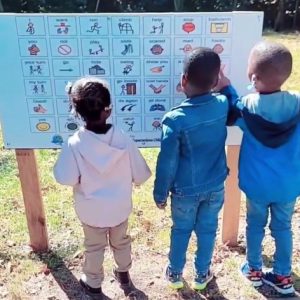
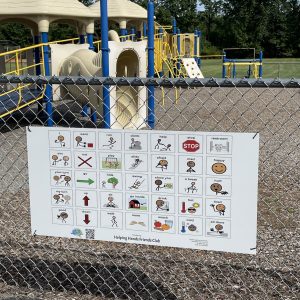
In recent years, the push for truly inclusive play has moved beyond physical ramps and rubber surfacing. Playground communication boards have emerged as the vital third pillar of accessibility: communication access. These boards are permanently installed, weather-resistant signs featuring symbols, pictures, or icons that allow children who are nonverbal, have autism, or speak different languages to interact with their peers.
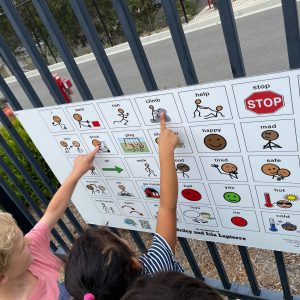
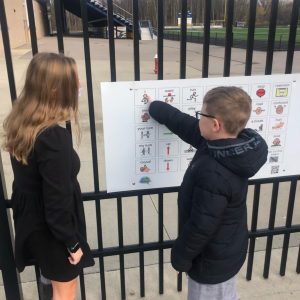
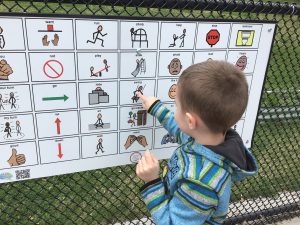
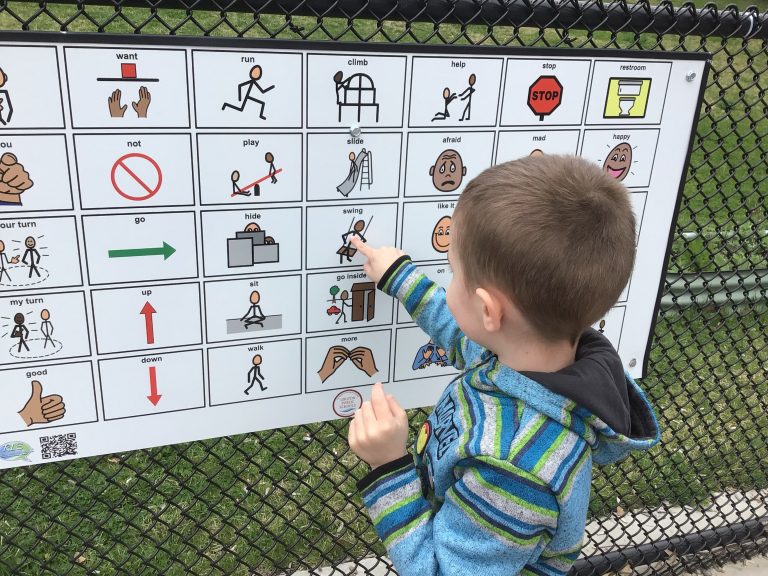
The beauty of playground communication boards lies in their simplicity. By providing a visual anchor for language, these boards remove the “invisible barriers” to play. When a child can point to an icon for “slide,” “swing,” or “my turn,” the frustration of being misunderstood vanishes. This leads to longer play sessions, fewer behavioral meltdowns, and a genuine sense of belonging for every child who visits the park.
Why Do Visual Supports Work Outdoors?
The Science of Inclusion in Natural Play Environments
Visual supports, such as playground communication boards, are highly effective in outdoor environments because they provide stable, predictable language access in settings that are often overwhelming, dynamic, and fast-paced. Research in Augmentative and Alternative Communication (AAC) consistently shows that communication can become significantly more difficult in high-stimulation environments—especially for neurodivergent children and individuals with communication differences.
Playgrounds are rich sensory spaces. While they are designed to encourage movement, exploration, and social interaction, they also present multiple communication barriers, including:
- High levels of background noise from children playing
- Constant motion from swings, slides, and group activities
- Competing visual stimuli across large open spaces
- Sensory input from wind, sunlight, temperature changes, and touch
For many children with autism, speech and language delays, or sensory processing differences, this combination of input can lead to communication breakdowns. Even children who can communicate effectively in structured environments may struggle to process spoken language or respond quickly in these conditions.
Unlike spoken language—which is temporary, fast-moving, and easily lost in noise—visual communication supports remain constant and accessible.
Playground communication boards act as a static reference point. This “permanent modeling” allows children to process language at their own pace.
The alignment between environment and communication system is critical. It ensures that AAC users are not switching between different symbolic languages depending on location, but instead interacting with a consistent, unified communication system across settings.
To support this continuity, we hold licensing for industry-standard symbol systems of Boardmaker© and SymbolStix©.
These widely recognized AAC systems help ensure that children see familiar visual language across:
- Classrooms
- Speech therapy sessions
- Personal AAC devices
- Community and playground environments
This consistency reduces cognitive load and allows children to focus on communication itself rather than learning new symbol systems in each environment.
How to Communication Boards Align with ADA Compliance and Universal Design for Play?
While the Americans with Disabilities Act (ADA) has long focused on ensuring physical access—such as ramps, transfer stations, and accessible playground equipment—modern accessibility standards are expanding beyond mobility alone. Today, true accessibility includes the ability to communicate, interact, and fully participate in shared play experiences.
This evolution is reflected in the growing adoption of Universal Design for Play, a framework that emphasizes environments usable by all children, regardless of physical, cognitive, sensory, or communication differences.
Under this framework, a playground is not truly inclusive if a child can physically access the space but cannot meaningfully engage with peers. Communication is a foundational part of participation—and this is where playground communication boards (AAC boards) play an essential role.
In playground settings, this means designing for:
- Physical access
- Sensory differences
- Cognitive diversity
- Communication needs
Communication boards are a key part of this framework because they support interaction, not just presence.
Many municipalities and school districts are now prioritizing playground communication boards when applying for inclusive play grants. These boards serve as a visible signal to families that your community values neurodiversity as much as physical diversity.
Communication boards are now being included in:
- Inclusive playground grant applications
- ADA transition and compliance plans
- School district accessibility upgrades
- Parks and recreation capital improvement projects
Funding agencies and grant programs are also placing greater emphasis on equity and neurodiversity inclusion, making AAC supports a valuable component of successful applications.


Who Benefits from AAC Communication Boards?
- Children with Autism
- Nonverbal, minimally verbal, and emerging communicators
- Individuals with speech or language difficulties to express needs, wants and feelings — Especially in a noisy or nonverbal environment.
How Do Playground Communication Boards Promote Inclusion and Accessibility?
- Sends a visible message of inclusivity
- Helps build welcoming communities centered around acceptance and accessibility
- Raises awareness and playground accessibility beyond just physical access
How Do Communication Boards Support AAC Users Across Environments?
- We hold licensing for Boardmaker© and SymbolStix© symbols, making transitions easier for AAC users
- Provides a multilingual form of communication
- Bridges the communication gap across settings and communication styles
How Do Communication Boards Encourage Social Interaction and Play?
- All children can use the playground communication boards to communicate.
- Fosters inclusion and socialization among peers
- Encourages collaborative and interactive play
How Do Communication Boards Enhance Safety in Playgrounds and Public Spaces?
- Provides clear communication options to express concerns
- Helps individuals communicate needs like feeling too hot or needing a break
- Supports safer interactions in busy or high-sensory environments
How Do Communication Boards Promote Independence?
- Provides independence for children with communication differences
- Allows active participation in play without relying solely on caregivers
- Empowers individuals to communicate their own needs and choices
How Do Communication Boards Support Emotional Expression and Regulation?
- Individuals can express their feelings
- Reduces frustration and potential “meltdowns”
- Provides a reliable way to communicate needs during overwhelming situations
What is the Best Material for Outdoor Communication Boards? Aluminum Composite
When selecting playground communication boards, durability is the most critical factor. Unlike indoor clinic boards, outdoor boards must face UV rays, extreme temperature fluctuations and potential vandalism.
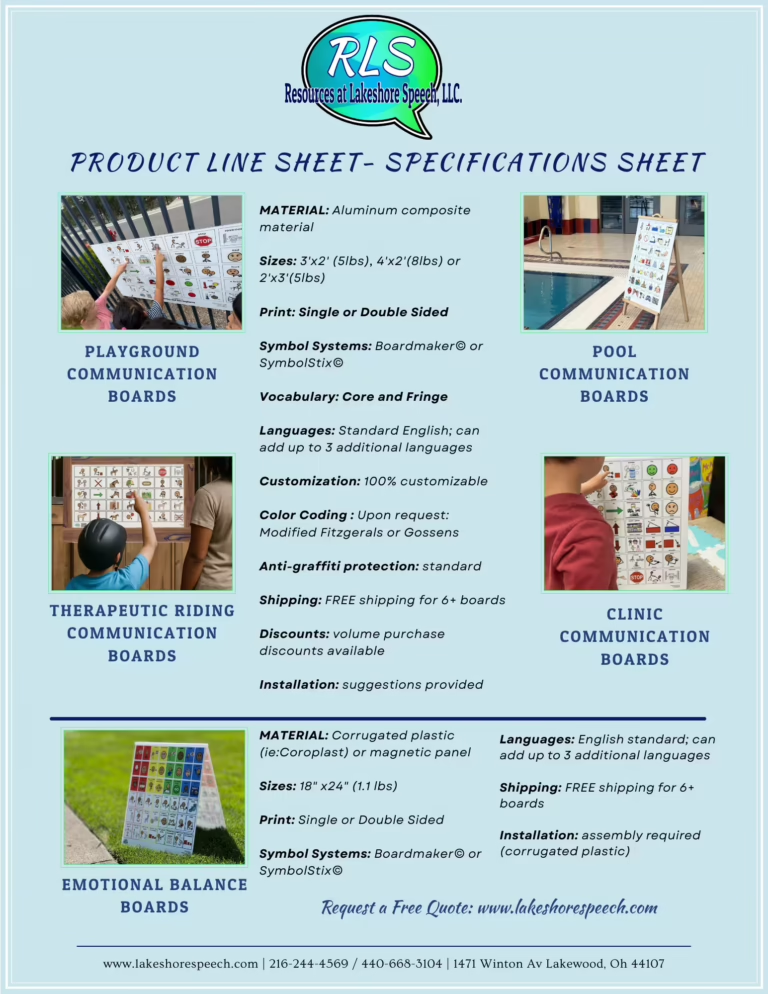
Our playground communication boards are manufactured using high-grade Aluminum Composite. This material is specifically chosen because it does not rust, warp or delaminate like PVC or wood. The graphics are printed with UV-resistant inks and finished with a protective coating that allows for easy cleaning—even if hit with graffiti or mud.
When you invest in playground communication boards from Resources at Lakeshore Speech, you aren’t just buying a sign; you are installing a permanent fixture that will serve your community for years to come.
$550 - $675
- Available in 3 sizes : 2’x3′, 4’x2′ and 3’x2′
- 100% customizable
- Availalbe with Boardmaker or SymbolStix symbol systems.
- Color code system available: Modified Fitzgerald or Gossens’
- Made to order
- Inventory: In Stock
2436or3624ply
2448ply
Across the Country Giving Everyone a Voice


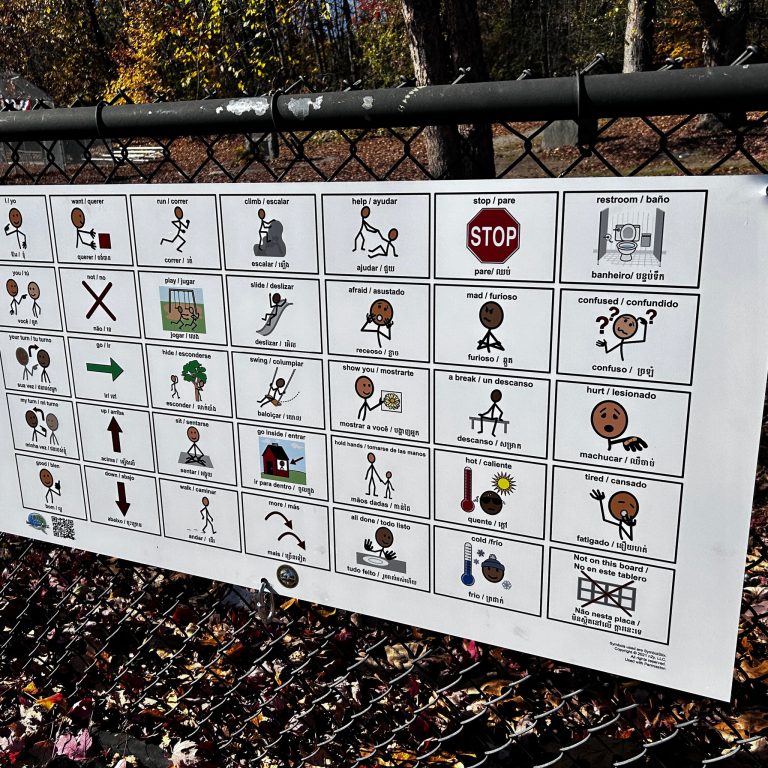
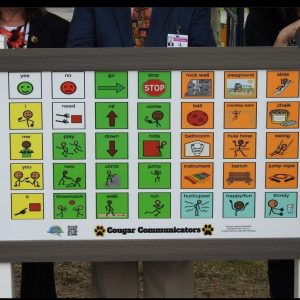
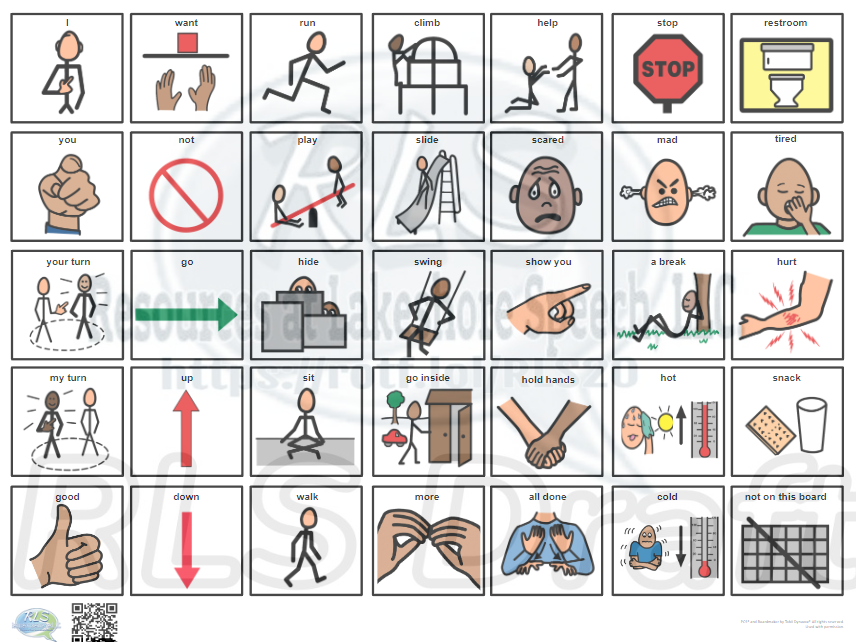
Playground Communication Boards –Standard Vocabulary and Layout
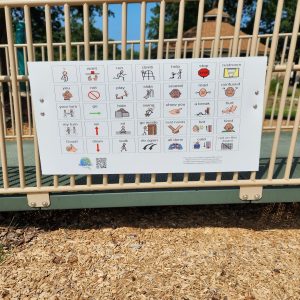
- Resources at Lakeshore Speech, LLC playground communication boards are 100% customizable to meet the individual needs of you and your project.
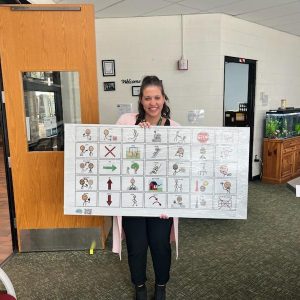
- Standard vocabulary and layout for playground communication boards is pictured.
- Click to enlarge the image for more comfortable viewing.
AAC playground communication boards.
inclusivity inclusion ada playgrounds.
Accessible AAC design.
Community AAC implementation.
Customizable AAC boards.
solutions for accessiblity
Inclusive public spaces.
Accessibility in communication.
Communication for all abilities.
Designing communication tools.
Equitable communication access.
Community inclusion for children
Universal design in AAC