


Back-to-School Success: Building Executive Functioning Skills for a Smooth Fall Transition
A new school year means new routines, new schedules, and the perfect opportunity to create habits that make your family’s days run smoothly. If you feel like you’re being pulled in a million different directions, you’re not alone. The back-to-school transition can feel overwhelming—but with a little planning and support, your family’s stress levels don’t need to be off the charts.
This fall, give yourself and your loved ones the gift of calm by creating a simple game plan that works for your household.
What Are Executive Functioning Skills—and Why Do They Matter?
Organizing tasks, managing time, and following through on a plan are all part of what we call executive functioning skills. These are the cognitive processes that help us plan, focus attention, remember instructions, and juggle multiple tasks successfully.
While some people seem naturally organized, these skills are not innate—they are learned and practiced over time. As executive functioning skills develop and strengthen, daily routines become smoother, stress levels decrease, and confidence grows—for children and adults alike.
As a speech-language therapist, I often work with families to strengthen these critical life skills. Small, consistent strategies at home can make a big difference in helping children (and parents!) stay on track.
Practical Strategies to Support Executive Functioning at Home
You don’t need an elaborate system or fancy supplies to build strong executive functioning habits. Try a few of these age-appropriate ideas and notice how much smoother your daily routines become.
For Children Under 5 Years Old
Create a “home base” for favorite toys. Use a labeled bin, basket, or shelf so cleanup is predictable and easy.
Keep the diaper bag ready. Always store it in the same place—on a hook or shelf near the door—so you can grab it quickly when heading out.
Stock an emergency car kit. Include snacks, wipes, diapers, and a change of clothes (for both you and your child). You’ll thank yourself later!
These small habits teach organization, planning, and consistency, which are the foundation of strong executive functioning skills.
For School-Age Children
Designate a “drop zone.” Every backpack, coat, and pair of shoes should have a specific home. It doesn’t need to be fancy—cardboard boxes decorated by each child work perfectly! This eliminates the “trail” of belongings through the house.
Set up an In/Out system for school papers. Use two bins or gift boxes (reinforced with tape) labeled In and Out. Work with your child to make sure important papers, forms, and homework land in the right spot.
Establish key household routines.
Hooks for keys
Shoe mats by the door
Lunchbox baskets
Labeled drawers for school vs. play clothes
These small systems keep daily chaos under control and model organization for your kids.
Simple After-School Routine
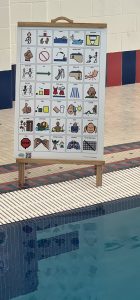
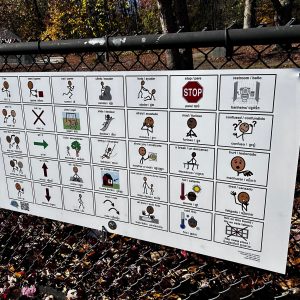
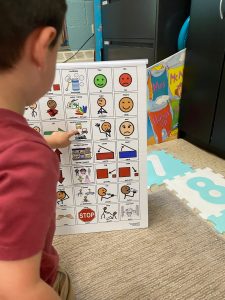
Visual schedules or written “To-Do” lists can reduce stress and improve follow-through. Try posting a short checklist like this near your child’s workspace:
Put folder in In/Out Box
Change into play clothes
Grab a snack
Start homework or reading
When children see a clear plan, they can transition more easily between school and home, reinforcing independence and responsibility.
Customizing Routines for Your Family
Every family is different. Your unique household rhythm will guide how you organize and teach executive functioning skills. The goal isn’t perfection—it’s progress. Even small changes can make your days feel calmer and more predictable.
If you notice that your child struggles with organization, focus, or time management, don’t hesitate to reach out to a Speech-Language Therapist. We can provide individualized strategies that support not only your child’s communication and cognitive development but also their success at home and in school.
Final Thoughts
Executive functioning skills develop gradually, but they can be nurtured at any age with structure, practice, and patience. By putting a few simple systems in place this school year, you’re helping your child build the lifelong habits they’ll need for learning, independence, and success.