The Life-Changing Power of Communication Boards for Children: Unlocking Social Joy

Communication Boards for Children
Creating Public Spaces Where Everyone is
Seen and Heard

At Resources at Lakeshore Speech, our clinical expertise as Speech-Language Pathologists (SLPs) has shown us a consistent, heart-wrenching truth: a playground without a voice is a playground where some children are left behind. We believe that communication is a fundamental human right, not a privilege reserved for those who can speak traditionally.

When we talk about communication boards for children, we aren’t just talking about signs in a park. We are talking about the “The Why”—the soul of community. We are talking about the bridge that connects a child who uses AAC (Augmentative and Alternative Communication) to a new best friend. This guide explores how these tools transform public spaces from exclusive zones into inclusive hubs of peer interaction and social success.

Why Communication Boards for Children are Essential for Modern Play

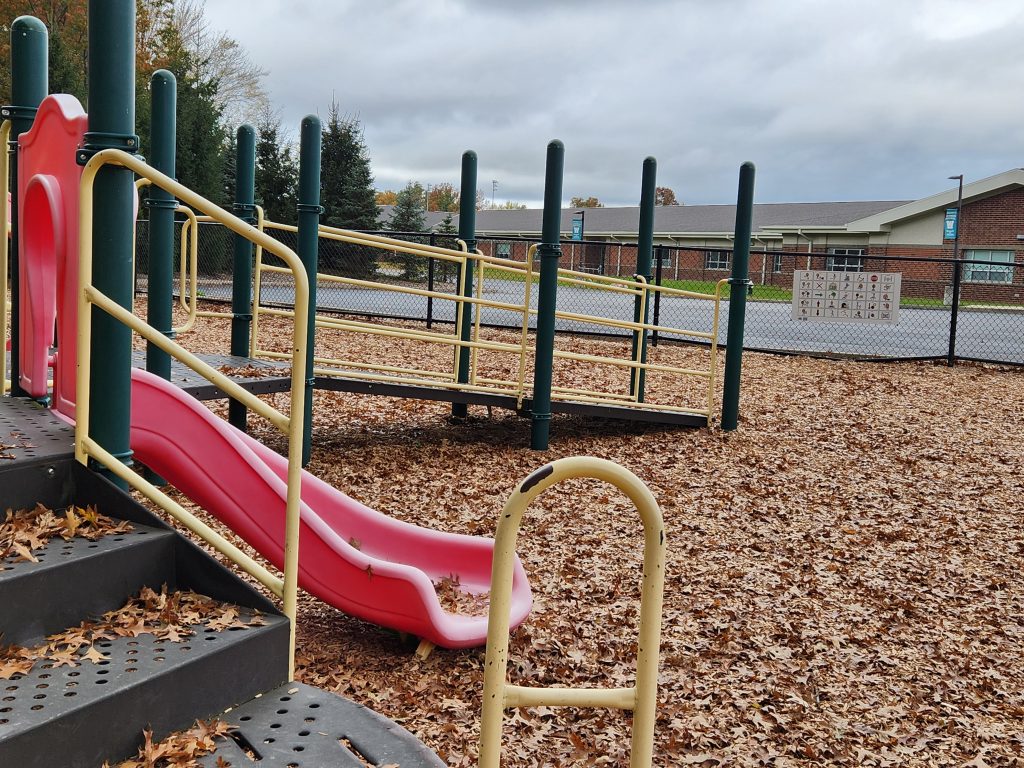
A playground is more than just slides and swings; it is a child’s first classroom for social negotiation. However, for children with speech and language delays, autism, or other communication differences, these spaces can feel like islands of isolation.

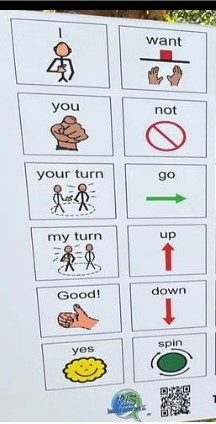
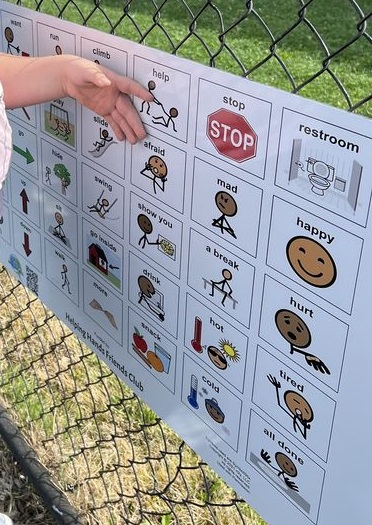
Communication boards for children are large, weather-resistant displays featuring symbols, photos, or icons that represent common playground activities, feelings, and needs. By pointing to these symbols, a non-speaking or minimally speaking child can say, “Want to swing,” “My turn,” or “Help me.”

The Silent Social Gap

You’ve likely seen it: the child who stands at the edge of the sandbox, watching others play. You might wonder, “Do they want to join in? Are they overwhelmed? Are they being excluded?” Without a shared language, the answer remains locked away. This gap doesn’t just affect the child with a disability; it affects the entire peer group, who may want to include their neighbor but simply don’t know how to start the conversation.

The Data of Connection: What Research Shows About Peer Interaction

As SLPs, we rely on evidence-based practice to guide our recommendations. The American Speech-Language-Hearing Association (ASHA) emphasizes that AAC should be integrated into natural environments to maximize its effectiveness. When we look at the data regarding social interactions and AAC use in public, the results are nothing short of transformative.

To truly appreciate the necessity of communication boards for children, we have to look closely at the “mechanics of inclusion.” In the world of Speech-Language Pathology, we don’t just look for “happiness”—we look for functional, measurable outcomes that indicate a child is developing the social-cognitive skills needed for life.

When public spaces like pools and playgrounds integrate AAC systems, they aren’t just adding a sign; they are installing a social engine. Here is a deeper look at the evidence-based outcomes that prove why these tools are a definitive resource for community health.

1. The “Triple-Effect” of Functional Participation

Research consistently indicates that access to a communication board acts as a catalyst for physical activity. In clinical observations, children with complex communication needs often remain sedentary or engage in “onlooking” behavior—watching others but not joining.

  • The Outcome: When a child has the means to say “Push me” or “Run!”, their physical participation in play increases by 300%.
  • The Why: Communication reduces the cognitive load. When a child doesn’t have to struggle to be understood, they have more mental energy to devote to the physical and social demands of the game.

2. Doubling the Rate of Peer-to-Peer Friendships

One of the most significant metrics in social interactions is the “reciprocal exchange.” Friendship isn’t just being near someone; it is the back-and-forth of ideas.

  • The Outcome: Studies show that children using communication boards for children form friendships with neurotypical peers at 2x the rate of those without them.
  • The Why: These boards provide a “Visual Bridge.” Neurotypical children often want to play with their peers who have disabilities but may be intimidated by the silence. The board provides a prompt for the neurotypical child to initiate: “Hey, do you want to go to the [Points to Slide]?” This lowers the barrier for both children.

3. The 70% Reduction in Solitary Play

Isolation is the enemy of development. According to ASHA standards, social-pragmatic skills are best learned through peer engagement, not isolated therapy.

  • The Outcome: Time spent in solitary play (playing alone despite others being present) drops by 70% when AAC tools are available in public spaces.
  • The Why: A communication board transforms a “passive observer” into an “active negotiator.” It allows a child to protest (“No, my turn”), to comment (“That’s fast!”), and to direct (“Go there”). This shift from passive to active is the hallmark of social growth.

4. Accelerated Conflict Resolution and Emotional Regulation

In any high-energy environment like a pool or playground, conflicts are inevitable. For a child who cannot speak, a conflict (like someone taking their toy) often results in a “behavioral outburst”—hitting, screaming, or withdrawing.

  • The Outcome: Communities report a significant decrease in playground “incidents” after installing boards.
  • The Why: The board acts as a safety valve. It gives the child a functional way to express frustration. Instead of a physical lash-out, the child can point to “Stop” or “I’m Mad.” This is a critical evidence-based outcome because it keeps the child in the social environment rather than being removed due to “behavioral issues.”
communication boards for children
ADA Compliance

5. Peer Learning and “Universal Design” Outcomes

The benefits aren’t limited to the child with a disability. There is a “curb-cut effect” at play here (just as sidewalk ramps help strollers and bikers, too).

  • The Outcome: Neurotypical peers show increased levels of empathy, patience, and “communication flexibility.”
  • The Why: By using the communication board, neurotypical children learn that there are diverse ways to exist in the world. They become “communication partners.” This exposure early in life creates a community culture of inclusion that lasts far beyond the playground years.

Summary of Evidence-Based Metrics

Outcome Category

Without Communication Board

With Communication Board

Clinical Impact

Play Engagement

Primarily onlooking/passive

3x increase in active play

Improved gross motor & social skills

Social Isolation

High (Solitary play is common)

70% reduction in isolation

Increased sense of belonging

Friendship Quality

Surface-level/proximity-based

2x increase in true peer bonds

Foundational social-emotional health

Behavioral Stability

Higher risk of frustration-based acts

Significant increase in “word-based” resolution

Safer, more inclusive environments

How Communication Boards for Children Foster Peer Interaction

The magic of a community communication board is that it creates a “Shared Communication Space.” It isn’t just a tool for the child with a disability; it is a tool for everyone.

1. Shared Vocabulary

When every child on the playground has access to the same symbols, the playing field is leveled. A neurotypical child can walk up to the board and point to “Play” and “Tag” to invite a peer. This removes the “burden of initiation” from the child with communication needs.

2. Turn-Taking and Social Rules

Social play relies heavily on negotiation. Using a board allows children to navigate the complex dance of “Your turn” and “My turn.” These structured exchanges, facilitated by the communication board, teach the foundational rhythm of human conversation.

3. Conflict Resolution

Disagreements are a healthy part of development. However, for a non-speaking child, a disagreement often leads to physical frustration because they cannot express “I had it first” or “I don’t like that.” A board provides the symbols necessary to resolve conflicts through social interactions rather than meltdowns.

4. Joint Attention

Joint attention—the ability of two people to focus on the same object—is a precursor to deep social bonding. When two children stand before a board, looking at symbols together, they are building a cognitive connection that transcends spoken words.

Common Questions: What You Need to Know About Communication Boards for Children in Public Spaces

“Will a communication board slow down a child’s speech development?”

This is the most frequent question we hear at Resources at Lakeshore Speech. The answer is a resounding NO. Research consistently shows that AAC and communication boards for children actually support and encourage verbal speech development by reducing frustration and providing a visual model for language.

“How do neurotypical children react to the boards?”

Children are naturally curious and inclusive. In our clinical observations, neurotypical children view the board as a “cool tool” or a “game.” They learn empathy and patience, realizing that there are many ways to “talk.” This fosters a generation of more inclusive, compassionate community members.

“Are these boards only for children with Autism?”

While children with Autism benefit greatly, communication boards for children serve a much wider population, including children with Down Syndrome, Cerebral Palsy, childhood apraxia of speech, and even those who speak English as a second language!

What Communities Discover After Implementation

When a town or school decides to install a communication board, the ripple effect is profound. It isn’t just about the hardware; it’s about the heart.

  • Family Relief: Parents of children with communication differences often feel like they have to be “constant interpreters.” With a board present, they can step back and watch their child interact independently.
  • Staff Confidence: Recess monitors and lifeguards feel empowered. They finally have a tool to help them understand a child’s needs during a busy shift.
  • Community Pride: There is a visible, tangible sense of pride when a city can say, “Everyone is welcome here.” It sets a standard for other districts to follow.

The Ultimate Question for Community Leaders

When we consult with city planners or school boards, we often hear questions about cost, durability, or installation timelines. While those are important, they aren’t the most important.

The most valuable question you can ask is: “What is the social impact?”

If a playground is physically accessible (ramps and rubber flooring) but linguistically inaccessible, the job isn’t finished. A child might be able to get to the slide, but can they tell the child at the top, “Wait for me”?

Social interaction is the lifeblood of childhood. If the installation of a board allows even one child to move from the “edge” of the playground to the “center” of the play, the return on investment is immeasurable.

Take the Next Step 

Empowerment begins with a single step toward inclusion. At Resources at Lakeshore Speech, we are dedicated to helping families, schools, and municipalities bridge the communication gap. We don’t just provide boards; we provide a pathway to connection.

Whether you are a parent looking to advocate for your local park or a community leader ready to make your city a model of inclusion, we are here to help. Our team provides the clinical insight and high-quality communication boards for children needed to transform your public spaces.

Ready to give every child a voice? Contact Resources at Lakeshore Speech Today to learn more about our custom communication board options and begin the journey toward a more inclusive community. Together, we can ensure that no child is left silent on the playground.

communication boards for children
playground communication boards for children - North Olmsted, OH

Transforming Sports: The Benefits of a Communication Board

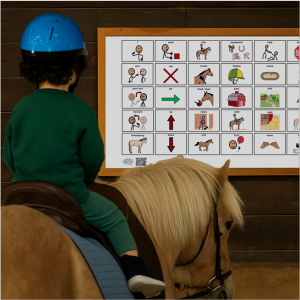
Therapeutic riding Boards

Empowering Every Athlete: The Definitive Guide to Using a Communication Board in Therapeutic Sports and Recreation

At Resources at Lakeshore Speech, we believe that every individual deserves a voice, regardless of their physical or cognitive setting. The right tools can bridge the gap between “participating” and “thriving.” In the world of adaptive athletics—from therapeutic riding arenas to soccer fields—the most vital piece of equipment isn’t always a specialized saddle or a modified ball. Often, it is a communication board.

“The Why” behind our mission is simple: communication is a human right. In therapeutic sports and recreation, the stakes are high. When an athlete cannot express pain, joy, or a need for a break, their safety and autonomy are compromised. By implementing Augmentative and Alternative Communication (AAC) tools, we move away from guessing and toward true inclusivity.

What is a Communication Board in a Therapeutic Context?

A communication board is a form of AAC that uses symbols, pictures, or photos to help individuals express their thoughts, needs, and feelings. In the context of therapeutic sports and recreation, these boards are often large-format, weather-resistant signs placed strategically where the action happens.

Whether a participant uses a high-tech speech-generating device at home or relies on gestures and facial expressions, a permanent AAC board on-site ensures that communication is always “available” and “normalized.” It removes the burden of carrying expensive electronics into dusty arenas or splash zones, providing a reliable, “low-tech” backup that everyone—coaches, volunteers, and peers—can understand.

The Activity Communication Gap: Moving Beyond Interpretation

A recurring challenge observed during therapeutic sports practices and events: The Activity Communication Gap. You have likely seen it yourself:

  • A rider at a therapeutic center who begins to melt down because they cannot say “stop” when sensory input becomes overwhelming.
  • A soccer player who stands frozen because they can’t signal “ready” or “wait.”
  • A camper who passively follows instructions but lacks the means to say “different” when they want to try a new craft.

When a participant lacks a functional way to speak, instructors often resort to interpreting behavior. While well-intentioned, interpretation is not communication. Interpretation is a guess; communication is agency. By installing a communication board, we provide the participant with the power of self-advocacy.

Where to Implement an AAC Board for Maximum Impact

To foster true inclusivity, a communication board should not be tucked away in a therapist’s office. It needs to be where the life of the program happens. Leading programs are implementing these tools in five key zones:

1. Arena and Field Entry

This serves as a pre-activity check-in. Participants can point to symbols to indicate their mood, their readiness to start, or even which piece of equipment they feel like using that day.

2. Activity Zones

During the heat of the game or the height of a lesson, communication needs to be instantaneous. Boards placed on the sidelines of a court or the fence of an arena allow for mid-activity choices, such as “faster,” “slower,” or “my turn.”

3. Rest Areas and Regulation Stations

Therapeutic recreation can be taxing. Having a communication board in a “cool-down” zone allows a participant to ask for “water,” “break,” or “quiet time,” helping them regulate their nervous system before a breakdown occurs.

4. Equipment and Tack Rooms

Involvement in the “prep” phase of sports builds vocational and life skills. Using a board to identify a “helmet,” “vest,” “saddle,” or “ball” encourages vocabulary growth and independence.

5. Transition and Reflection Zones

Post-activity reflection is crucial for cognitive processing. A board at the exit allows a participant to tell their parents or caregivers, “I liked it,” “It was hard,” or “I want to do it again.”
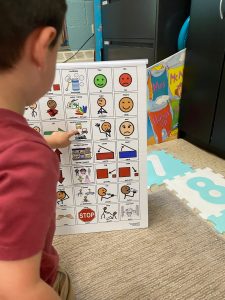
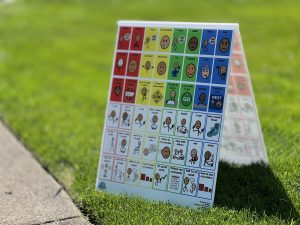
Clinic communication board in use at a private speech therapy clinic in Ohio.
emotional regulation / /balance communication board

People Also Ask: Common Questions About Communication Boards

How do I know which symbols to include on an AAC board?

The selection of symbols should never be random. In the field of Speech-Language Pathology, we follow Evidence-Based Practice (EBP). According to the American Speech-Language-Hearing Association (ASHA), effective AAC should include a mix of “core vocabulary” (high-frequency words like go, stop, want, help) and “fringe vocabulary” (activity-specific words like horse, ball, kick).

Can adults use these boards, or are they just for children?

Inclusivity means everyone. These boards are designed for individuals with autism, Down syndrome, cerebral palsy, aphasia from a stroke, or even temporary injuries. The use of universal symbols (like Boardmaker/PCS or SymbolStix) ensures that the message is clear regardless of the user’s age or literacy level.

Will using a communication board stop my child from talking?

This is a common myth. Decades of SLP research show that AAC actually supports and encourages natural speech development. It reduces the frustration of being misunderstood, which often opens the door to more vocal attempts.

Material Considerations for Activity Environments

When choosing a communication board, the environment dictates the material. You wouldn’t use a cardboard box as a hurdle, and you shouldn’t use paper for an outdoor arena.

Outdoor Fields and Arenas

For environments exposed to the elements, Aluminum Composite is the industry standard.

  • Durability: 15+ year lifespan.
  • Resilience: Temperature stable from -20°F to 120°F.
  • Quality: UV-cured printing ensures the symbols don’t fade under the sun.
  • Cost: Typically ranges from $550-$675.

Indoor Gyms and Protected Areas

For tack rooms or indoor courts, Coroplast (corrugated plastic) is a budget-friendly alternative.

  • Lifespan: 5-7 years.
  • Cost: Typically ranges from $200-$400.
  • Utility: Lightweight and easy to mount on walls or portable easels.

Evidence-Based Practice: Why It Matters

As SLPs, our practice is grounded in the “Participation Model.” This framework suggests that we must identify barriers to communication and then provide the necessary supports to overcome them. A communication board is a direct intervention that addresses the “opportunity barrier.”

When we provide an AAC board in a public or recreational space, we are practicing Universal Design for Learning (UDL). This means we are creating an environment that is accessible to the greatest number of people without the need for adaptation or specialized design. It benefits the non-speaking child, the senior with hearing loss and even the volunteer who might be a non-native English speaker.

Symbol Selection: The Vocabulary of Play

A successful communication board for therapeutic sports and recreation focuses on functional communication. Here are the categories of words we prioritize at Resources at Lakeshore Speech:

Category

Key Vocabulary Examples

Safety

STOP, WAIT, HELP, SLOW, HURT

Readiness

READY, NOT READY, MORE, DONE

Activity-Specific

WALK, TROT, THROW, KICK, CATCH

Feelings/Comfort

GOOD, DIFFERENT, AGAIN, HARD, EASY

Equipment

HELMET, BALL, BAT, VEST, GLOVE

By providing these specific words, we allow the athlete to be a partner in the process, not just a recipient of a service.

Funding Pathways: How to Pay for Your Communication Board

One of the most frequent hurdles programs face is the budget. However, we have seen that therapeutic sports and recreation programs rarely have to pay for these boards out of pocket. Many “stack” their funding through these common pathways:

  1. Adaptive Sports Grants: Many state and federal agencies offer funding specifically for “accessible equipment.”
  2. Therapeutic Riding Associations: Organizations like PATH Intl. often have small grants for facility improvements.
  3. Community Foundations: Local Rotary Clubs or disability advocacy groups love funding tangible projects like a permanent AAC board.
  4. Donor Campaigns: “Give a Participant a Voice” is a powerful message for a capital campaign. A single donor can often sponsor one board for the cost of a few hundred dollars.

The Human Cost: Why Waiting Isn’t an Option

When program directors ask about the return on investment for a communication board, the most valuable question isn’t about the $600 for the aluminum or the $300 for the Coroplast.

The real question is: What is the cost of not doing this?

It is the cost of the participant who spends an entire hour in a riding lesson unable to say “I’m scared.” It is the cost of the athlete who never learns that their opinion matters. It is the cost of the student who goes through your program without ever experiencing the thrill of self-advocacy.

When we fail to provide a communication board, we are inadvertently telling the participant that their voice is only welcome if it sounds like ours. Inclusivity demands better.

Conclusion: Empowering Your Community

Implementing a communication board is a transformative step toward a truly inclusive therapeutic environment. It shifts the power dynamic, giving the athlete the tools to lead their own journey. It provides volunteers with the confidence to assist and parents with the relief of knowing their child is understood.

At Resources at Lakeshore Speech, we are dedicated to helping organizations navigate the complexities of AAC and therapeutic communication. Whether you are a small riding center or a large-scale adaptive sports complex, your participants deserve to be heard.

Ready to give your participants a voice? Contact Resources at Lakeshore Speech today for a professional consultation on selecting, designing, and implementing the perfect communication board for your facility. Let’s build a more inclusive world, one word at a time.

Clinic communication board in use at a private speech therapy clinic in Ohio.
communication boards starting at $550
Therapeutic riding Boards

Inspiring Connections: Communication Board Design for Fun

Teacher communicating with student using playground communication board.

Communication Board Design:
A Speech Pathologist’s Guide to Inclusive Play

At Resources at Lakeshore Speech, we’ve seen firsthand that a child’s “voice” doesn’t stop at the classroom door. As SLPs, we know that the playground is where some of the most vital social-emotional learning happens. However, for many children, these spaces can feel isolating without the right tools.

Communication board design is one of the most effective ways to bridge that gap. By bringing Augmentative and Alternative Communication (AAC) into the sunshine, we aren’t just providing a tool—we’re validating a language. This guide explores how to design these boards so they truly serve the families who need them most.

As we enter the “Spring into Action” season, many park departments and school boards are looking for ways to refresh their outdoor spaces. In our clinical experience, there is no better way to “spring into action” than by ensuring the very foundation of your community—the playground—is accessible to every single child, regardless of how they communicate. When we look at a park, we don’t just see equipment; we see opportunities for connection, and communication boards are the physical manifestation of that opportunity.

What exactly is a Communication Board?

We refer to these as a form of “Light-Tech” AAC. These boards use symbols and pictures to help children—especially those with Autism, apraxia, or Down syndrome—express their thoughts when verbal speech is difficult.

On a playground, a board acts as a “point-and-talk” station. Instead of a child feeling frustrated because they can’t ask for the “swing,” they can simply point to a symbol. This reduces the “communication breakdown” and invites neurotypical peers to interact in a way that is natural and visual.

It is important to remember that AAC is not a “replacement” for speech; rather, it is a tool that supports and enhances it. For many of our clients, having a visual representation of a word actually reduces the cognitive load required to produce speech. When a child isn’t struggling to find the motor plan for the word “slide,” they are free to focus on the joy of the activity itself. This is why communication board design must be intuitive—if a child has to hunt for a symbol for more than a few seconds, the “teachable moment” has often passed.

The Shift Toward Universal Design

Historically, we kept communication aids in small, portable folders. But as we move toward Universal Design, we are seeing these tools installed as permanent fixtures in parks. This shift tells our families: “We didn’t just build a park for some kids; we built it for yours, too.”

Universal Design is a framework that suggests environments should be usable by all people to the greatest extent possible, without the need for adaptation or specialized design. By integrating communication board design into the initial blueprint of a park, we move away from “special needs” being an afterthought and toward “human needs” being the primary focus. It turns a segregated experience into a shared one.

Why do Communication Boards Matter in Public Spaces?

As clinicians, we look at the playground as a “naturalistic environment” for language growth. Here is why inclusive playground design is so impactful:

  • Modeling in the Wild: For a child to learn AAC, they need to see others use it. When a parent points to “go” while pushing the swing, they are modeling language in real-time.
  • Reducing “Behavior” via Expression: We often say “behavior is communication.” When a child has a functional way to say “help” or “all done,” the frustration that leads to meltdowns often melts away.
  • Normalizing Neurodiversity: When every child in the neighborhood sees a communication board, AAC becomes “normal” rather than “different.” It builds a community of empathy from the ground up.

Furthermore, these boards serve as a safety net. Imagine a child who wanders or “elopes” (a common safety concern in the neurodivergent community). If that child is non-speaking and becomes separated from their caregiver, a communication board at the park entrance can be a literal lifesaver, allowing the child to point to symbols like “lost” or “mom” to communicate with a helping adult. This safety aspect is a frequently overlooked but vital component of communication board design in public infrastructure.

SLP Tips for Effective Communication Board Design

When you start planning, it’s easy to get overwhelmed by materials. Here is what we recommend focusing on to ensure the board is actually functional for the kids.

1. Durability and “Play-Proof” Materials

Since playground communication boards live outdoors, they need to be tough. We look for:

  • High-density polyethylene (HDPE) or heavy-duty aluminum.
  • UV-resistant coatings so the symbols don’t fade (if the “Stop” sign turns white, it loses its meaning!).
  • Non-glare surfaces to help children with visual processing needs see the icons clearly even in midday sun.

From an SLP perspective, the “tactile” feel of the board matters too. Children often “tap” or “slap” the icons with enthusiasm. We need materials that can take the vibration of a heavy-handed “Point” without rattling or degrading. We also have to consider the “cleaning” factor. Playgrounds are high-germ environments; effective communication board design ensures the surface can be wiped down with industrial-grade disinfectants without the ink running or the symbols peeling away.

2. The “Gold Standard” of Layout: Core Vocabulary

The most important part of communication board design is the vocabulary. We advocate for a “Core Vocabulary” approach.

  • Core Words: These are high-frequency words like want, more, stop, go, help, I, you. They should take up the bulk of the board because they can be used in almost any situation.
  • Fringe Words: These are specific nouns like slide, swing, ball, or snack.
  • Consistency: Symbols should be placed where a child can reach them—ideally with the most used icons at chest height for a child or someone in a wheelchair.

In the world of AAC, “Motor Memory” is everything. Think about how you type on a keyboard without looking—that’s motor memory. If we change the location of the “Help” button every time we design a new board, the child has to relearn the “map.” Professional communication board design respects the user by keeping core words in consistent, predictable grids. This allows a child to become a “fast” communicator, which is essential when they are trying to keep up with the fast-paced world of playground play.

Can I Customize My Board for My Community?

Yes! One size rarely fits all in speech therapy, and the same goes for playgrounds.

  • Bilingual Support: If your neighborhood has many Spanish-speaking families, your board should absolutely be bilingual.
  • Site-Specific Symbols: A board at a pool needs different “fringe” vocabulary (like splash or cold) than a board at a wooded nature trail.
  • Symbol Sets: Whether you use Boardmaker (PCS) or SymbolStix, try to match what the local school district uses so the children have a “fluent” transition from school to play.

We also suggest thinking about the “Social-Emotional” vocabulary. Inclusion isn’t just about asking for a turn on the slide; it’s about making friends. Does your communication board design include icons for “My turn,” “Your turn,” “Play with me,” or “I like that”? These are the building blocks of friendship. By including social bridge words, we give neurodivergent children the tools to initiate play, which is one of the hardest—but most rewarding—social skills to master.

Let’s Build a More Inclusive Playground Together

Transitioning from a traditional playground to an inclusive one is a big step, and it’s okay to have questions about the clinical side of the process. At Resources at Lakeshore Speech, we don’t just “sell” boards—we partner with communities to make sure the communication board design is linguistically sound and culturally relevant.

As you look to “Spring into Action” this month, think about the voices in your community that are currently unheard.

Are you curious about which symbols would work best for your specific park or how to fund an installation? We’d love to chat!

communication board design at Fairview Park Ohio
benefits of communication boards
communication boards
communication board design

5 Proven Ways Communication Boards Build Language Skills in Toddlers

communication boards for playgrounds

Discover 5 proven ways a communication board builds language in toddlers. Get expert speech therapy tips for autism, play and ending frustration.

Continue reading

How Communication Boards Boost Speech and Language: Simple Guide

Clinic communication board in use at a private speech therapy clinic in Ohio.

Learn how AAC communication boards support speech development, language learning and student independence in schools and communities.

Continue reading

How to Manage Parades, Picnics and Firewords this 4th of July

pexels photo 450301

Don’t let the ‘ring’ ruin the day!

July 4th week!  Picnics! Parades! Fireworks! Tantrums!  Wait, what? Yes, you read that correctly, tantrums! Otherwise known as ‘melt-downs’, ‘explosions’, ‘losing your marbles’, whatever the name, the result of these moments in time can create a stressful situation for everyone involved, child, parent, siblings, and casual observers. As mentioned in previous posts, one way to better manage these moments is count on them and plan for them.

Count on the fact that there will be something your child will not understand, wants but won’t be able to clearly communicate, be afraid of, not want to wait for, etc.  You probably already know what that ‘something’ is without having to even be in the situation. This year, proactively prepare your child for these situations.

Parades-

In the town I live in, the 4th of July parade is one of the premier events of the Summer – one NOT to miss! The parade route is lines with friendly faces 3 and 4 deep.  There will be at least 3 bands, firetrucks, and emergency trucks to entertain young and old. AND the best part – CANDY!!!! Every float will be tossing candy to the crowd! Fun?!??!  Not for everyone! If your community has a parade or if you will be at a parade at anytime with your child, consider a few of these tips:

  • Find a location along the route that is less populated and stake your claim.
    • Typically the start of the parade or early into the route is less crowded.  
    • Ask the homeowner if you can sit on their tree lawn (this simple question could be the start of a new friendship).
    • Ask if you can put lawn chairs or a blanket in the area that you will be sitting either the evening before or early in the AM – now you don’t have to be haired looking for a place to sit/stand during the parade.
  • Consider using some sort of music or headphones to help regulate the noise.
    • If your child will wear ear plugs or has noise canceling headphones make sure to use them before the parade starts – don’t want your child to be startled by the marching band’s drumline or the fire engine’s siren.
    • If your child will listen to music, have his/her favorite playlist on a portable device.  She/he can still enjoy the parade while listening to preferred music which will help dampen the other sounds.
  • Typically, the parade line-up is available somewhere – city website, friend of a friend is the chairperson, etc.
    • Preview the parade  – “First we will see the fire trucks, then we will see the marching band, then we will see the baseball teams, etc.”.
    • Help anticipate what is happening next – “After the clowns, we will see and hear the huge fire truck.”
    • Plan your entry and exit – “After the dance float, the parade is over and we will go home.”
  • Somehow, someway, make sure your child’s name and YOUR cell number are on your child.
    • Use a marker and write it on his/her arm.
    • Make a name tag and put it on your child’s BACK
    • If she/he will keep a necklace or bracelet on make one  – Pintrest is FULL of ideas.

Picnics –

Many choices and  many new foods can make for a frustrating mealtime for everyone.  Not only preparing the meal (or part of it) is stressful, but worrying that your child may or may not eat all day adds another layer of stress.  Do yourself a favor and try one or all of these tips.

  • Offer to bring something that requires little to no preparation – you’ll have your hands full – paper products, beverages, chips are all great options without the fuss.
  • Bring food you know your child will eat – it’s OK if she/he is not eating what everyone else it eating – it’s a picnic.  What’s on the plate is not what’s important; those sitting around the table are!
  • Make your child’s favorite breakfast – and plenty of it – so you know he/she has eaten a complete meal, even if the rest of the day is a steady diet of chips and watermelon.
  • Bring a special blanket or lawn chair for specific for your child.  Maybe it has a character on it that is calming or ‘hugs’ your child when he/she sits in it. Don’t give it up to anyone else, make it a special ‘safe’ place for your child.
  • Create or bring a small tent for your child.  Give them a space (much like the chair or blanket) that is away from the bustle of others – you may want to crawl in it with them at some time :).
  • Make a quick choice board of the different foods.
    • Bring tape, scissors and a piece of paper to the picnic.
      • Cut labels off of foods and tape them on the paper
    • Use your cell phone
      • Take pictures of the different food items
      • Put them in a collage – instant communication board

Fireworks –

Amazing and scary all in one! Hopefully some of these ideas will end up in you and your family enjoying the fireworks versus fearing the fireworks.

  • Location, location, location –
    • Look for a location where you can see the fireworks but maybe not hear them
    • Find a location where you can watch them from inside (ie: upstairs bedroom window)
    • Discover a location where your child (and you) feel safe
  • Headphones/music – see above in the parade section
  • Watch them on TV

Remember, these are just moments in time, so enjoy every one!  Prior planning puts everyone in a better place! Happy Fourth of July!

Yours in Speech,

Lakeshore Speech Therapy.