



We Have the Communication Board — What Now?
You’ve finally received your communication board or AAC system—congratulations! This exciting step opens new doors for connection, but it can also raise many questions for speech therapists and families alike. Where do you begin? What words should you start with? In this post, our speech-language therapy team shares a simple, stress-free plan for introducing augmentative and alternative communication (AAC) at home so your child can start building confidence right away.
Speech Therapist Tips for Getting Started with AAC
Families and caregivers are amazing advocates for their children but often feel unsure about how to begin or what questions to ask their speech therapist when it comes to AAC. This guide will give you a clear game plan for introducing an AAC system at home and answer some of the most common questions speech therapists hear from families.
Who Should Use or Touch the AAC System?
Many families set a “rule” that only the child can touch the AAC system or communication board—often to protect the device. However, this can unintentionally make AAC seem off-limits or mysterious.
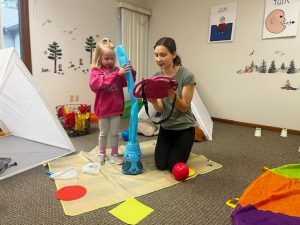
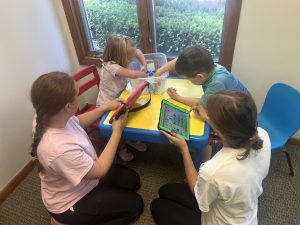
When siblings, peers, and parents model using the AAC system themselves, children see that this is simply another way to communicate. AAC works best when everyone uses it! Let your child see you using the system during meals, play, or storytime. This sends a message of inclusion and helps normalize communication in all forms.
Tip from speech therapists: Encourage everyone—siblings, parents, grandparents—to use the AAC tool or communication board during everyday routines. This builds acceptance, curiosity, and confidence.
What Words Should We Start With?
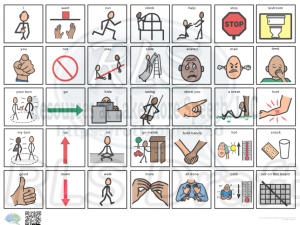
When children learn to talk, families don’t stop to think about which words to teach first—they just talk! The same is true for AAC communication boards. Don’t get stuck searching for the perfect vocabulary set. Start small with core words that can be used in many situations.
Some great starter words include go, want, more, and stop. Use them often and naturally in daily routines.
Question to ask your speech therapist:
“What core words should we begin modeling for my child’s communication board?”
A Simple 4-Week Plan for AAC Success
Learning to use AAC can feel overwhelming at first. Creating a short, structured plan can make it manageable and reduce stress. Here’s a therapist-tested plan to help your family build consistent AAC use over time.
Week 1: Start Small
- Choose 1–2 core words (e.g., want, go).
- Set aside 5 minutes twice a day for “AAC time.”
- Model both the verbal word and the AAC selection during activities like snack, reading, or outdoor play.
- Keep the system or communication board nearby throughout the day.
Week 2: Build Momentum
- Add 1–2 new core words (e.g., more, stop).
- Increase AAC time to 10 minutes, twice daily.
- Keep practicing Week 1 words.
Week 3: Expand Vocabulary
- Introduce 1–2 new core words (e.g., help, I).
- Spend 15 minutes twice a day modeling.
- Encourage siblings and peers to participate.
Week 4 and Beyond
- Continue adding words and time each week.
- Keep the AAC device or communication board accessible at all times.
- Celebrate small wins—every modeled word builds your child’s understanding!
When Will My Child Start Using Their AAC System?
Every child’s journey with AAC is unique. Some begin imitating selections right away, while others may observe for weeks before trying. Progress happens on their timeline—not ours.
Patience and persistence are key. Continue modeling without pressure. Remember: communication growth often happens quietly before it’s visible.
Speech therapist reminder: It’s okay if your child isn’t using the communication board yet. Keep modeling and trust the process.
Final Thoughts from Speech Therapists
With any AAC system or communication boards, there comes excitement, uncertainty, and maybe even frustration. Remember—communication isn’t a race; it’s a connection. Watch for every form of communication your child uses—eye contact, gestures, facial expressions, and body language—and celebrate them all.
Give your child, and yourself, the freedom to move at your own pace.
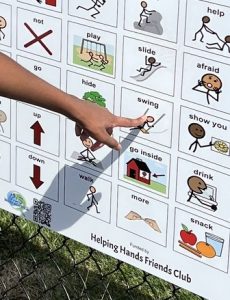
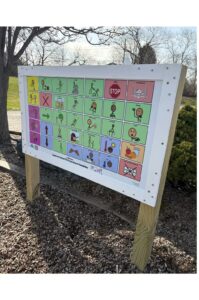
For more guidance, check out our post How to Create Sentences: A Beginner’s Guide to AAC, or explore our therapist-designed communication boards for playgrounds, pools and clinics.





1 Comment
[…] AAC is just one piece of the communication puzzle. Many AAC users also use gestures, facial expressions, vocalizations, or sign language. Validating all these methods helps to build confidence and promote more robust communication skills. […]
Comments are closed for this article!