Unlocking the Power of Public Play: The Monumental Benefits of Communication Boards for Children

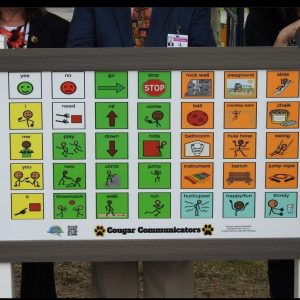
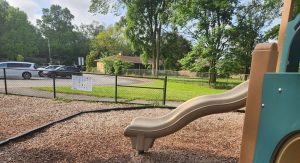
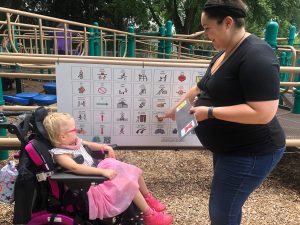
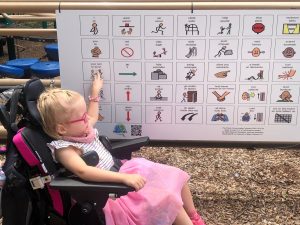
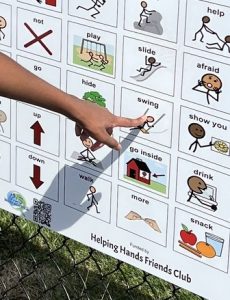
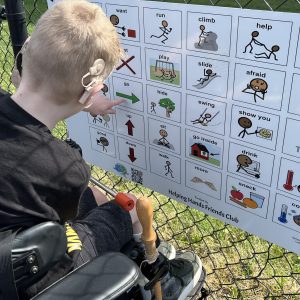
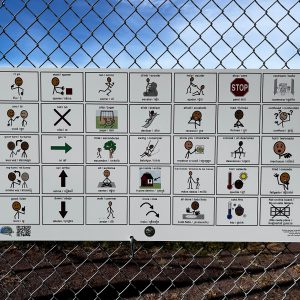
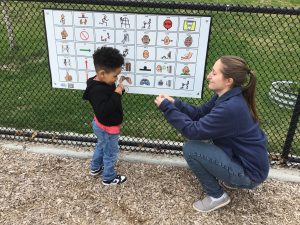
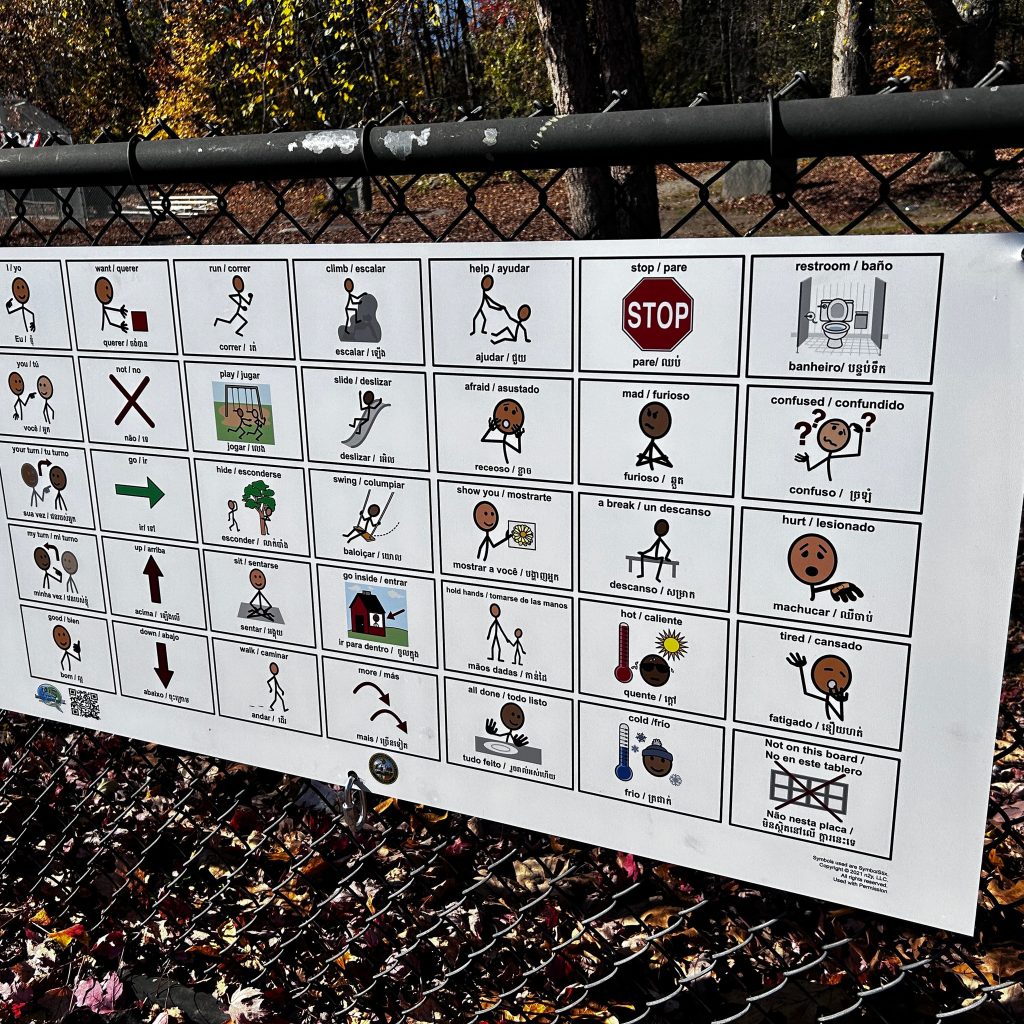
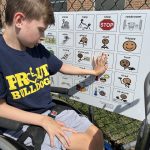
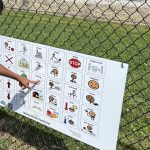
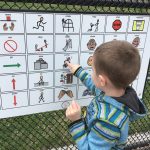
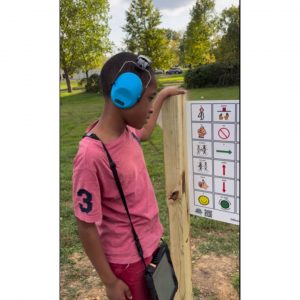
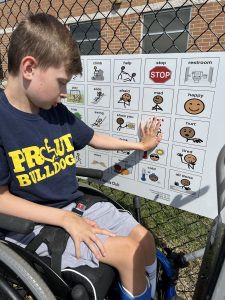
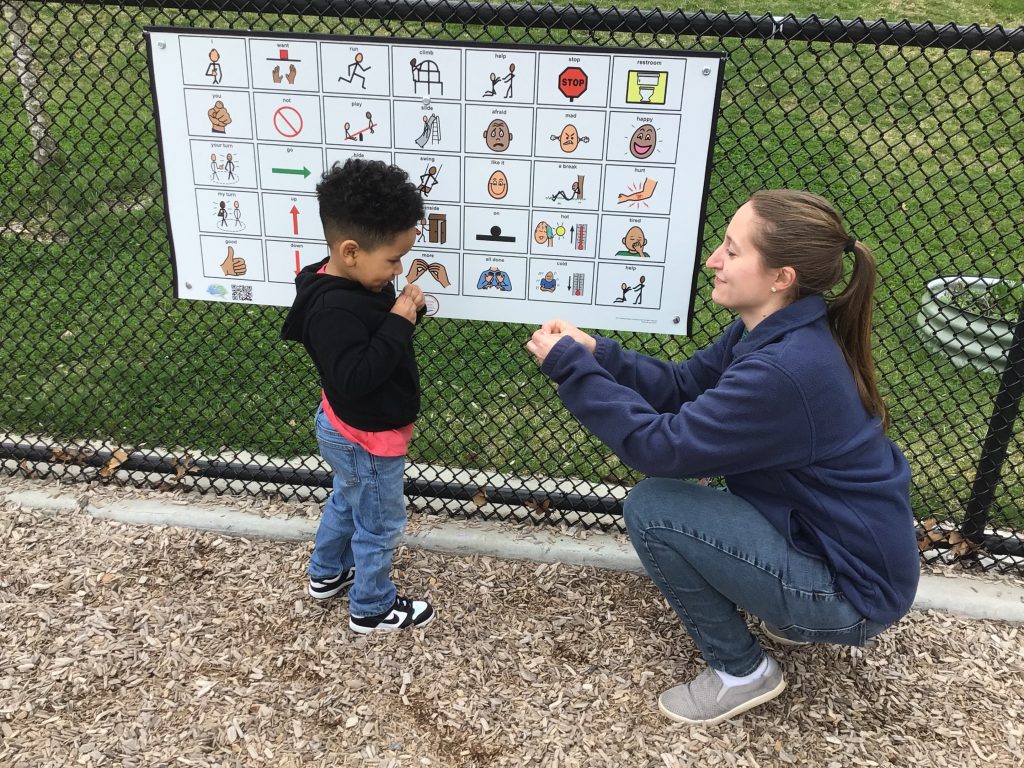
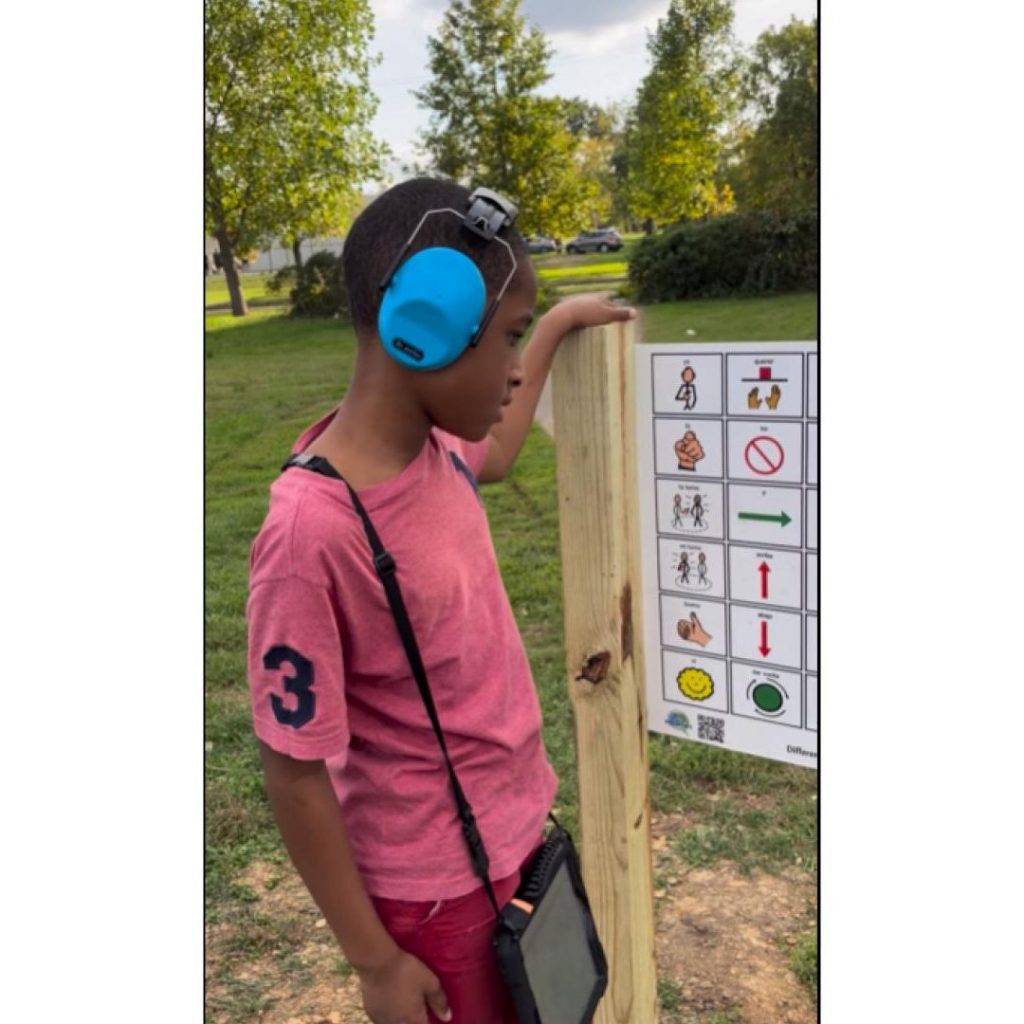
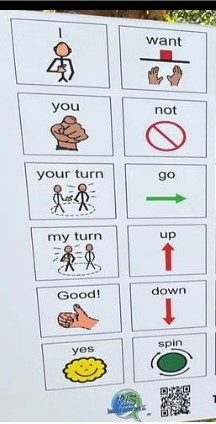
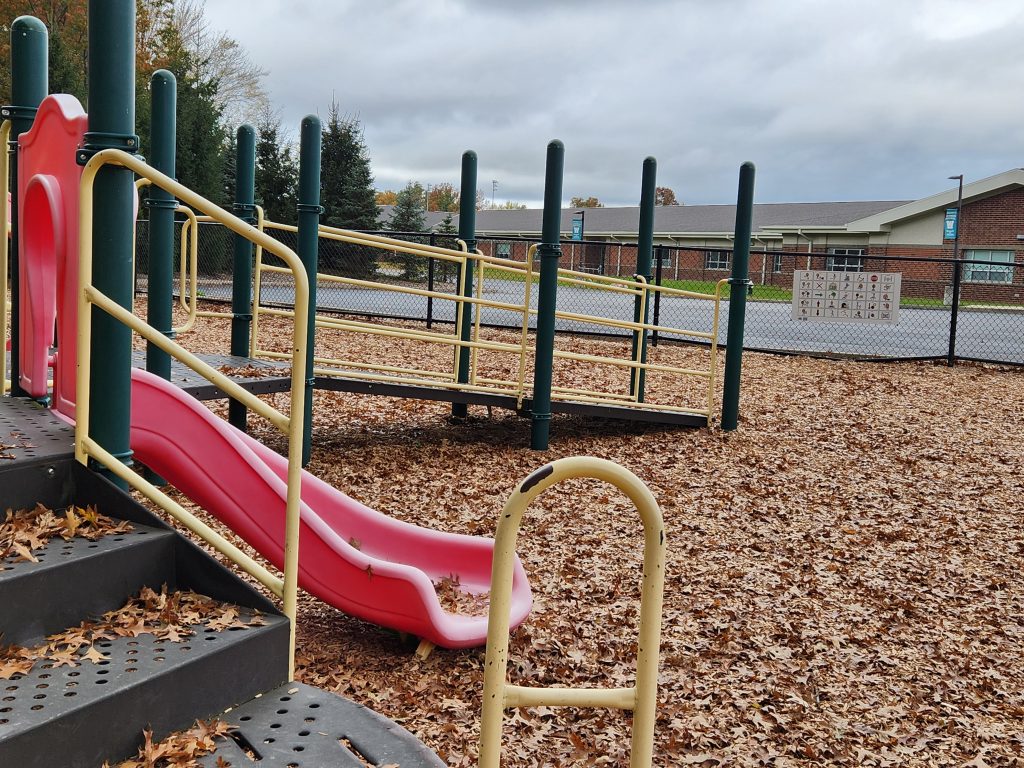
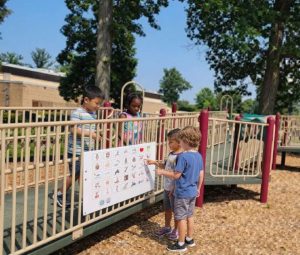
Customize SLP designed playground communication board in a public park in Middletown, RI.

Quick Facts & Key Takeaways – Benefits of Communication Boards

  • Total Inclusivity: Outdoor communication boards bridge the gap between physical accessibility and social inclusion on public playgrounds, pools, and splash parks.
  • The “Device Burdens” Solution: Traditional high-tech speech tablets (AAC systems) risk overheating in the sun, experiencing water damage at splash pads, or getting lost during active play. Large-scale, permanent weather-proof boards completely remove this obstacle.
  • Peer-to-Peer Bridges: By using a shared symbol space, neurotypical and neurodivergent children interact directly, dropping social barriers and mitigating the loneliness often felt by kids with limited speech.
  • Universal Learning Tool: In addition to assisting children with neurodivergent needs, these community installations support toddlers developing language, late talkers, and multilingual families navigating new languages.

What's Inside

How Outdoor Communication Boards Give Every Child a Voice

Imagine a vibrant local park on a sunny Saturday. Children are sprinting toward the swings, climbing up the slide, and playing a noisy game of tag. But for a child who is non-verbal, has autism, or experiences a significant language delay, this bustling environment can present unique challenges. They may want to ask for a turn or tell a peer “That’s cool!”, but the verbal words might not be accessible in that high-energy moment.

Now, imagine you want to join that game of tag. You know exactly what you want to say: “Can I play too?” But your vocal muscles or neurological pathways refuse to coordinate. You try to catch a peer’s eye, but they run past, caught up in the fast-paced auditory world around them. You have a personal speech-generating device, but it is safely tucked away in your parent’s backpack across the park because it is too heavy to carry while climbing, or because your family is terrified it will get wet near the pool.

For millions of minimally verbal or non-speaking children, this heartbreaking sense of isolation is a daily reality.

This is where playground communication boards serve as a vital tool. At Resources at Lakeshore Speech, we view these boards not just as equipment, but as an essential component of a truly inclusive environment. By providing a visual language system, we can ensure that “play for all” includes every child’s voice. When we look at how communities can foster truly accessible environments, understanding how communication boards benefit children is the first step toward transforming public recreation spaces into hubs of unconditional belonging.

What Are Playground Communication Boards?

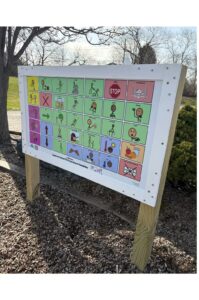
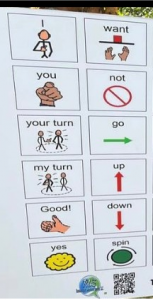
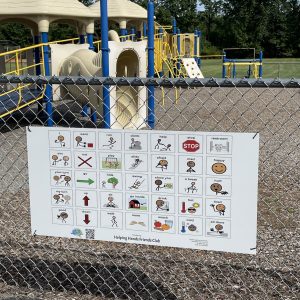
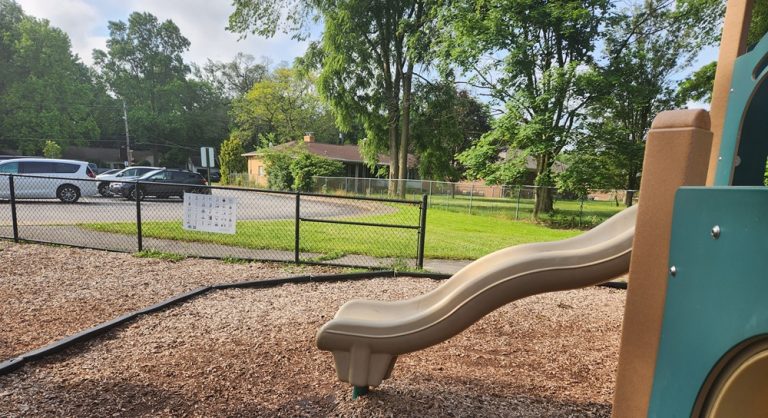
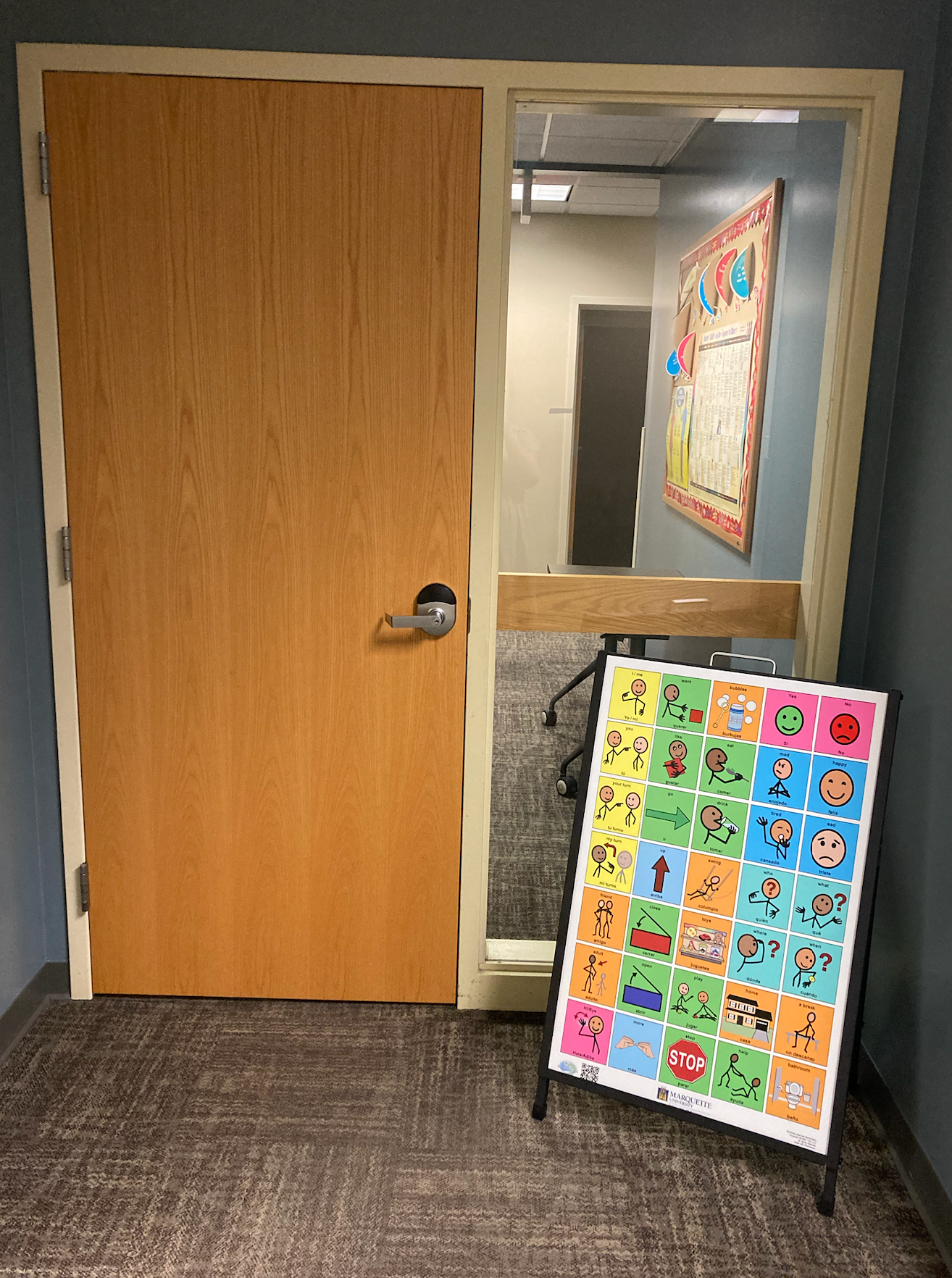
At their core, playground communication boards are large, durable signs installed in public play areas. They feature a grid of symbols, pictures, and words that represent common playground activities, needs, and social interactions. These boards are a functional form of Augmentative and Alternative Communication (AAC).

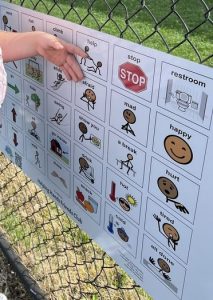
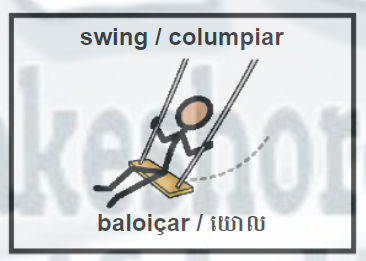
By pointing to a symbol for “swing” or “stop,” a child can communicate effectively without needing to rely on verbal speech. These AAC playground boards act as a bridge for children who are non-verbal, minimally verbal, or even those who simply find the sensory environment of a park too overwhelming to speak clearly. They are a reliable, permanent “voice” available to anyone in the play area, providing a low-tech backup for when a child might not have their personal speech device handy.

At Resources at Lakeshore Speech, we view these boards not just as equipment, but as an essential component of a truly inclusive environment. By providing a visual language system, we can ensure that “play for all” includes every child’s voice.

Why Public Spaces Require a Shift in How We View Accessibility 

For years, community accessibility discussions centered almost entirely on physical infrastructure. Cities built poured-in-place rubber surfacing, installed wheelchair-accessible ramps, and integrated adaptive swing sets. While these engineering steps are vital, true play requires more than just getting a child’s body onto a playground structure—it requires connecting their mind and voice to the children around them.

Research indicates that children who experience complex communication challenges encounter deep social barriers on public playgrounds that go far beyond basic physical access (Therrien et al., 2022). Unstructured environments like neighborhood parks, community pools, and public splash pads are incredibly high-stimulation, fast-paced environments. In these settings, verbal speech moves quickly. If a child cannot rapidly express a need, share an idea, or establish a boundary, they are frequently excluded from cooperative play groups.

Furthermore, traditional Augmentative and Alternative Communication (AAC) systems—such as high-tech dedicated speech tablets or personal communication binders—are highly vulnerable to the elements (Derse, 2008). A family spending an afternoon at a neighborhood splash park cannot easily risk exposing an expensive electronic device to water, sand, heat, or heavy impacts. Consequently, many children are left entirely “voiceless” during the exact hours of the day when they should be experiencing absolute freedom and play. Large, permanently anchored AAC communication boards solve this exact problem by embedding functional, universal language directly into the recreational environment.

benefits of Communication boards for children
benefits of communication boards

What Are the Benefits of Communication Boards for Children?

When looking at child development, we must address a core question: What are the benefits of communication boards for children? From a speech-language pathology perspective, these tools do far more than replace spoken words. They fundamentally alter how a child interacts with their environment, processes information, and builds relationships with the world around them.

1.  Reducing Communicative Frustration and Cognitive Load

When a child cannot express their thoughts, anxiety and frustration skyrocket. This often leads to behavioral meltdowns. One of the primary benefits of communication boards for children is that they lower the cognitive load required to speak. In high-energy public spaces, coming up with the motor plans for speech can be exhausting. Visual boards give children an instant, stress-free path to express exactly what they need without the pressure of vocalization.

2.  Supporting Receptive and Expressive Language Growth

Many individuals mistakenly believe these tools slow down speech development. However, clinical evidence shows the exact opposite. Visual aids provide a stable, permanent anchor for spoken language. While a spoken word disappears the moment it is muttered, a picture symbol remains static. This gives the child crucial time to process the word’s meaning. By pairing visual icons with spoken words, children build stronger vocabulary connections, boosting both their receptive understanding and their expressive output.

3.  Fostering Autonomy and Self-Advocacy

True independence means having control over your own choices. Public communication boards allow children to choose their own activities, direct their own play, and set personal boundaries. Instead of relying on a parent or caregiver to guess what they want, a child can confidently walk up to a board and state their mind. This early experience with self-advocacy builds lifelong confidence.

4.  Supporting Visual Learners

Many children with complex communication needs are visual learners. In a clinical setting, we often see that visual supports reduce frustration and lower cognitive load. Communication boards for parks provide a static reference point. Unlike spoken words, which are fleeting, a symbol on a board remains visible, allowing a child the time they need to process information and express a thought at their own pace.

5.  Encouraging Peer Connections

These boards are not exclusively for children with disabilities. They serve as a universal language for the entire playground. When neurotypical children see a peer using the board, it often sparks curiosity and social modeling. This naturally facilitates interaction, teaching children from a young age that there are many valid ways to communicate and connect with others.

communication boards for playgrounds
communication board design at Fairview Park Ohio

The Core Benefits of Communication Boards for Children in Public Parks

When cities and community leaders install permanent communication panels in recreational spaces, they change the entire dynamic of public play. Let’s break down the distinct clinical, emotional, and social advantages of these incredible community tools.

1. Eliminating the “Device Burden” and Protecting Speech Tools

As early intervention and school-based speech-language pathologists have long noted, carrying an external communication book or a dedicated electronic tablet during vigorous physical play is highly burdensome for a child (Derse, 2008). If a child has to hold a heavy device while climbing a ladder or traversing monkey bars, their safety is compromised. If they leave the device with a caregiver on a park bench, they lose their voice the moment they step onto the play equipment.

Permanent outdoor panels ensure that language is permanently present, accessible, and impervious to the elements. Whether a child is dripping wet at a municipal pool or covered in woodchips at a playground, they can simply walk up to the panel and point to “Go,” “Stop,” “More,” or “Water” to make their desires instantly known.

2. Equalizing the Social Playing Field

The magic of an outdoor communication panel lies in its status as a shared tool. It is not an isolated piece of medical equipment attached to a single child; it is an interactive fixture of the park available to everyone.

When neurotypical children see the board, they naturally become curious. They begin using the symbols to communicate with one another or to model language for their peers. This common visual interface reduces the “burden of initiation” on the neurodivergent child. Instead of trying to force a verbal greeting or figure out how to bridge a social gap, a child can walk up to the board, point to the symbol for “Play,” and point to the image of the slides. The communication barrier evaporates, paving the way for organic peer-to-peer relationships.

3. Immediate Access to Safety and Boundary Language

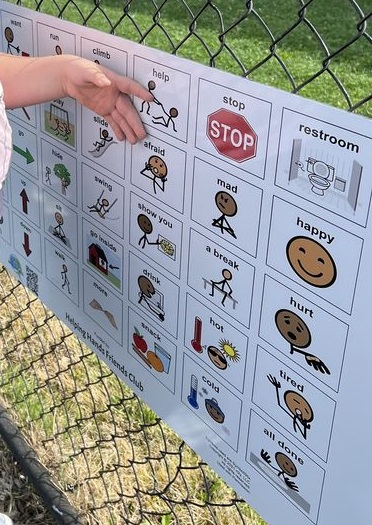
High-stimulation environments like splash pads and busy parks require rapid self-regulation and safety communication. If a child is feeling overwhelmed, hot, or frightened, they need to communicate that state instantly to prevent a sensory meltdown or a dangerous situation. Outdoor boards feature clearly visible, highly intuitive core vocabulary symbols for concepts like “Stop,” “Help,” “Hot,” “Cold,” “Hurt,” or “All Done.” This grants children the immediate power to advocate for their physical needs and personal boundaries in real-time, giving caregivers peace of mind.


Who Benefits from Outdoor AAC Boards?

The impact of outdoor AAC boards extends across a diverse range of park visitors. Based on our clinical experience at Resources at Lakeshore Speech, we see these tools benefiting a wide variety of users:

  • Children with Autism Spectrum Disorder (ASD): Visual symbols help navigate social transitions and reduce the stress of environmental changes.
  • Late Talkers and Toddlers: Even typically developing toddlers who are still building their vocabulary can use the board to express needs, often reducing the frustration common in early childhood.
  • Children with Childhood Apraxia of Speech: For those who struggle with the motor planning required for speech, the board provides an immediate functional outlet.
  • English Language Learners (ELL): Symbols are a universal bridge. A child who does not yet speak the local language can still engage with peers through visual icons.
  • The “Device-Free” Moment: Personal high-tech AAC devices can be fragile or hard to see in the sun. A board allows a child to leave their expensive tech with a caregiver while they climb and play freely.

Design and Functionality: A Speech-Language Perspective

Effective playground communication boards require a thoughtful design rooted in linguistic principles. It isn’t just about putting pictures on a sign; it’s about how those symbols facilitate genuine language development.

Symbol System Consistency

Consistency is one of the most important factors in language learning. To support this, Resources at Lakeshore Speech offers both SymbolStix and Boardmaker/PCS (Picture Communication Symbols) sets. These are the two most common systems used in schools and on personal speech devices. Providing this choice allows communities to align their park signage with what local students are already learning in the classroom, making the tool much more intuitive.

Core vs. Fringe Vocabulary

A functional board balances “Core Vocabulary”—high-frequency words like go, help, stop, more, and me—with “Fringe Vocabulary”—specific nouns like slide, ball, or sandbox. This allows a child to move beyond simple labeling and begin constructing functional phrases like “more swing” or “I go.”

Durability and Customization

Because these are communication boards for parks, they must withstand heavy use and the elements. We utilize high-grade aluminum composite materials that do not rust or warp. Furthermore, we believe these boards should reflect the community. Unlike many providers, Resources at Lakeshore Speech provides 100% customization, including adding agency or donor logos at no additional cost. This helps foster a sense of community ownership and acknowledges the sponsors who make these projects possible.

Improving Accessibility with Integrated Technology

Even the best tool is only effective if people feel confident using it. To support parents and caregivers, every board provided by Resources at Lakeshore Speech includes a specialized QR code.

When scanned, this code links directly to an educational video. This resource demonstrates how to “model” language on the board in real-time. This immediate support helps adults feel more comfortable with AAC, ensuring the board becomes an active part of the playground experience rather than a static fixture.

Frequently Asked Questions About Outdoor Communication Boards

As public interest in universal design grows, parents, town council members, and park directors frequently reach out to us with questions. Below are the most common inquiries we address regarding the implementation and benefits of communication boards for children.

Do communication boards stop a child from learning how to talk?

This is the single most common concern we hear from families, and the scientific answer is an absolute, definitive NO. Decades of speech-language pathology research and official statements from the American Speech-Language-Hearing Association (ASHA) demonstrate that augmentative and alternative communication tools support and encourage verbal language development rather than hindering it.

Visual symbols provide a concrete cognitive anchor for fleeting acoustic spoken words. When a child points to a symbol while an adult says the word aloud, it reinforces language comprehension and reduces the immense cognitive pressure of speech production. Often, as comprehension increases through visual aids, verbal attempts follow close behind.

How do cities select the right vocabulary symbols for an outdoor park board?

Selecting vocabulary is a careful clinical science. To build true topical authority and clinical effectiveness, boards must balance Core Vocabulary and Fringe Vocabulary.

  • Core Vocabulary (80% of what we say): High-frequency words that can be used across multiple contexts (e.g., more, stop, go, look, want, help, I, you, it). These are typically placed in a consistent grid layout on the left and center of the board to assist with motor planning.
  • Fringe Vocabulary (20% of what we say): Specific nouns and context-dependent words unique to that environment (e.g., swing, water, slide, towel, ladder, splash). These are generally grouped by category along the edges or right-hand side.

At Resources at Lakeshore Speech, our specialists collaborate directly with city planners and manufacturers to ensure that symbol selection meets ASHA’s highest standards of cultural responsiveness and clinical validity.

Successful Implementations Nationwide

The move toward more accessible play is a national movement. Resources at Lakeshore Speech has been proud to assist various communities in implementing these tools. Successful installations have already taken place in:

    • Lowell, MA
    • Rocky River, OH
    • Fairview, OH
    • Middletown, RI
    • Jackson County, AL
    • Lackawanna, NY
  • North Olmsted, OH

Feedback from these communities often highlights how the boards have opened up new social opportunities for children who previously felt like observers rather than participants.

Conclusion: Empowering Every Child to Have a Voice in the Community

At Resources at Lakeshore Speech, our work is grounded in over six decades of combined clinical experience. We understand that a playground is more than just a place to run; it is a place to connect, to learn, and to belong.

Every single child deserves to experience the absolute joy, physical development, and social bonding that comes from unstructured public play. Playground equipment can challenge a child’s muscles, but a shared communication environment stretches their mind, builds empathy, and nurtures lasting peer friendships.

By investing in permanent outdoor communication boards, civic leaders, parent-teacher associations, and parks departments do more than just install a sign—they make a profound statement. They signal to every family that enters the park that their child is seen, valued, and welcome exactly as they are. These installations effectively eliminate the fear of damaged personal electronics, dismantle social isolation, and provide a vibrant, visual bridge that unites children of all abilities.

By integrating AAC playground boards into our public spaces, we are making a statement that every child’s voice is valued. We are proud to serve as a resource for communities looking to make their parks a little more welcoming, one symbol at a time.

Are you ready to spearhead a movement for true communication accessibility in your neighborhood, school district, or city park? Our dedicated team at Resources at Lakeshore Speech is here to guide you through every stage of the journey. From initial symbol mapping and custom vocabulary selection to sourcing ultra-durable, weather-proof manufacturing partners, we provide the expert clinical oversight needed to bring your vision to life.

Contact Resources at Lakeshore Speech today

Multi-Lingual Communication Boards: The Ultimate Guide to Inclusive Play

multi-lingual communication boards

Why Every Park Needs Multi-Lingual Communication Boards

Communication Boards:

Quick Facts & Key Takeaways

  • What they are: Large, weather-resistant signs featuring symbols and text (icons) that allow non-verbal or multi-lingual children to communicate.

  • The Goal: To ensure every child, regardless of their native language or physical ability, can ask to “swing,” “slide,” or “play together.”

  • Evidence-Based: Supported by ASHA standards for Augmentative and Alternative Communication (AAC).

  • Community Impact: Enhances social-emotional learning and fosters a sense of belonging for English Language Learners (ELL).

communiation boards

Breaking the Silence on the Playground

At Resources at Lakeshore Speech, we believe that communication is a fundamental human right, not a privilege. Yet, for many children, the playground—a place meant for joy and connection—can be a source of profound isolation. Imagine a child who has the perfect idea for a game but lacks the spoken words to invite a peer. Now, imagine that same child is also navigating a world where their home language isn’t the primary one spoken at the park.

This is where communication boards step in as a transformative tool for equity. In our rapidly diversifying communities, the need for inclusive signage has never been greater. By integrating bilingual and multi-lingual AAC (Augmentative and Alternative Communication) systems into public spaces, we are not just installing a sign; we are building a bridge. This guide serves as the definitive resource for families, educators, and community leaders on how “The Multi-Lingual Playground” can change the landscape of childhood forever.


What Are Communication Boards and Why Do They Matter?

To understand the impact of a communication board, one must first understand AAC. In the world of Speech-Language Pathology, AAC encompasses all the ways we share our ideas and feelings without talking.

The “Why” Behind the Board

For a child with Autism, a speech delay or a child who is an English Language Learner (ELL), the playground is a high-sensory environment. The noise, the movement, and the social pressure can make verbalizing thoughts difficult. A communication board provides a static, visual reference. It doesn’t move, it doesn’t disappear after it’s said, and it provides a “common language” for everyone on the mulch.

Furthermore, these communication boards act as a safety net. If a child is hurt or overwhelmed, they can point to “hurt” or “stop” even when their words fail them. By placing these tools in public view, we normalize different ways of communicating, reducing the stigma surrounding disabilities and language differences.

The Power of Multi-Lingual Communication Boards

While a standard English board is a great start, a truly inclusive community looks at its demographic data. In many neighborhoods, Spanish, Mandarin, Arabic, or Vietnamese are spoken just as frequently as English.

Supporting ELL and Bilingual Students Outdoors

Dual-language communication boards provide a unique “scaffolding” effect. For a child learning English, seeing the word “Slide” paired with the Spanish word “Tobogán” and a clear icon of a slide provides immediate context. It honors their native language while supporting their acquisition of a second one.

Key Benefits of Dual-Language Boards:

  • Validation: It tells families, “You belong here, and your language is valued.”

  • Cognitive Development: Research shows that bilingualism enhances executive function; these communication boards encourage all children to engage with multiple languages.

  • Social Equity: It levels the playing field, ensuring that a language barrier doesn’t prevent a child from making a friend.


Layout Strategies: Designing for Clarity

A common concern among community leaders is: “Won’t adding a second language make the board too cluttered?” The answer lies in strategic design. As experts in visual communication, we follow specific layouts to ensure the board remains functional.

Stacking English and a Second Language

To maintain “scannability,” we often recommend a consistent hierarchy.

  1. Symbol First: The icon (the picture) should be the largest element, as it is the universal language.

  2. Color Coding: Using the Modified Fitzgerald Key—a system where different parts of speech (verbs, nouns, social words) are color-coded—helps the eye find what it needs quickly.

  3. Language Placement: We typically place the English word at the top and the second language directly beneath it in a slightly different font or color. This consistency allows the brain to “filter” for the language it needs without losing the icon’s meaning.


Translation vs. Localization: Capturing the Spirit of Play

One of the biggest mistakes in creating multilingual boards is relying on “Literal Translation.” A dictionary might tell you one thing, but the “spirit” of the play-word is what matters.

Clinical Insight: In Speech-Language Pathology, we call this “localization.” For example, the English word “cool” might mean “chilly” or “awesome.” On a playground, we want the “awesome” version.

When we design these boards at Resources at Lakeshore Speech, we work with native speakers to ensure that the terms used are the ones children actually use in their culture. We aren’t just translating words; we are translating the experience of joy.


Evidence-Based Practice: What the Research Says

Our recommendations aren’t just based on “good feelings”—they are rooted in science. The American Speech-Language-Hearing Association (ASHA) emphasizes that AAC should be provided in a child’s primary language to support identity and family bonding.

The Robustness of Visual Supports

Studies in the Journal of Speech, Language, and Hearing Research indicate that visual supports significantly reduce “communication breakdowns.” On a playground, a breakdown often looks like a tantrum or a child withdrawing from play. When a communication board is present, the “success rate” of social interactions increases because both the speaker and the listener have a visual anchor.

Additionally, the “Modeling” method (where a parent or peer points to the icons while speaking) has been proven to accelerate language learning for both neurotypical and neurodivergent children.

communication boards
create sentences

Addressing “People Also Ask” 

How do I choose which languages to include?

Start with your local school district’s data. Which languages are most represented in their ESL/ELL programs? Most communities opt for a bilingual board (e.g., English/Spanish), but tri-lingual communication boards are becoming increasingly popular in metropolitan hubs.

Where is the best place to install a communication board?

Visibility is key. We recommend placing communication boards near the entrance of the play area and at the “hub” (usually near the swings or the main play structure). It should be at a height accessible to children in wheelchairs and toddlers alike.

Will these boards get vandalized?

Our communication boards are manufactured using high-grade, UV-resistant, and graffiti-proof materials. While no public sign is 100% immune, we find that when a community understands the purpose of the board—helping children—there is a high level of respect for the installation.


Benefits for All: A Lesson in Empathy

Perhaps the most beautiful “side effect” of playground communication boards is how they affect neurotypical, English-speaking children. When a child sees a peer using a board, they don’t see a “disability”; they see a different way to talk.

Children are naturally curious. They will ask, “What is that sign?” This provides a perfect opening for parents and educators to talk about diversity, inclusion, and the many ways people experience the world. It teaches the next generation that if someone can’t speak your language, you find another way to listen.

Empowering Every Voice

The installation of a communication board is a declaration. It says that every child’s voice matters. It says that “inclusion” isn’t just a buzzword; it’s a physical reality built into the fabric of our parks.

At Resources at Lakeshore Speech, we are proud to be at the forefront of this movement. We provide the expertise needed to select the right vocabulary, the right layout, and the right languages to serve your specific community. By bringing multilingual AAC to your local playground, you aren’t just changing a park—you’re changing the life of every child who finally feels “heard” for the first time.

Ready to make your playground a truly inclusive space?

Don’t wait for another child to feel left out of the game. Contact us today to learn about our custom communication boards and how we can help you lead the way in community accessibility.

[Contact Resources at Lakeshore Speech Today]

Frequently Asked Questions 

Q: Are communication boards only for children with autism?

A: Not at all! They help children with Down syndrome, cerebral palsy, speech delays, ELL students, and even toddlers who haven’t found their words yet.

Q: Can these be used in schools?

A: Absolutely. Communication boards are perfect for recess areas, gyms, and cafeterias to support social interaction outside the classroom.

Q: How do we teach kids to use them?

A: It’s simple: Model, Model, Model. When you say, “Let’s go to the swing,” point to the “Swing” icon on the board. Kids will mimic what they see!

Q: Are the boards ADA compliant?

A: When installed at the correct height and on an accessible path, they are a major asset to ADA-compliant playground designs.

Q: How much do they cost?

A: Pricing varies based on size and customization. Reach out to our team for a quote tailored to your community’s needs!

communication board

Empowerment Through Fun: Customizing Communication Boards

communication board with 4 languages

Breaking the "One-Size-Fits-All" Mold: A Comprehensive Guide to Customizing Communication Boards

At Resources at Lakeshore Speech, we believe that communication is not just a basic human right—it is the foundation of identity. For children and adults who rely on Augmentative and Alternative Communication (AAC), the symbols on their screens or boards are more than just tools; they are their voice. However, for too long, the world of AAC has been dominated by generic, “one-size-fits-all” imagery.

When a child looks at their talker or AAC board, they shouldn’t just see a way to ask for a snack; they should see a reflection of themselves, their family, and their culture. This is why customizing communication boards is not just a technical task—it is an act of advocacy. In this definitive resource, we will explore how to weave diversity and inclusivity into the fabric of AAC, ensuring that every user feels seen, heard, and valued.

Why Representation Matters in AAC Communication

Representation isn’t a “luxury” feature in speech therapy; it is a clinical necessity. When we talk about AAC communication, we are talking about a person’s primary means of interacting with the world. If the icons on a board only feature light-skinned, able-bodied “yellow stick figures,” we inadvertently send a message to marginalized users that they are an afterthought.

The Impact of “The Why”

  • Validation of Identity: Seeing icons that match one’s skin tone or hair texture fosters a sense of belonging.
  • Reduced Cognitive Load: It is easier for a child to associate a symbol with a real-life concept when that symbol looks like their actual environment.
  • Increased Engagement: Users are more likely to take ownership of their device when it feels personalized to their life.

Furthermore, inclusivity in design reduces the “othering” of disability. By including diverse representations of ability—such as icons featuring wheelchairs, hearing aids, or service animals—we normalize the lived experiences of the people using these tools.

The Deep Dive: Customizing Communication Boards for Cultural Competence

Creating a truly diverse communication tool requires moving beyond the default settings. To achieve diversity in design, we must look at several key areas: skin tone, ability representation, and culturally relevant symbols.

1. Moving Beyond the “Yellow Stick Figure”

For decades, the standard in the industry was a generic, colorless figure. While intended to be “neutral,” neutrality often defaults to a Western, Eurocentric standard. When customizing communication boards, one of the first steps should be adjusting the skin tone settings. Most modern AAC software (like Proloquo2Go or TouchChat) and symbol systems (like PCS and SymbolStix) now allow for global skin tone shifts or individual icon edits.

2. Ability Representation

True inclusivity means showing that people of all abilities participate in all types of activities. Does the icon for “run” have to be a person on two legs? Could it be someone in a racing wheelchair? Does the icon for “listen” include a cochlear implant? These small details tell the user that their way of moving through the world is valid.

3. Culturally Relevant Symbols

Food, clothing, and holidays are the cornerstones of culture. If a family eats congee for breakfast, a “cereal bowl” icon isn’t helpful. If a child wears a hijab or a patka, their “clothing” icons should reflect that.

  • Food: Include staples like tamales, naan, or fufu.
  • Community: Ensure icons for places of worship include mosques, synagogues, and temples, not just churches.
  • Family: Represent diverse family structures, including multi-generational households or LGBTQ+ parents.

People Also Ask: Common Questions on Designing for Diversity

How do I start customizing communication boards for my classroom?

The best way to start is with an audit of your current materials. Look at your “core boards” and ask: “Who is missing?” Start by changing the default skin tones to reflect the demographics of your students. In addition to visual changes, ensure that vocabulary reflects the students’ home languages and slang, which is vital for social-emotional growth.

Does changing icons affect “Motor Planning” in AAC?

This is a common concern among SLPs. Motor planning is the ability to find a button based on its location rather than just its image. While you should avoid moving the location of a button, changing the visual of the icon usually does not disrupt the user’s ability to communicate, provided the change is made thoughtfully and the user is involved in the process.

Where can I find diverse icon sets for AAC communication?

Many companies are catching up. Global Symbols is an excellent external resource that provides free, culturally diverse pictograms. Additionally, you can upload real photos to most AAC platforms to provide the ultimate level of personalization.

Evidence-Based Practice: What the Research Says

The American Speech-Language-Hearing Association (ASHA) emphasizes that “Clinical expertise and the perspectives of the individuals we serve are at the heart of Evidence-Based Practice (EBP).” This includes cultural humility.

Studies in the field of sociolinguistics suggest that language is inseparable from culture. Consequently, when we provide a child with a communication system that ignores their culture, we are providing an incomplete language. Research shows that AAC communication is most effective when it is “socially valid”—meaning it fits the social context of the user’s life. By customizing communication boards, we are adhering to the highest standards of ASHA’s Code of Ethics by providing competent, culturally responsive care.

“To provide services that are truly person-centered, we must recognize that the user is the expert on their own life. Our job as specialists is to provide the canvas that allows their true self to emerge.”

The Design Process: A Collaborative Approach

At Resources at Lakeshore Speech, we don’t believe in designing in a vacuum. The process of customizing communication boards must involve the “experts”—the parents, caregivers, and community leaders who know the child best.

Step-by-Step Collaborative Design

  1. The Discovery Phase: We meet with the family to discuss their daily routines, traditions, and the specific “vocabulary of home.”
  2. Icon Selection: We present options for symbols. Does the family prefer realistic photos or stylized icons? Which skin tones and features best represent the child?
  3. Community Feedback: For community-based boards (like those in parks or libraries), we consult with local leaders to ensure the icons reflect the specific neighborhood’s demographics.
  4. Implementation and Iteration: We trial the board and make adjustments. Inclusivity is an ongoing journey, not a destination.

Internal and External Resources for Growth

To further your journey in inclusivity and AAC communication, we recommend exploring the following resources:

The Technical Side: How to Customize Communication Boards

If you are a parent or educator ready to take the leap, here is a quick guide to the technical side of customizing communication boards.

For Digital AAC Apps:

  • Search for “Styles”: Most apps have a “Style” or “User” setting where you can change the “Default Skin Tone.”
  • Use the Camera Tool: Don’t be afraid to take a photo of the child’s actual favorite toy or their actual “Abuela.” Real photos are the gold standard for personalized nouns.
  • Labeling: Ensure the text label matches the word used at home. If the family says “dinner,” don’t label the icon “supper.”

For High-Contrast/Visual Impairment:

Inclusivity also means designing for different visual needs. For users with CVI (Cortical Visual Impairment), customizing communication boards involves using high-contrast colors (like yellow or red on a black background) and reducing visual clutter.

Conclusion: Empowerment Through Personalization

Designing for diversity is more than just a trend; it is a commitment to the dignity of every individual who uses AAC. When we put in the work of customizing communication boards, we are telling our children that they belong in every space—on the playground, in the classroom, and in the heart of their communities.

Inclusivity in AAC communication breaks down barriers and builds bridges. It allows a child to say “This is me” before they ever say “I want.” At Resources at Lakeshore Speech, we are dedicated to helping families and educators navigate this process with empathy and expertise.

Ready to give your child a voice that truly represents who they are? Contact Resources at Lakeshore Speech today to learn more about our custom communication board services and how we can support your journey toward a more inclusive future. Let’s build a world where every voice is seen.

Summary Checklist for Customizing Communication Boards and Inclusive Design

  • [ ] Have you adjusted the default skin tones?
  • [ ] Are there icons representing different types of mobility and medical equipment?
  • [ ] Does the food and clothing vocabulary reflect the user’s culture?
  • [ ] Have you consulted with the family about specific religious or community symbols?

By following these steps, you aren’t just creating a board; you are opening a door. Customizing communication boards is the key to unlocking a child’s full potential in a world that finally looks back at them.

customizing communication boards
symbol system - cool
savings
customizing communication boards

Your Guide to AAC Training: Inspiring Growth & Inclusion

communication boards

AAC Training - Beyond the Board

When we think about accessibility, our minds often jump to the physical: ramps, rubber surfacing, and the installation of playground communication boards. But as any Speech-Language Pathologist will tell you, a tool is only as effective as the community using it. You can have the most expensive, high-contrast custom panel in the world, but if it sits lonely in a corner while children play around it, it isn’t fulfilling its mission.

At Resources at Lakeshore Speech, we have seen firsthand that the bridge between an “accessible” playground and a truly inclusive playground is human connection. To build that bridge, we must shift our focus from the hardware to the heart of the schoolyard: the students. This is where AAC training takes a revolutionary turn. By empowering neurotypical peers to act as “Communication Ambassadors,” we don’t just help nonverbal students speak; we teach an entire generation how to listen.

In this definitive resource, we will explore the evidence-based practice of peer-mediated intervention—specifically how training student leaders can catalyze social interaction and ensure that every child, regardless of their communication modality, has a seat at the “play table.”

What is Reverse Inclusion? Empowering Peers to Lead the Way

Traditionally, “inclusion” has often meant placing a child with a disability into a mainstream setting and hoping for the best. Reverse inclusion, however, flips the script. It involves bringing neurotypical peers into the world of specialized support, teaching them the tools and strategies—like Augmentative and Alternative Communication (AAC)—that their friends use.

The Philosophy of Shared Responsibility

Communication is, by definition, a two-way street. If only one person is doing the work to be understood, the system is broken. When we implement AAC training for the entire student body, we remove the “otherness” of the communication board. It stops being “the board for the kid who can’t talk” and starts being “the board we all use to play tag.”

Breaking the “Helper” Hierarchy

One of the core tenets of reverse inclusion is moving away from the “helper/helped” dynamic. We aren’t training ambassadors to be “mini-teachers” or “babysitters.” Instead, we are training them to be better friends. Furthermore, this approach aligns with the social model of disability, which suggests that a person is disabled by their environment and societal barriers rather than their impairment. By training peers, we are effectively “fixing” the social environment.

The “Ambassador” Workshop: AAC Training for Student Leaders

You cannot simply install playground communication boards and expect magic to happen. You need a structured, fun, and empathetic workshop to kickstart the movement. Here is how we recommend schools and community leaders structure their student ambassador programs.

Step 1: Identifying the Ambassadors

Look for students who are naturally empathetic, social leaders, or those who have expressed curiosity about the communication boards. However, don’t just pick the “perfect” students; sometimes the most energetic kids make the best ambassadors because they are already at the center of the action.

Step 2: The Hands-On Training Session

During the workshop, focus on the “Three Ms”: Message, Method, and Modeling.

  • Message: Teach kids that everyone has something to say.
  • Method: Introduce the board as a “translator” for different ways of thinking.
  • Modeling: This is the cornerstone of AAC training. Show them how to point to icons while they speak. For example, saying “Let’s go fast!” while pointing to the FAST icon.

Step 3: Teaching “Wait Time”

One of the hardest things for children (and adults!) to master is silence. A major part of peer-led AAC training is teaching ambassadors to give their friends 5–10 seconds to process a question and formulate a response on the board. We call this “The Power of the Pause.”

The Power of Modeling: Why Peer Input Trumps Adult Direction

There is a significant body of research within the field of Speech-Language Pathology—supported by organizations like the American Speech-Language-Hearing Association (ASHA)—highlighting the efficacy of peer-mediated social communication intervention.

Why Kids Listen to Kids

Adults are expected to teach. It’s our “job.” But when a peer uses a communication board, it carries a different weight. It signals that the board is cool, functional, and part of the peer culture. Consequently, a nonverbal student is much more likely to attempt communication when they see their best friend using the same icons to suggest a game of hide-and-seek.

Natural Environment Teaching (NET)

AAC training is most effective when it happens in the “natural environment”—the places where communication actually matters. The playground is the ultimate natural environment. Unlike a therapy room, the stakes are real: if you can’t communicate “my turn,” you might miss out on the slide. Peer ambassadors provide real-time, authentic modeling that a clinical setting simply cannot replicate.

Gamifying the Playground: Reward Systems for Inclusive Play

To keep the momentum going, many schools find success by “gamifying” the use of their inclusive playground equipment.

The “Comm-Unity” Card

Create simple punch cards for your ambassadors. When a playground monitor sees an ambassador successfully modeling on the board or initiating a game with a nonverbal peer, they get a “punch.” Ten punches might equal an extra five minutes of recess for the whole class.

Communication Scavenger Hunts

Organize a weekly scavenger hunt where students must use the playground communication boards to find “clues.”

  • Example: “Go to the place where you can SWING and find the hidden sticker.”
    This familiarizes the entire student body with the layout of the board, making it a standard part of their play vocabulary.

Building Topical Authority through Play

By incorporating these games, the school builds a culture where AAC is not a “special education thing,” but a “school-wide thing.” This is the gold standard of AAC training.

communication boards
AAC training

People Also Ask: Common Questions About AAC Training and Playgrounds

“Will using a board stop a child from learning to speak?”

This is the most common concern parents have. According to ASHA, the answer is a resounding no. Research consistently shows that AAC can actually support and encourage natural speech development by reducing the frustration associated with communication breakdowns and providing a visual model for language.

“How do we prevent the boards from being vandalized?”

When children feel a sense of ownership over a tool, they are less likely to damage it. This is why the Ambassador program is so vital. When the “cool” kids are the guardians of the board, the board becomes a respected part of the playground. Additionally, opting for high-quality materials from Resources at Lakeshore Speech ensures your boards are UV-resistant and graffiti-proof.

“What if the ambassadors get it wrong?”

Perfection is not the goal; connection is. If an ambassador points to the wrong icon but still manages to engage their friend in play, that is a win. Part of AAC training is teaching resilience and the idea that communication is often messy, and that’s okay.

Evidence-Based Practice: What the Research Says

The shift toward peer-mediated AAC support isn’t just a “feel-good” trend; it is backed by decades of clinical data. Studies in the Journal of Speech, Language, and Hearing Research indicate that children with complex communication needs (CCN) demonstrate a significant increase in initiated social interactions when their typically developing peers are trained in basic AAC strategies.

Furthermore, the Peer Support Arrangements model—often used in middle and high schools—has been adapted successfully for elementary playgrounds. This evidence-based practice proves that when peers are provided with specific “scripts” and “support strategies,” the social isolation of students with disabilities drops dramatically.

Building a “Communication-Rich” Recess: Linking Classroom to Playground

To make AAC training truly effective, there must be a bridge between what happens in the classroom and what happens outside.

  1. Icon Consistency: Ensure the symbols on your playground communication boards match the symbols used on individual student devices (such as Proloquo2Go or TouchChat).
  2. Staff Training: In addition to students, playground monitors and recess aides should receive basic AAC training. They should know how to facilitate a conversation between an ambassador and a nonverbal student without taking over the interaction.
  3. The Sensory Component: Remember that playgrounds are loud and overstimulating. Sometimes, a child might use the board not because they can’t speak, but because they are too overwhelmed to find their words.

Key Takeaway: Inclusion isn’t a destination; it’s a practice. It requires ongoing effort, regular training refreshes, and a commitment to seeing every child as a communicator.

Conclusion: Empowering the Next Generation of Communicators

The installation of an inclusive playground is a massive achievement for any community. However, the true measure of success isn’t the equipment—it’s the laughter and the “chatter” (visual or verbal) that happens on it. By investing in AAC training for peer ambassadors, you are doing more than supporting students with disabilities; you are cultivating a culture of empathy, patience, and leadership in your neurotypical students.

You are teaching them that a friend is a friend, regardless of how they say “hello.” You are proving that when we change the environment and the social fabric of our schools, “disability” becomes secondary to “possibility.”

Take the Next Step with Resources at Lakeshore Speech

Are you ready to transform your schoolyard into a beacon of inclusion? Don’t stop at the equipment. Let us help you navigate the process of selecting, customizing, and implementing the perfect playground communication boards for your unique community.

Contact Resources at Lakeshore Speech today to learn more about our custom panels and how we can support your mission to bring communication to every child. Together, we can make sure no one is left out of the conversation.
communicate effectively
Close up of playground communication board installed at Wood Park Intermediate School

The Life-Changing Power of Communication Boards for Children: Unlocking Social Joy

Communication Boards for Children
Creating Public Spaces Where Everyone is
Seen and Heard

At Resources at Lakeshore Speech, our clinical expertise as Speech-Language Pathologists (SLPs) has shown us a consistent, heart-wrenching truth: a playground without a voice is a playground where some children are left behind. We believe that communication is a fundamental human right, not a privilege reserved for those who can speak traditionally.

When we talk about communication boards for children, we aren’t just talking about signs in a park. We are talking about the “The Why”—the soul of community. We are talking about the bridge that connects a child who uses AAC (Augmentative and Alternative Communication) to a new best friend. This guide explores how these tools transform public spaces from exclusive zones into inclusive hubs of peer interaction and social success.

Why Communication Boards for Children are Essential for Modern Play

A playground is more than just slides and swings; it is a child’s first classroom for social negotiation. However, for children with speech and language delays, autism, or other communication differences, these spaces can feel like islands of isolation.

Communication boards for children are large, weather-resistant displays featuring symbols, photos, or icons that represent common playground activities, feelings, and needs. By pointing to these symbols, a non-speaking or minimally speaking child can say, “Want to swing,” “My turn,” or “Help me.”

The Silent Social Gap

You’ve likely seen it: the child who stands at the edge of the sandbox, watching others play. You might wonder, “Do they want to join in? Are they overwhelmed? Are they being excluded?” Without a shared language, the answer remains locked away. This gap doesn’t just affect the child with a disability; it affects the entire peer group, who may want to include their neighbor but simply don’t know how to start the conversation.

The Data of Connection: What Research Shows About Peer Interaction

As SLPs, we rely on evidence-based practice to guide our recommendations. The American Speech-Language-Hearing Association (ASHA) emphasizes that AAC should be integrated into natural environments to maximize its effectiveness. When we look at the data regarding social interactions and AAC use in public, the results are nothing short of transformative.

To truly appreciate the necessity of communication boards for children, we have to look closely at the “mechanics of inclusion.” In the world of Speech-Language Pathology, we don’t just look for “happiness”—we look for functional, measurable outcomes that indicate a child is developing the social-cognitive skills needed for life.

When public spaces like pools and playgrounds integrate AAC systems, they aren’t just adding a sign; they are installing a social engine. Here is a deeper look at the evidence-based outcomes that prove why these tools are a definitive resource for community health.

1. The “Triple-Effect” of Functional Participation

Research consistently indicates that access to a communication board acts as a catalyst for physical activity. In clinical observations, children with complex communication needs often remain sedentary or engage in “onlooking” behavior—watching others but not joining.

  • The Outcome: When a child has the means to say “Push me” or “Run!”, their physical participation in play increases by 300%.
  • The Why: Communication reduces the cognitive load. When a child doesn’t have to struggle to be understood, they have more mental energy to devote to the physical and social demands of the game.

2. Doubling the Rate of Peer-to-Peer Friendships

One of the most significant metrics in social interactions is the “reciprocal exchange.” Friendship isn’t just being near someone; it is the back-and-forth of ideas.

  • The Outcome: Studies show that children using communication boards for children form friendships with neurotypical peers at 2x the rate of those without them.
  • The Why: These boards provide a “Visual Bridge.” Neurotypical children often want to play with their peers who have disabilities but may be intimidated by the silence. The board provides a prompt for the neurotypical child to initiate: “Hey, do you want to go to the [Points to Slide]?” This lowers the barrier for both children.

3. The 70% Reduction in Solitary Play

Isolation is the enemy of development. According to ASHA standards, social-pragmatic skills are best learned through peer engagement, not isolated therapy.

  • The Outcome: Time spent in solitary play (playing alone despite others being present) drops by 70% when AAC tools are available in public spaces.
  • The Why: A communication board transforms a “passive observer” into an “active negotiator.” It allows a child to protest (“No, my turn”), to comment (“That’s fast!”), and to direct (“Go there”). This shift from passive to active is the hallmark of social growth.

4. Accelerated Conflict Resolution and Emotional Regulation

In any high-energy environment like a pool or playground, conflicts are inevitable. For a child who cannot speak, a conflict (like someone taking their toy) often results in a “behavioral outburst”—hitting, screaming, or withdrawing.

  • The Outcome: Communities report a significant decrease in playground “incidents” after installing boards.
  • The Why: The board acts as a safety valve. It gives the child a functional way to express frustration. Instead of a physical lash-out, the child can point to “Stop” or “I’m Mad.” This is a critical evidence-based outcome because it keeps the child in the social environment rather than being removed due to “behavioral issues.”
communication boards for children
ADA Compliance

5. Peer Learning and “Universal Design” Outcomes

The benefits aren’t limited to the child with a disability. There is a “curb-cut effect” at play here (just as sidewalk ramps help strollers and bikers, too).

  • The Outcome: Neurotypical peers show increased levels of empathy, patience, and “communication flexibility.”
  • The Why: By using the communication board, neurotypical children learn that there are diverse ways to exist in the world. They become “communication partners.” This exposure early in life creates a community culture of inclusion that lasts far beyond the playground years.

Summary of Evidence-Based Metrics

Outcome Category

Without Communication Board

With Communication Board

Clinical Impact

Play Engagement

Primarily onlooking/passive

3x increase in active play

Improved gross motor & social skills

Social Isolation

High (Solitary play is common)

70% reduction in isolation

Increased sense of belonging

Friendship Quality

Surface-level/proximity-based

2x increase in true peer bonds

Foundational social-emotional health

Behavioral Stability

Higher risk of frustration-based acts

Significant increase in “word-based” resolution

Safer, more inclusive environments

How Communication Boards for Children Foster Peer Interaction

The magic of a community communication board is that it creates a “Shared Communication Space.” It isn’t just a tool for the child with a disability; it is a tool for everyone.

1. Shared Vocabulary

When every child on the playground has access to the same symbols, the playing field is leveled. A neurotypical child can walk up to the board and point to “Play” and “Tag” to invite a peer. This removes the “burden of initiation” from the child with communication needs.

2. Turn-Taking and Social Rules

Social play relies heavily on negotiation. Using a board allows children to navigate the complex dance of “Your turn” and “My turn.” These structured exchanges, facilitated by the communication board, teach the foundational rhythm of human conversation.
3. Conflict Resolution

Disagreements are a healthy part of development. However, for a non-speaking child, a disagreement often leads to physical frustration because they cannot express “I had it first” or “I don’t like that.” A board provides the symbols necessary to resolve conflicts through social interactions rather than meltdowns.

4. Joint Attention

Joint attention—the ability of two people to focus on the same object—is a precursor to deep social bonding. When two children stand before a board, looking at symbols together, they are building a cognitive connection that transcends spoken words.

Common Questions: What You Need to Know About Communication Boards for Children in Public Spaces

“Will a communication board slow down a child’s speech development?”

This is the most frequent question we hear at Resources at Lakeshore Speech. The answer is a resounding NO. Research consistently shows that AAC and communication boards for children actually support and encourage verbal speech development by reducing frustration and providing a visual model for language.

“How do neurotypical children react to the boards?”

Children are naturally curious and inclusive. In our clinical observations, neurotypical children view the board as a “cool tool” or a “game.” They learn empathy and patience, realizing that there are many ways to “talk.” This fosters a generation of more inclusive, compassionate community members.

“Are these boards only for children with Autism?”

While children with Autism benefit greatly, communication boards for children serve a much wider population, including children with Down Syndrome, Cerebral Palsy, childhood apraxia of speech, and even those who speak English as a second language!

What Communities Discover After Implementation

When a town or school decides to install a communication board, the ripple effect is profound. It isn’t just about the hardware; it’s about the heart.

  • Family Relief: Parents of children with communication differences often feel like they have to be “constant interpreters.” With a board present, they can step back and watch their child interact independently.
  • Staff Confidence: Recess monitors and lifeguards feel empowered. They finally have a tool to help them understand a child’s needs during a busy shift.
  • Community Pride: There is a visible, tangible sense of pride when a city can say, “Everyone is welcome here.” It sets a standard for other districts to follow.

The Ultimate Question for Community Leaders

When we consult with city planners or school boards, we often hear questions about cost, durability, or installation timelines. While those are important, they aren’t the most important.

The most valuable question you can ask is: “What is the social impact?”

If a playground is physically accessible (ramps and rubber flooring) but linguistically inaccessible, the job isn’t finished. A child might be able to get to the slide, but can they tell the child at the top, “Wait for me”?

Social interaction is the lifeblood of childhood. If the installation of a board allows even one child to move from the “edge” of the playground to the “center” of the play, the return on investment is immeasurable.

Take the Next Step 

Empowerment begins with a single step toward inclusion. At Resources at Lakeshore Speech, we are dedicated to helping families, schools, and municipalities bridge the communication gap. We don’t just provide boards; we provide a pathway to connection.

Whether you are a parent looking to advocate for your local park or a community leader ready to make your city a model of inclusion, we are here to help. Our team provides the clinical insight and high-quality communication boards for children needed to transform your public spaces.

Ready to give every child a voice? Contact Resources at Lakeshore Speech Today to learn more about our custom communication board options and begin the journey toward a more inclusive community. Together, we can ensure that no child is left silent on the playground.

communication boards for children
playground communication boards for children - North Olmsted, OH

The Ultimate Guide to Funding Communication Boards: How to Unlock Free Access to Inclusive Play

communiation boards

At Resources at Lakeshore Speech, we believe that every child deserves a voice, regardless of their location. Whether they are at the local playground, in the school cafeteria, or navigating a public park, the ability to connect with others is a fundamental human right. However, for non-speaking individuals or those who use Augmentative and Alternative Communication (AAC), the world can often feel silent and exclusionary.

One of the most effective ways to bridge this gap is through the installation of large-scale, weather-proof communication boards. These tools provide a visual language system that allows everyone to interact. Yet, the most common hurdle we hear from dedicated parents and educators is: “How do we pay for this?”

The truth is that funding communication boards is not as daunting as it seems. While you might not see a specific line item in a budget labeled “communication board,” the funds are hidden in plain sight under categories like accessibility, civil rights, and educational equity. This guide will walk you through the evidence-based strategies to secure these funds and transform your community into an inclusive haven.

Why Funding Communication Boards is a Community Priority

Before diving into the “how,” we must understand “the why.” In the world of Speech-Language Pathology, we often refer to the Communication Bill of Rights. This document, supported by the American Association of Speech-Language-Hearing Association (ASHA), asserts that all people have the right to request objects, actions, events, and people, and to express personal feelings or beliefs.

When a park or school lacks an AAC board, a child who uses a high-tech device or non-verbal cues is effectively silenced the moment they step outside. By funding communication boards, you are not just buying a sign; you are:

  • Promoting Universal Design: Making spaces usable by all people to the greatest extent possible without the need for adaptation.
  • Enhancing Safety: Allowing a child to quickly communicate pain, fear, or a need for help in a crowded public space.
  • Fostering Social Inclusion: Giving neurotypical children the tools to initiate play with their neurodivergent peers.

Understanding the Primary Pathways for Funding Communication Boards

To successfully navigate the financial landscape, you have to speak the language of the funders. Most organizations don’t realize that an AAC board qualifies as “Assistive Technology” or “Environmental Modification.” Here are the heavy hitters in the funding world:

1. IDEA Part B (Special Education Funds)

For schools, the Individuals with Disabilities Education Act (IDEA) is the gold standard. Under Part B, funds are allocated to ensure a Free Appropriate Public Education (FAPE).

  • Assistive Technology: If a student requires a communication board to access their playground or common areas as part of their IEP (Individualized Education Program), these funds can be utilized.
  • Supplementary Aids and Services: This category covers the extra support needed to help a child participate in regular education environments.

2. ADA Compliance and Civil Rights

The Americans with Disabilities Act (ADA) mandates that public entities provide equal access.

  • Barrier Removal: If a park is undergoing a renovation, adding an AAC board can be classified as a “communication access improvement.”
  • Transition Grants: Many local governments have specific funds set aside for ADA transition plans to make their public spaces more compliant.

3. Community Development Block Grants (CDBG)

Administered by HUD (Housing and Urban Development), these grants are designed to develop viable communities by providing decent housing and a suitable living environment—particularly for persons of low and moderate income. Disability access is a major pillar of this funding.

Key Secondary Keywords: Using an AAC Board to Leverage Local Grants

When searching for local money, using the term communication boards is helpful, but focusing on the impact of the AAC board is what wins the grant. Local organizations love projects with tangible, visual results.

The Power of Local Service Clubs

Groups like Rotary International, Kiwanis, and the Lions Club have long histories of supporting children’s health and community accessibility.

  • The Strategy: Present these groups with a “turnkey” project. Show them the design of the communication boards, explain the cost of installation, and offer to put their logo on the board as a “sponsored by” recognition.
  • The Result: Many communities have found that a single presentation to a local Rotary Club results in the full funding of a board within weeks.

PTAs and Local Education Foundations

Parent-Teacher Associations are often looking for legacy projects—something that will stay at the school for years. A communication board on the school playground is a perfect candidate because it serves every grade level and creates a culture of kindness from day one.

Frequently Asked Questions About Funding Communication Boards

How much does a professional communication board typically cost?

While prices vary based on size and material, a high-quality, durable outdoor AAC board typically ranges from $550 to $3,500. This includes the design, heavy-duty weatherproofing, and mounting hardware. While this may seem high, when compared to the cost of a single piece of playground equipment (which can exceed $10,000), it is one of the most cost-effective ways to increase playground utility.

Can we use “Mental Health” or “Public Health” funds?

Absolutely. Lack of communication leads to frustration, behavioral outbursts, and social isolation—all of which are public health concerns. Many Health and Human Services (HHS) grants for “Community Wellness” or “Mental Health Support” are applicable because these boards reduce the stressors associated with communication barriers.

Who is responsible for the maintenance of the board?

When funding communication boards through a city or school district, maintenance usually falls under the Parks and Rec or Facilities department. Because the boards are made from high-grade aluminum or anti-graffiti laminate, maintenance is minimal—usually just a wipe-down during regular cleaning cycles.

Can we use more than one funding source?

The “Stacking” Strategy

The most successful projects don’t rely on one check. They “stack” their layers:

  1. Layer 1: A grant covers the physical AAC board cost.
  2. Layer 2: A local business or service club covers the professional installation.
  3. Layer 3: The existing staff budget covers a 1-hour training session for teachers or park rangers on how to model the board.

Mastering the Justification Language: What Funders Need to Hear

To secure funding communication boards, your application must be precise. Funders aren’t just looking for “a sign”; they are looking to solve a problem. Your justification language should focus on these four pillars:

  1. The Population: “This project serves non-speaking students, individuals with Autism, those with expressive language delays, and English Language Learners (ELL).”
  2. The Barrier: “Currently, there is a ‘communication gap’ on our playground that prevents 15% of our student body from safely and effectively interacting with peers.”
  3. The Outcome: “Expected outcomes include a 40% reduction in playground-related behavioral incidents and a measurable increase in peer-to-peer social engagement.”
  4. The Necessity: “This is a necessary step in meeting our ADA obligations for ‘effective communication’ and ensuring that our facilities are truly inclusive.”

Pro Tip: At Resources at Lakeshore Speech, we provide custom justification language for communities at no cost. You give us 10 minutes of your time to describe your space, and we provide the text you need to get your board funded.

communication boards
Funding Communication Boards with Community Help
communicate effectively

Evidence-Based Practice: Why SLPs Advocate for Physical Boards

As Speech-Language Pathologists, we follow the evidence. Clinical observations and ASHA standards emphasize Modeling (also known as Aided Language Stimulation). This is the process where a communication partner points to symbols on a board while speaking.

Research shows that:

  • Visual supports increase the speed of language acquisition.
  • Providing a permanent visual display (like a large AAC board) reduces the cognitive load on a child who struggles to process spoken words.
  • Augmentative communication does not stop a child from learning to speak; in fact, it often encourages vocalizations by reducing the pressure of communication.

By funding communication boards, you are applying these clinical gold standards to the “real world,” ensuring that the progress a child makes in a therapy room isn’t lost the moment they go outside to play.

Navigating the Challenges of Funding Communication Boards

While the path is clear, there are often minor hurdles. Here is how to leap over them:

“We don’t have enough space.”

Communication boards come in various sizes. If a large freestanding kiosk isn’t an option, consider fence-mounted versions or smaller “communication stations” at key points (the swing set, the slide, the gate).

“What if it gets vandalized?”

High-quality communication boards are built with anti-graffiti coatings. Most markers and spray paints can be removed with simple solvents without damaging the icons. When presenting to a city council, emphasize the durability of the materials—this is a 10-year investment, not a temporary fix.

“Our staff doesn’t know how to use it.”

This is where Resources at Lakeshore Speech comes in. We don’t just provide the boards; we provide the roadmap for implementation. Funding can often include a small “professional development” line item to ensure that everyone from the gym teacher to the park gardener knows how to point to “Go,” “Stop,” and “Play.”

The Community Impact: A Legacy of Inclusion

When a community succeeds in funding communication boards, the atmosphere changes. It sends a silent but powerful message to families: “You belong here. We see you, and we have prepared a place for you.”

For a parent of a non-speaking child, seeing an AAC board at a local park is an invitation to exhale. It means they don’t have to carry a heavy device into a sandbox or worry that their child will be misunderstood by a new friend. It creates a “universal language” that transcends diagnoses and age groups.

Furthermore, these boards benefit more than just the disability community. They are used by:

  • Toddlers who are just beginning to develop functional language.
  • Grandparents who may have hearing loss or cognitive changes.
  • Non-English speakers who can use the universal icons to communicate basic needs.

Conclusion: Start Your Journey Toward an Inclusive Community Today

Funding communication boards is not an expense—it is an investment in the social fabric of your neighborhood. Whether you leverage federal IDEA funds, tap into local Rotary clubs, or utilize ADA transition grants, the money is available. The key is to stop seeing the board as a “nice to have” and start seeing it as a civil rights necessity.

At Resources at Lakeshore Speech, we are more than just experts in communication; we are your partners in advocacy. We know the clinical benefits of communication boards, and we know the administrative hurdles of funding communication boards.

Are you ready to give your community a voice? Don’t let a lack of budget stand in the way of inclusion. Empowerment starts with a single conversation. Contact Resources at Lakeshore Speech today to receive your free justification language and start the process of ordering your communication boards. Together, we can ensure that no child is left out of the conversation.
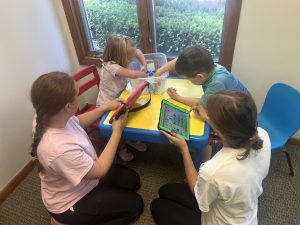
Action Checklist for Successful Funding of Communication Boards:

  • [ ] Identify your site: Where would a board have the most impact?
  • [ ] Identify your “Stack”: Which two funding sources can you combine?
  • [ ] Request Justification: Contact us for the specific wording for your grant.
  • [ ] Present to Stakeholders: Use our evidence-based talking points to win approval.
  • [ ] Install and Celebrate: Hold a ribbon-cutting ceremony to show your community that everyone has a voice!
Example of a project involving funding communication boards in a local park
Funding Communication Boards with PTA help
benefits of Communication boards for children

The Ultimate Guide: Where to Buy Communication Boards for Outdoor Playground Use

benefits of communication boards
Where to buy playground communciation boards
customizing communication boards

The Ultimate Guide: Where to Buy Communication Boards for Outdoor Playground Use

 As Senior Speech-Language Pathologists at Resources at Lakeshore Speech, we’ve spent our careers bridging the gap between clinical therapy and real-world play. We often see families and schools spend thousands on accessible swings and ramps, only to realize that the children using them still have no way to say, “My turn!” or “Look at me!”

The playground is a high-stakes social environment. For a child with complex communication needs, it can be overwhelming without the right tools. This guide serves as the definitive resource for understanding the landscape of communication boards, why they are essential for inclusive play, and where you can acquire a board that meets the highest clinical and durability standards.

Introduction: Why the Playground Needs a Voice

Communication is a fundamental human right, yet it is often the “missing piece” of playground accessibility. While many children use high-tech Augmentative and Alternative Communication (AAC) devices—like speech-generating tablets—these devices aren’t always suited for the sandbox, the splash pad, or the top of a sun-drenched slide.

A permanent, outdoor communication board provides a “low-tech” fail-safe. It ensures that even if a device is left in a backpack or runs out of battery, the child’s voice remains present. Furthermore, these boards act as a visual bridge for the entire community, teaching neurotypical peers and adults how to interact and model language in a way that is inclusive of all processing styles.

Where to Buy Communication Boards: Navigating Your Options

When you are ready to move from “advocacy” to “action,” knowing where to source your equipment is vital. Not all signs are created equal. To ensure your investment is both clinically effective and “park-tough,” consider these primary sourcing avenues:

1. Clinical-Grade Turnkey Providers (The RLS Standard)

For organizations that want a “set it and forget it” solution that is rooted in evidence-based practice, a turnkey provider is the gold standard. At Resources at Lakeshore Speech, we specialize in these communication boards because we know that a sign is only as good as the vocabulary on it.

  • The Benefit: You aren’t just buying a piece of plastic; you are buying a layout designed by SLPs. These communication boards use researched-based “Core Vocabulary” (words like Go, Stop, Help, More) that allow for the greatest variety of expression.
  • The Durability: Our boards are engineered specifically for the “playground gauntlet.” They utilize high-density, UV-stabilized materials that resist fading, cracking, and even graffiti.
  • The Integration: These communication boards come with a QR code demonstrating how to use a board, to ensure the board is actually used once it is installed.

2. Inclusive Playground Equipment Manufacturers

Many large-scale playground equipment companies have begun adding communication boards to their catalogs as an “add-on” feature.

  • What to look for: While these are convenient if you are already doing a $100,000 playground renovation, ensure the vocabulary isn’t “noun-heavy.” Many general manufacturers focus too much on labels (e.g., “Slide,” “Swing”) rather than functional communication (e.g., “I want to go fast”).
  • The Gap: Often, these companies lack the clinical staff to provide training or support for the families using the equipment.

3. Grant-Funded Community Cooperatives

In many cases, the “purchase” happens through a partnership with local non-profits or civic groups like the Lions Club or the Junior League.

  • The Strategy: These groups often look for specific, tangible items to fund. Providing them with a direct link to a vetted communication board provider allows them to handle the procurement while you ensure the quality meets SLP standards.

The Deep Dive: Features That Make or Break a Board

What Vocabulary Should Be Included?

A common mistake in DIY or low-quality communication boards is focusing on “Fringe Vocabulary.” If a board only has pictures of playground equipment, a child can only label what is in front of them.

  • Core Vocabulary: These are the “power words” (like Go, Help, Want, Stop, Like, Mine). They make up about 80% of what we say and can be used in almost any situation.
  • Social Scripts: Including phrases like “My turn” or “Want to play?” facilitates immediate peer interaction, which is the primary goal of the playground experience.

How Do We Choose the Right Size and Placement?

A communication board that is too small will be ignored; one that is too high will be inaccessible.

  • Visibility: The board should be large enough (typically at least 3 feet by 2 feet) so that it can be seen from the main play structures.
  • The “Path of Travel”: Under the Americans with Disabilities Act (ADA), any “interactive element” in a park must be accessible via a firm, stable path. This means the board should be placed next to a sidewalk or on poured-in-place rubber surfacing—not in the middle of a deep wood-chip pit.

What Materials Can Actually Survive the Outdoors?

We’ve all seen faded, peeling signs at local parks. To avoid this, look for:

  • Sub-Surface Printing: This ensures the ink is protected by a thick layer of clear material.
  • Non-Glare Matte Finish: This is crucial for children with sensory sensitivities or visual impairments who may be blinded by a “shiny” sign in direct midday sun.
  • Graffiti-Resistant Coatings: In public spaces, this is a must. You want a surface where permanent marker or spray paint can be removed without dissolving the communication symbols underneath.

Frequently Asked Questions (People Also Ask)

Are these boards only for children with Autism?

Absolutely not. While communication boards are incredibly helpful for autistic children who may be non-speaking or minimally verbal, they serve a much wider population:

  • Children with Apraxia or Phonological Disorders: They may use the board to “clarify” their speech when a peer doesn’t understand them.
  • English Language Learners (ELL): The symbols provide a universal language that helps children from different linguistic backgrounds play together.
  • Late Talkers: The visual support can reduce the frustration of a toddler who can’t yet express their needs.

How much do playground communication boards cost?

Pricing varies based on the “tier” of the product:

  • Base Level (Sign Only): Often ranges from $550 to $1,500.
  • Full Kits (Sign + Mounting Posts + Hardware): Range from $2,500 to $4,500.
  • The ROI: When you consider that a high-tech AAC device can cost $5,000+ and can be broken in a single afternoon, a $3,000 permanent board that lasts 10–15 years is an incredibly cost-effective community investment.

Can we customize our communication boards?

Yes, and we often recommend it! A board at a “Splash Pad” should have different fringe vocabulary (e.g., wet, cold, splash) than a board at a “Nature Trail” (e.g., bug, bird, dirt). Customizing the board makes the language more relevant and motivating for the child.

Evidence-Based Practice: The Clinical “Why”

At Resources at Lakeshore Speech, our recommendations follow the guidelines of the American Speech-Language-Hearing Association (ASHA) regarding “Augmentative and Alternative Communication.

Clinical research shows that:

  • Visual Supports Promote Literacy: Seeing a word paired with a symbol consistently helps build the “sight word” recognition necessary for future reading.
  • Modeling Facilitates Acquisition: Children learn language by hearing it. For children who use AAC, they need to see it. When parents and teachers use the communication board to “talk” to the child, they are providing the necessary input for the child to eventually use it themselves.
  • Behavior is Communication: Many “problem behaviors” on the playground stem from an inability to express a need. By providing a clear way to say “STOP” or “NEED BREAK,” we significantly reduce playground incidents.

Why Buy from Resources at Lakeshore Speech?

We aren’t just a sign company; we are a team of practicing clinicians. When you purchase from us, you are getting:

  • SLP-Vetted Vocabulary: We’ve done the research on which words get kids talking.
  • Implementation Support: We don’t just ship you a sign; we provide the training resources your staff needs to make it a success.
  • Durability Guarantee: We know schools and parks are on tight budgets. We build our boards to last through snowy winters and blistering summers.

Conclusion: Empowering the Next Generation of Play

Inclusive play is about more than just physical access; it’s about social connection. By installing high-quality communication boards, you are giving every child a seat at the table—or a spot on the slide. You are telling your community that every voice deserves to be heard, regardless of how that voice is produced.

The time to wait for “perfect” is over; the time to build “inclusive” is now. We are ready to equip your playground so it is truly inclusive, contact us today!

Where do I buty a playground communication board
happy to create sentences

Communication Boards & ADA Accessibility : Inspiring Inclusion

ada communication boards

The Power of Connection: A Comprehensive Report on Communication Boards & ADA Accessibility

Imagine walking onto a playground and feeling like you have no voice. For many children and adults with speech differences, this is a daily reality. However, we have the power to change that. Seeing how the right tools turn a silent park into a world of conversation is a powerful thing.

Today we go on a deep dive into communication boards and ADA accessibility. We will explore how these simple signs create a “language-rich” environment for everyone. Whether you are a parent, a teacher, or a community leader, you play a vital role in building a world where every voice is heard.

Why Every Community Needs Communication Boards

At its heart, communication is a human right. Many people use Augmentative and Alternative Communication (AAC). This is just a way of saying they use tools other than talking to share their thoughts.

When we put communication boards in public spaces, we are telling every child, “You belong here.” These boards usually feature symbols or pictures that represent words like “swing,” “help,” “more,” or “stop.” By pointing to a picture, a person who cannot speak clearly can still tell their friend they want to play tag.

Furthermore, these boards don’t just help people with disabilities. They help toddlers who are still learning to talk and families who speak different languages. Consequently, a single board makes the entire community stronger and more connected.

The Legal Side: Communication Boards and ADA Accessibility

You might wonder if these boards are required by law. The Americans with Disabilities Act (ADA) says that public spaces must be accessible. While the law is often associated with ramps and wide doorways, it also covers “effective communication.” This means people with speech disabilities must have a way to interact with their environment.

Understanding Inclusive Playground Requirements

To truly meet inclusive playground requirements, we have to look past the physical equipment. A child might be able to get their wheelchair onto the play structure, but can they ask to join the game?

  • ADA Physical Access: The board must be at a height where someone in a wheelchair or a small child can reach it.
  • ADA Visual Access : The board needs high-contrast colors so people with low vision can see the symbols clearly.
  • Durability: In public spaces, boards must withstand rain, sun, and heavy use over many years.

By following these inclusive playground requirements, city planners ensure that “access” means more than just being present—it means being an active participant in the fun.

FAQ: Common Questions About AAC in Public Spaces

In clinical and community settings, certain questions come up often. Understanding the “why” behind AAC public spaces helps everyone get on board with these projects.

1. Who actually uses these communication boards?

The short answer is: Everyone! Specifically, they support individuals with:

  • Autism or Down Syndrome
  • Cerebral Palsy or Apraxia of Speech
  • Brain injuries or temporary speech loss

In addition to those with disabilities, they are great for young kids who are learning to follow icons and symbols.

2. Do these boards stop children from learning to talk?

This is a common worry, but the evidence shows the opposite. Research and clinical standards from groups like the American Speech-Language-Hearing Association (ASHA) show that using AAC actually helps language development. It reduces the frustration that comes with not being understood. When a child feels successful communicating through a board, they are often more motivated to try using their voice.

3. Where should we place them for the best impact?

Location is key for ADA accessible park communication. You want the board to be in a “high-traffic” area where play happens. Good spots include:

  • The main entrance to the playground area.
  • Near the most popular equipment, like the swings or slides.
  • In “quiet zones” where a child might go if they feel overwhelmed.

The Clinical Perspective: Why Symbols Matter

In speech therapy, the focus is on functional communication. This means being able to say what you need, when you need it, in the real world.

Public boards use what is called “Core Vocabulary.” These are words that make up about 80% of what we say every day. Words like “go,” “want,” “I,” and “you” are incredibly versatile.

Key Takeaway: A well-designed board doesn’t just have pictures of toys; it has “action words” that allow a person to direct their own play and make choices.

Designing Meaningful ADA Accessible Parks Communication

If you are a community leader looking to install a board, keep these three things in mind to ensure the project successfully includes ADA accessbility:

Universal Design

Don’t hide the board in a corner. It should be a central part of the park. When everyone—regardless of ability—uses the board, the social pressure of using AAC disappears. It becomes a normal part of playing, just like the sandpit or the monkey bars.

Clear Icons and Systems

Use symbols that are widely recognized. Most speech experts recommend using symbols from established systems. This consistency helps users because the “stop” sign at the park looks the same as the “stop” sign in their school book or on their personal tablet.

Community Training and Support

Installing the board is only the first step. Furthermore, you should provide a way for people to learn how to use it. Many boards now include a QR code that links to a short video. This video can show parents how to “model” the language. Modeling is simply pointing to the pictures while you talk to your child so they see how it works.

Expert Tip: If you want your park to be truly inclusive, host a “Communication Playdate” where an SLP shows the community how to use the board!

Making AAC Public Spaces a Reality

Creating AAC public spaces requires a team effort. It takes a village to ensure no one is left out of the conversation. Here is how different groups can help:
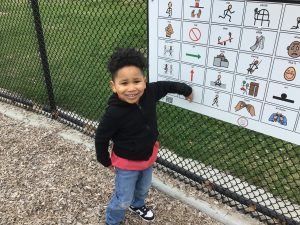
  • Families: Request communication boards and ADA accessibility from your local parks department or city council. Your lived experience is the best way to spark change.
  • Educators: Use the boards during field trips. Show your students that communication happens everywhere, not just at a desk.
  • Community Leaders: Budget for these boards as essential infrastructure, not as an “extra.”

In addition to being the right thing to do, it is a smart investment. Parks that are inclusive attract more families and foster a more welcoming city culture for everyone.

Conclusion: Empowerment Through Accessibility

When we prioritize communication boards and ADA accessibility, we are building more than just parks; we are building confidence. We are giving a non-speaking child the power to say “My turn!” We are giving a parent the joy of finally understanding what their child wants to do next.

Communication is the thread that ties a community together. An inclusive park can change a life by removing the barriers that keep people apart. No one should be a spectator in their own neighborhood because they communicate differently. Making a public space truly ADAaccessible is a big job, but it is one that pays off every time a child points to a board and smiles

Taking the Next Step. Let’s Build an Inclusive Future Together

Are you ready to make your public space truly ADA accessible? Whether you need help choosing symbols, understanding inclusive playground requirements, or training your staff, we are here to help. Contact Resources at Lakeshore Speech to begin your journey.

communication boards for children
benefits of Communication boards for children
ADA Compliance
symbol system - cool

Inspiring Connections: Communication Board Design for Fun

Teacher communicating with student using playground communication board.

Communication Board Design:
A Speech Pathologist’s Guide to Inclusive Play

At Resources at Lakeshore Speech, we’ve seen firsthand that a child’s “voice” doesn’t stop at the classroom door. As SLPs, we know that the playground is where some of the most vital social-emotional learning happens. However, for many children, these spaces can feel isolating without the right tools.

Communication board design is one of the most effective ways to bridge that gap. By bringing Augmentative and Alternative Communication (AAC) into the sunshine, we aren’t just providing a tool—we’re validating a language. This guide explores how to design these boards so they truly serve the families who need them most.

As we enter the “Spring into Action” season, many park departments and school boards are looking for ways to refresh their outdoor spaces. In our clinical experience, there is no better way to “spring into action” than by ensuring the very foundation of your community—the playground—is accessible to every single child, regardless of how they communicate. When we look at a park, we don’t just see equipment; we see opportunities for connection, and communication boards are the physical manifestation of that opportunity.

What exactly is a Communication Board?

We refer to these as a form of “Light-Tech” AAC. These boards use symbols and pictures to help children—especially those with Autism, apraxia, or Down syndrome—express their thoughts when verbal speech is difficult.

On a playground, a board acts as a “point-and-talk” station. Instead of a child feeling frustrated because they can’t ask for the “swing,” they can simply point to a symbol. This reduces the “communication breakdown” and invites neurotypical peers to interact in a way that is natural and visual.

It is important to remember that AAC is not a “replacement” for speech; rather, it is a tool that supports and enhances it. For many of our clients, having a visual representation of a word actually reduces the cognitive load required to produce speech. When a child isn’t struggling to find the motor plan for the word “slide,” they are free to focus on the joy of the activity itself. This is why communication board design must be intuitive—if a child has to hunt for a symbol for more than a few seconds, the “teachable moment” has often passed.

The Shift Toward Universal Design

Historically, we kept communication aids in small, portable folders. But as we move toward Universal Design, we are seeing these tools installed as permanent fixtures in parks. This shift tells our families: “We didn’t just build a park for some kids; we built it for yours, too.”

Universal Design is a framework that suggests environments should be usable by all people to the greatest extent possible, without the need for adaptation or specialized design. By integrating communication board design into the initial blueprint of a park, we move away from “special needs” being an afterthought and toward “human needs” being the primary focus. It turns a segregated experience into a shared one.

Why do Communication Boards Matter in Public Spaces?

As clinicians, we look at the playground as a “naturalistic environment” for language growth. Here is why inclusive playground design is so impactful:

  • Modeling in the Wild: For a child to learn AAC, they need to see others use it. When a parent points to “go” while pushing the swing, they are modeling language in real-time.
  • Reducing “Behavior” via Expression: We often say “behavior is communication.” When a child has a functional way to say “help” or “all done,” the frustration that leads to meltdowns often melts away.
  • Normalizing Neurodiversity: When every child in the neighborhood sees a communication board, AAC becomes “normal” rather than “different.” It builds a community of empathy from the ground up.

Furthermore, these boards serve as a safety net. Imagine a child who wanders or “elopes” (a common safety concern in the neurodivergent community). If that child is non-speaking and becomes separated from their caregiver, a communication board at the park entrance can be a literal lifesaver, allowing the child to point to symbols like “lost” or “mom” to communicate with a helping adult. This safety aspect is a frequently overlooked but vital component of communication board design in public infrastructure.

SLP Tips for Effective Communication Board Design

When you start planning, it’s easy to get overwhelmed by materials. Here is what we recommend focusing on to ensure the board is actually functional for the kids.

1. Durability and “Play-Proof” Materials

Since playground communication boards live outdoors, they need to be tough. We look for:

  • High-density polyethylene (HDPE) or heavy-duty aluminum.
  • UV-resistant coatings so the symbols don’t fade (if the “Stop” sign turns white, it loses its meaning!).
  • Non-glare surfaces to help children with visual processing needs see the icons clearly even in midday sun.

From an SLP perspective, the “tactile” feel of the board matters too. Children often “tap” or “slap” the icons with enthusiasm. We need materials that can take the vibration of a heavy-handed “Point” without rattling or degrading. We also have to consider the “cleaning” factor. Playgrounds are high-germ environments; effective communication board design ensures the surface can be wiped down with industrial-grade disinfectants without the ink running or the symbols peeling away.

2. The “Gold Standard” of Layout: Core Vocabulary

The most important part of communication board design is the vocabulary. We advocate for a “Core Vocabulary” approach.

  • Core Words: These are high-frequency words like want, more, stop, go, help, I, you. They should take up the bulk of the board because they can be used in almost any situation.
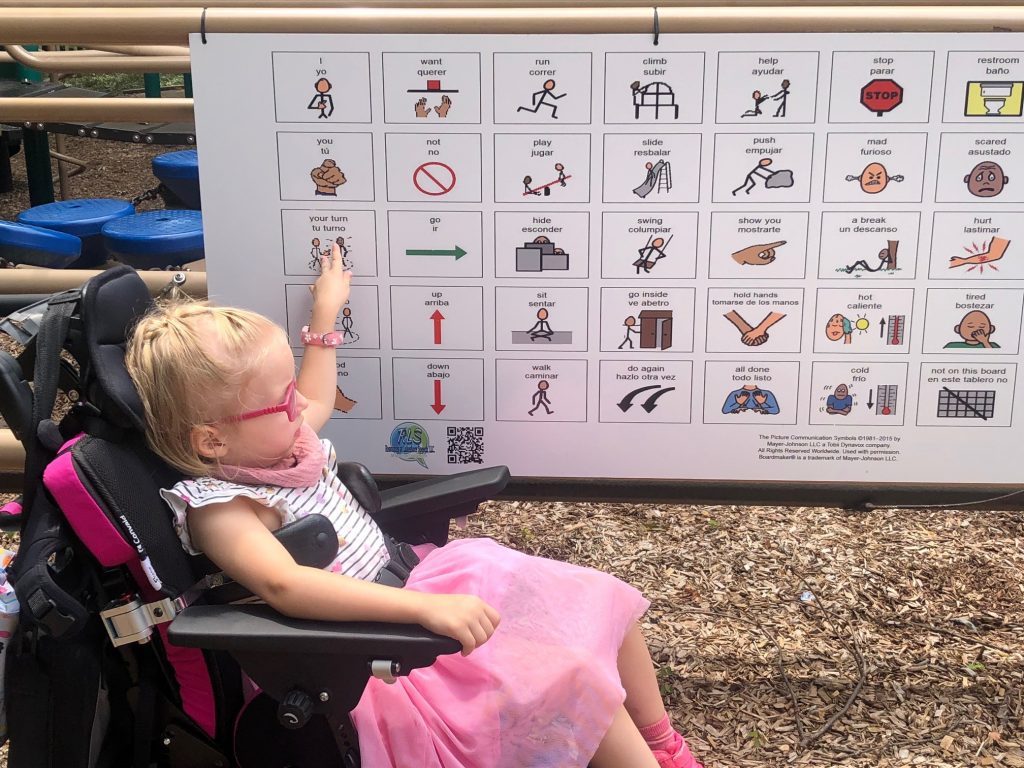
  • Fringe Words: These are specific nouns like slide, swing, ball, or snack.
  • Consistency: Symbols should be placed where a child can reach them—ideally with the most used icons at chest height for a child or someone in a wheelchair.

In the world of AAC, “Motor Memory” is everything. Think about how you type on a keyboard without looking—that’s motor memory. If we change the location of the “Help” button every time we design a new board, the child has to relearn the “map.” Professional communication board design respects the user by keeping core words in consistent, predictable grids. This allows a child to become a “fast” communicator, which is essential when they are trying to keep up with the fast-paced world of playground play.

Can I Customize My Board for My Community?

Yes! One size rarely fits all in speech therapy, and the same goes for playgrounds.

  • Bilingual Support: If your neighborhood has many Spanish-speaking families, your board should absolutely be bilingual.
  • Site-Specific Symbols: A board at a pool needs different “fringe” vocabulary (like splash or cold) than a board at a wooded nature trail.
  • Symbol Sets: Whether you use Boardmaker (PCS) or SymbolStix, try to match what the local school district uses so the children have a “fluent” transition from school to play.

We also suggest thinking about the “Social-Emotional” vocabulary. Inclusion isn’t just about asking for a turn on the slide; it’s about making friends. Does your communication board design include icons for “My turn,” “Your turn,” “Play with me,” or “I like that”? These are the building blocks of friendship. By including social bridge words, we give neurodivergent children the tools to initiate play, which is one of the hardest—but most rewarding—social skills to master.

Let’s Build a More Inclusive Playground Together

Transitioning from a traditional playground to an inclusive one is a big step, and it’s okay to have questions about the clinical side of the process. At Resources at Lakeshore Speech, we don’t just “sell” boards—we partner with communities to make sure the communication board design is linguistically sound and culturally relevant.

As you look to “Spring into Action” this month, think about the voices in your community that are currently unheard.

Are you curious about which symbols would work best for your specific park or how to fund an installation? We’d love to chat!

communication board design at Fairview Park Ohio
benefits of communication boards
communication boards
communication board design