Inspiring Connections: Communication Board Design for Fun

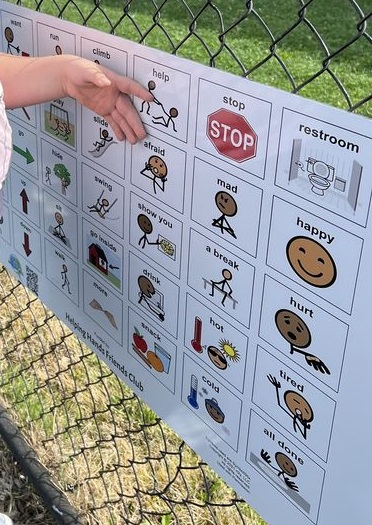
Teacher communicating with student using playground communication board.

Communication Board Design:
A Speech Pathologist’s Guide to Inclusive Play

At Resources at Lakeshore Speech, we’ve seen firsthand that a child’s “voice” doesn’t stop at the classroom door. As SLPs, we know that the playground is where some of the most vital social-emotional learning happens. However, for many children, these spaces can feel isolating without the right tools.

Communication board design is one of the most effective ways to bridge that gap. By bringing Augmentative and Alternative Communication (AAC) into the sunshine, we aren’t just providing a tool—we’re validating a language. This guide explores how to design these boards so they truly serve the families who need them most.

As we enter the “Spring into Action” season, many park departments and school boards are looking for ways to refresh their outdoor spaces. In our clinical experience, there is no better way to “spring into action” than by ensuring the very foundation of your community—the playground—is accessible to every single child, regardless of how they communicate. When we look at a park, we don’t just see equipment; we see opportunities for connection, and communication boards are the physical manifestation of that opportunity.

What exactly is a Communication Board?

We refer to these as a form of “Light-Tech” AAC. These boards use symbols and pictures to help children—especially those with Autism, apraxia, or Down syndrome—express their thoughts when verbal speech is difficult.

On a playground, a board acts as a “point-and-talk” station. Instead of a child feeling frustrated because they can’t ask for the “swing,” they can simply point to a symbol. This reduces the “communication breakdown” and invites neurotypical peers to interact in a way that is natural and visual.

It is important to remember that AAC is not a “replacement” for speech; rather, it is a tool that supports and enhances it. For many of our clients, having a visual representation of a word actually reduces the cognitive load required to produce speech. When a child isn’t struggling to find the motor plan for the word “slide,” they are free to focus on the joy of the activity itself. This is why communication board design must be intuitive—if a child has to hunt for a symbol for more than a few seconds, the “teachable moment” has often passed.

The Shift Toward Universal Design

Historically, we kept communication aids in small, portable folders. But as we move toward Universal Design, we are seeing these tools installed as permanent fixtures in parks. This shift tells our families: “We didn’t just build a park for some kids; we built it for yours, too.”

Universal Design is a framework that suggests environments should be usable by all people to the greatest extent possible, without the need for adaptation or specialized design. By integrating communication board design into the initial blueprint of a park, we move away from “special needs” being an afterthought and toward “human needs” being the primary focus. It turns a segregated experience into a shared one.

Why do Communication Boards Matter in Public Spaces?

As clinicians, we look at the playground as a “naturalistic environment” for language growth. Here is why inclusive playground design is so impactful:

  • Modeling in the Wild: For a child to learn AAC, they need to see others use it. When a parent points to “go” while pushing the swing, they are modeling language in real-time.
  • Reducing “Behavior” via Expression: We often say “behavior is communication.” When a child has a functional way to say “help” or “all done,” the frustration that leads to meltdowns often melts away.
  • Normalizing Neurodiversity: When every child in the neighborhood sees a communication board, AAC becomes “normal” rather than “different.” It builds a community of empathy from the ground up.

Furthermore, these boards serve as a safety net. Imagine a child who wanders or “elopes” (a common safety concern in the neurodivergent community). If that child is non-speaking and becomes separated from their caregiver, a communication board at the park entrance can be a literal lifesaver, allowing the child to point to symbols like “lost” or “mom” to communicate with a helping adult. This safety aspect is a frequently overlooked but vital component of communication board design in public infrastructure.

SLP Tips for Effective Communication Board Design

When you start planning, it’s easy to get overwhelmed by materials. Here is what we recommend focusing on to ensure the board is actually functional for the kids.

1. Durability and “Play-Proof” Materials

Since playground communication boards live outdoors, they need to be tough. We look for:

  • High-density polyethylene (HDPE) or heavy-duty aluminum.
  • UV-resistant coatings so the symbols don’t fade (if the “Stop” sign turns white, it loses its meaning!).
  • Non-glare surfaces to help children with visual processing needs see the icons clearly even in midday sun.

From an SLP perspective, the “tactile” feel of the board matters too. Children often “tap” or “slap” the icons with enthusiasm. We need materials that can take the vibration of a heavy-handed “Point” without rattling or degrading. We also have to consider the “cleaning” factor. Playgrounds are high-germ environments; effective communication board design ensures the surface can be wiped down with industrial-grade disinfectants without the ink running or the symbols peeling away.

2. The “Gold Standard” of Layout: Core Vocabulary

The most important part of communication board design is the vocabulary. We advocate for a “Core Vocabulary” approach.

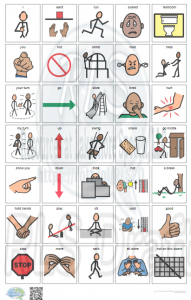
  • Core Words: These are high-frequency words like want, more, stop, go, help, I, you. They should take up the bulk of the board because they can be used in almost any situation.
  • Fringe Words: These are specific nouns like slide, swing, ball, or snack.
  • Consistency: Symbols should be placed where a child can reach them—ideally with the most used icons at chest height for a child or someone in a wheelchair.

In the world of AAC, “Motor Memory” is everything. Think about how you type on a keyboard without looking—that’s motor memory. If we change the location of the “Help” button every time we design a new board, the child has to relearn the “map.” Professional communication board design respects the user by keeping core words in consistent, predictable grids. This allows a child to become a “fast” communicator, which is essential when they are trying to keep up with the fast-paced world of playground play.

Can I Customize My Board for My Community?

Yes! One size rarely fits all in speech therapy, and the same goes for playgrounds.

  • Bilingual Support: If your neighborhood has many Spanish-speaking families, your board should absolutely be bilingual.
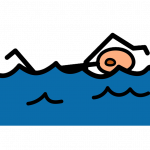
  • Site-Specific Symbols: A board at a pool needs different “fringe” vocabulary (like splash or cold) than a board at a wooded nature trail.
  • Symbol Sets: Whether you use Boardmaker (PCS) or SymbolStix, try to match what the local school district uses so the children have a “fluent” transition from school to play.

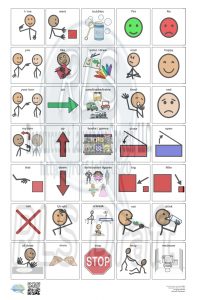
We also suggest thinking about the “Social-Emotional” vocabulary. Inclusion isn’t just about asking for a turn on the slide; it’s about making friends. Does your communication board design include icons for “My turn,” “Your turn,” “Play with me,” or “I like that”? These are the building blocks of friendship. By including social bridge words, we give neurodivergent children the tools to initiate play, which is one of the hardest—but most rewarding—social skills to master.

Let’s Build a More Inclusive Playground Together

Transitioning from a traditional playground to an inclusive one is a big step, and it’s okay to have questions about the clinical side of the process. At Resources at Lakeshore Speech, we don’t just “sell” boards—we partner with communities to make sure the communication board design is linguistically sound and culturally relevant.

As you look to “Spring into Action” this month, think about the voices in your community that are currently unheard.

Are you curious about which symbols would work best for your specific park or how to fund an installation? We’d love to chat!

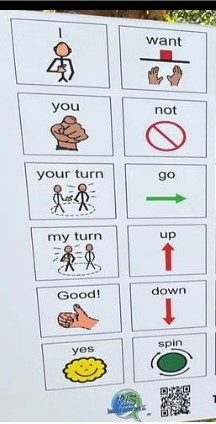
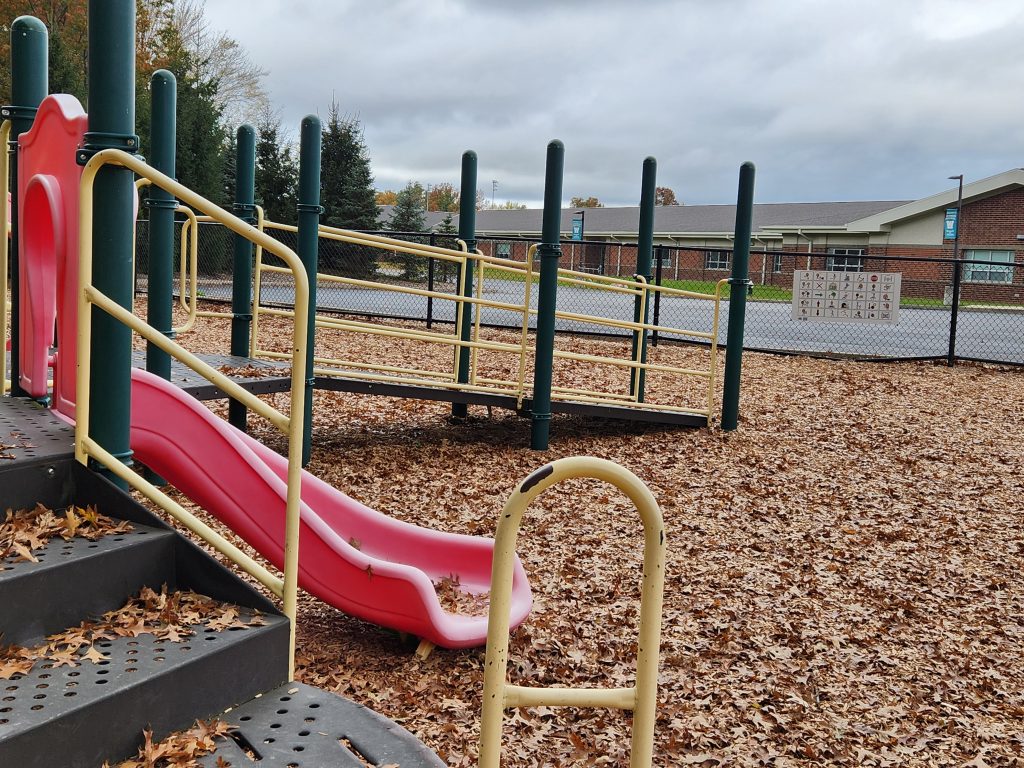
communication board design at Fairview Park Ohio
core vocabulary - communication board design
playground communication board design - motor memory
communication board design

A Guide to Selecting the Right Symbol System : The Power of Choice

Funding guide for community playground communication boards.

The Power of Choice: A Guide to Selecting the Right Symbol System for Communication Boards

Communication is the heartbeat of human connection. For many individuals, finding the right way to express a thought, a need, or a dream requires more than just spoken words—it requires a visual language. At Resources at Lakeshore Speech, our team of dedicated speech-language pathologists (SLPs) is committed to providing individuals with communication differences a voice. With over 60 years of combined experience, our founders, VernaAnn Kotansky and Ellen Spear, have seen firsthand how the right symbol system can transform a child’s ability to interact with their world.

When designing inclusive environments—whether it’s a local park, a classroom, or a healthcare facility—the choice of visual icons is one of the most critical decisions you will make. This guide is designed to walk families, educators, and community leaders through the nuances of the most popular systems and help navigate the process of choosing symbol systems that empower every communicator.

What is a Symbol System?

In the world of Augmentative and Alternative Communication (AAC), a symbol system is a structured collection of graphic representations used to convey meaning. These can range from highly realistic photographs to abstract line drawings. For a child with autism, a student with Down syndrome, or an adult recovering from a stroke, these symbols serve as the building blocks of language.

When we create communication boards, we aren’t just placing pictures on a sign; we are selecting a linguistic framework. The goal is to create a bridge between an internal thought and an external expression. By understanding the different types of icons available, we can ensure that the “voice” provided is as clear and functional as possible. As we dive deeper into helping to better understand AAC symbol systems, it becomes clear that these systems are the very foundation of an individual’s ability to participate in their community.

Comparing the Most Popular Symbol Systems

Not all visual languages are created equal. Each symbol system has its own “logic,” aesthetic, and level of complexity. Here is a breakdown of the systems most commonly used:

1. Picture Communication Symbols (PCS) by Boardmaker

PCS is perhaps the most widely recognized symbol system in the world. Developed by Mayer-Johnson, these icons are characterized by their simple, clear line drawings.

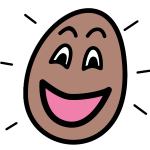
  • Classic PCS: These are the familiar “egghead” figures. They are intentionally gender-neutral and minimalist to reduce visual clutter.
  • Thinline PCS: These offer a more modern, realistic look with detailed figures.
  • High Contrast PCS: Specifically designed for individuals with visual impairments (such as CVI), these use bright colors against black backgrounds.

2. SymbolStix

If you have used popular AAC apps like Proloquo2Go or TouchChat, you have likely encountered SymbolStix.

  • Pros: SymbolStix is excellent for representing verbs and abstract concepts because the figures are often shown in action.
  • Integration: It is the standard for many educational curricula, making it a common choice for school-based communication boards.

3. Widgit Symbols

Widgit is a highly structured symbol system featuring a very consistent “schema”—for example, all symbols related to time might share a specific visual element. This internal logic can help some learners “decode” new words more easily.

How to Choose the Symbol System to Use When Making a Communication Board

Selecting the right visual language is a process known in the SLP world as “feature matching.” It is not about aesthetic preference; it is about finding the most functional tool for the user. When choosing symbol systems, consider the following clinical criteria:

1. Evaluate the Learner’s Visual Profile

Before picking a symbol system, we must look at the user’s vision. Can they see fine lines, or do they need bold, high-contrast icons? For individuals with Cortical Visual Impairment (CVI), a high-contrast system is often the only way to ensure the symbols are actually processed by the brain.

2. Consider Iconicity and Transparency

Iconicity refers to how closely a symbol resembles the real-world object it represents.

  • Transparent Symbols: A picture of a “ball” that looks exactly like a ball is highly transparent.
  • Opaque Symbols: Abstract symbols (like the word “more” or “want”) are opaque and must be taught.
    A robust symbol system should balance clear nouns with recognizable representations of “core vocabulary”—the verbs, adjectives, and pronouns that make up 80% of what we say.

3. Environmental Consistency

Consistency is a cornerstone of AAC success. If a child uses SymbolStix on their personal tablet at home, it is often best to use the same symbol system on the communication boards at their school or local playground. This reduces the “cognitive load,” allowing the user to focus on what they want to say rather than learning a new language every time they change locations.

4. The Science of Placement and Organization

There is a specific clinical science to where icons are placed on a communication board that SLPs utilize to foster language development. This is not arbitrary; it is rooted in motor planning and linguistic mapping.

The Modified Fitzgerald Key is a color-coding system that organizes vocabulary by grammatical category (e.g., yellow for pronouns, green for verbs). By keeping the placement of “Core Vocabulary” consistent, we help the user develop motor memory. Just as a touch-typer doesn’t look at the keyboard, a proficient AAC user learns the “geography” of their board. When the layout is predictable, it allows for faster, more spontaneous communication.

Symbol system
symbol system - symbolstix

The Role of Communication Boards in the Community

At Resources at Lakeshore Speech, we believe that communication should never be restricted to a therapy room. Public spaces like playgrounds, pools and public spaces are where social-emotional growth happens.

Why Community Boards Matter

When a park installs a board using a recognized symbol system, they are creating a truly inclusive environment. These boards:

  • Model Language: They allow peers and parents to “point while they talk,” showing AAC users that their language is valued.
  • Reduce Frustration: They provide a quick way for a child to express a need or emotion in real-time.
  • Foster Connection: They bridge the gap between neurotypical children and those with communication differences.

Opening Doors with Multilingual Support

Inclusion also means respecting the linguistic diversity of our communities. While English is the standard for many systems, we believe in opening doors that were once closed. By offering the ability to add up to three additional languages per cell, we ensure the symbol system is accessible to families from all backgrounds, making the community space welcoming for everyone.

Designing for Success: Best Practices

Once you have settled on a symbol system, the physical design and layout are the next steps in ensuring the board is functional.

  • Focus on Core Vocabulary: Prioritize high-frequency words like “go,” “stop,” “help,” and “more.” These are the most versatile tools for any communicator.
  • Limit Visual Clutter: Proper spacing between icons is essential for users with motor challenges to select the right symbol accurately.
  • Use High-Quality Materials: We utilize high-grade aluminum composite for our boards because it does not rust, warp, or delaminate. It is vital that the symbol system remains vibrant and legible through years of environmental exposure.
  • Sensory Considerations: Using a matte finish helps prevent “sun flare” or glare, which is critical for individuals with light sensitivity or visual processing needs.

Frequently Asked Questions About Symbol Systems

Q: Can I mix different symbol systems on one board?

Generally, we advise against this. Mixing icons from PCS and SymbolStix can be confusing. It is much more effective to stick to one cohesive symbol system to support literacy and cognitive ease.

Q: What if the user only understands real photographs?

Photographs are a helpful starting point. However, because they are so specific (a photo of your chair doesn’t always represent all chairs), we often use them as a bridge toward a more representative symbol system like PCS or SymbolStix for better generalization.

Q: Is there a “best” system?

There is no “best” system—only the best fit for the individual’s specific needs, visual abilities, and existing communication tools.

Empowering Every Voice

At Resources at Lakeshore Speech, our mission is to ensure that everyone has a voice. The world of AAC can feel complex, but the goal is simple: connection. Whether you are a parent, an educator, or a community leader, choosing the right symbol system is a foundational step in building a more inclusive world.

When we prioritize the needs of the user and maintain consistency across environments, we break down barriers and open up a world of possibility. Our resources are grounded in clinical experience and a deep commitment to the families we serve. To see how these boards have impacted others, we invite you to refer to the customer reviews on our website for real-world stories of connection and success.

Conclusion: Moving Toward Inclusion

By understanding the differences between icons and selecting a framework that supports motor memory and linguistic growth, you are providing a lifeline of connection.

If you are ready to explore how a communication board can support your local playground or community space, or if you need guidance on navigating the funding process, we invite you to check the funding page on our website for information on grants and community support.

Visit us at www.lakeshorespeech.com to learn more about our mission or to request more information. Let’s work together to make sure every voice is heard!

symbol system
symbols system - symbolstix