
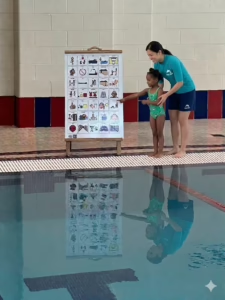
Explaining the world of Augmentative and Alternative Communication (AAC) can seem overwhelming, especially when it comes to the various symbol systems used. When developing a communication board, like one that would be used on playgrounds or pools, having a more clear understanding of the different symbol systems is key. In this week’s blog we will take a deeper look into some of the symbols systems.
What is a symbol system?
A symbol system is a collection of pictures or symbols, with each symbol representing a word or an idea. Some symbol systems use simple pictures, like cartoons, while others use more detailed drawings. These symbols help people who use AAC devices communicate with others and express themselves in a way that works best for them.
More commonly used symbol systems:
SymbolStix:
- Developed by News-2-You, SymbolStix is a dynamic symbol set designed to support individuals with diverse communication needs.
- Characterized by their abstract and simplistic style, SymbolStix symbols are easy to interpret and suitable for a wide range of users.
- They are highly versatile and can be easily customized to suit individual preferences and communication goals, particularly for those who benefit from clear, uncluttered visual supports.
Boardmaker:
- Developed by Mayer-Johnson, Boardmaker is a comprehensive symbol set and software program widely used in AAC.
- Boardmaker symbols are known for their detailed and realistic representations, making them highly effective for conveying complex concepts and ideas.
- The software allows for the creation of communication boards, schedules, and other visual supports tailored to individual needs. Boardmaker symbols are ideal for individuals who require more specific and detailed visual representations to support their communication.
Picture Communication Symbols (PCS):
- Developed by Mayer-Johnson, PCS is a widely used symbol set.
- These symbols are simple, colorful, and easy to understand, making them ideal for individuals with communication difficulties.
- PCS covers a wide range of concepts, actions, and objects, allowing for versatile communication.
Widget Symbol Set:
- The Widget Symbol Set offers a range of symbols designed for ease of use and clarity.
- Ideal for individuals who benefit from straightforward and intuitive communication aids, Widget symbols can be easily incorporated into communication devices and visual supports.
What symbol system should I use?
The choice depends on the individual’s communication abilities and preferences, with attention given to their vision and visual processing. For example, SymbolStix is preferred for its simplicity and flexibility, making it suitable for a broad range of users. Boardmaker, with its detailed symbols and customization options, is often chosen for individuals who require more specific and realistic representations.
What questions do I consider when choosing a symbol system?
What is best for children with vision of visual perceptional deficits?
Consider less detailed high contrast symbol systems – ie: Boardmaker High Contrast Symbols
What is best for children who need more concrete representation of a word or meaning?
Consider symbol systems with more life-like drawing or incorporate actual photos.
Can I try symbol systems out before making a decision?
YES – Most symbol systems offer a free trial period. Present your child with a few choices to see which ones she or he gravity towards. A licensed speech therapist who is well versed in AAC will guide you to the correct symbol system.


Core vs. Fringe Vocabulary in Symbol Systems
Understanding how AAC symbol systems organize language is essential when choosing or customizing visual supports. AAC vocabulary is generally split into two distinct categories: core vocabulary and fringe vocabulary.
Core Vocabulary: High-frequency, versatile words that make up approximately 80% of what we say every day (e.g., go, want, stop, more, help, in, on, I, you). In high-quality AAC symbol systems, core words remain in fixed, predictable grid locations so children develop motor memory over time.
Fringe Vocabulary: Context-specific nouns and verbs that apply to specific activities, locations, or interests (e.g., swing, cracker, slide, dinosaur, math). Fringe symbols are typically swapped or updated based on the environment.
When designing low-tech tools, pairing consistent core AAC symbol systems with environment-specific fringe words ensures children can express themselves across home, classroom, and community settings. Learn how this core-first approach supports early language in our comprehensive parent guide on communication boards for kids.
Selecting the Right Symbol System for Autistic Learners & Sensory Needs
Every child processes visual information differently. For autistic learners and children with visual or sensory processing differences, symbol selection goes far beyond aesthetic preference—it directly impacts readability, cognitive load, and visual processing speed.
When evaluating AAC symbol systems for sensory-sensitive communicators, consider:
Visual Clutter & Contrast: High-contrast symbols with high-saturation borders help children isolate individual icons without feeling visually overwhelmed.
Symbol Transparency: Concrete pictographs (e.g., a real photograph or clear drawing of a ball) require less cognitive decoding than abstract line drawings, making them ideal for early communicators or during moments of high frustration.
Predictable Organization: Maintaining consistent background colors based on parts of speech (such as the Modified Goossens’ color-coding system) helps children locate symbols quickly during high-energy or stressful transitions.
For children who experience visual fatigue or emotional dysregulation, symbol clarity directly supports self-advocacy. Discover how targeted visual supports help prevent meltdowns and support self-regulation in our article on emotional balance boards.
Standardizing Symbol Systems Across School & Community Spaces
One of the biggest hurdles AAC users face is symbol inconsistency between environments. If a child uses one set of AAC symbol systems at home, a different visual board in the classroom, and an entirely different set of icons on the playground, their learning curve slows dramatically.
When schools, parks, and therapy clinics utilize standardized AAC symbol systems, children transition seamlessly between learning and play without having to relearn icon meanings.
In Classrooms: Consistent grid layouts allow teachers and paraprofessionals to model language effortlessly across academic subjects.
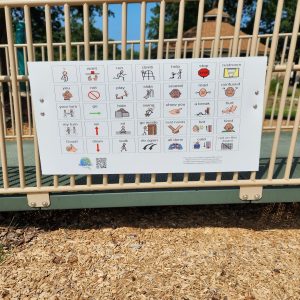
In Outdoor & Civic Spaces: All-weather visual supports placed near playground equipment, splash pads, or park entrances give children immediate access to functional communication with peers.
To see how districtwide symbol consistency transforms student outcomes, explore our case studies on communication boards in schools. You can also discover how visual supports foster inclusive play in our guide to playground communication boards.
Choosing the Right Symbols for Your Communication Board
Choosing the right symbol system is just one part of creating an effective communication board. The layout, vocabulary, and where the board will be used all play an important role in how successful it is for the user.
If you are new to AAC and symbol system, our Ultimate Parent Guide for communication boards for kids (whether you are the parent, caregiver or therapist) is the perfect place to start.
See how schools are using a customized approach when designing communication boards to ensure the symbols and layout truly meet the needs of users.
Understanding the different symbol systems used in AAC can help you better support individuals with communication differences. Whether you’re a parent, caregiver, or simply interested in AAC, knowing the basics of these systems can make a significant difference in how you interact and communicate with others.
Ready to start creating a customized communciation board for your community? Request a quote today to get started.



5 Comments
[…] provided is as clear and functional as possible. As we dive deeper into helping to better understand AAC symbol systems, it becomes clear that these systems are the very foundation of an individual’s ability to […]
[…] allows for “modeling,” a professional term for when a communication partner points to symbols on the board while speaking. This practice helps children understand how symbols represent spoken […]
[…] Visual Access : The board needs high-contrast colors so people with low vision can see the symbols […]
[…] Choosing the symbol system or type of icons/drawings used on a communication board is best discussed with the child’s speech-langauge pathologist and educational team. It is an an important part of creating an effective communication system. Learn more about AAC symbol systems. […]
[…] those with communication disorders, may not have the words to describe how they are feeling. The pictures on a communication board provide a visual representation of emotions, making it easier for individuals to connect with and […]
Comments are closed for this article!