
Communication Boards: Parent Guide to AAC
Supporting Communication Everywhere
At Resources at Lakeshore Speech, our team of certified speech-language pathologists designs durable, evidence-based communication boards for kids to bridge the gap between therapy, home and the community. Whether a child is developing early communication skills, has a speech delay or uses AAC (augmentative and alternative communication), communication boards open doors to meaningful interactions.
A communication board is much more than a laminated sheet of symbols. It is a bridge—connecting children to their families, teachers, peers, and communities. In this guide, we’ll explain what a communication board is, how to teach a child to use one and how communication boards can support children in everyday settings such as home, school, playgrounds and community spaces.
You will also learn how communication board strategies support regulation and independence, how customizable communication boards empower children of all abilities and how family engagement accelerates learning and confidence.
What Is a Communication Board?
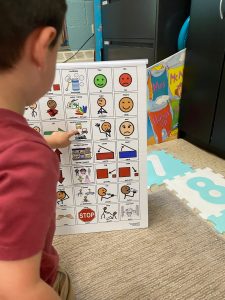
A communication board is a visual tool that displays words, symbols, photos, or icons that children can point to in order to express themselves. Boards come in many forms—low-tech printed boards, boards printed on all weather aluminum or high-tech digital versions within AAC apps. Regardless of format, the purpose is the same: to give children a reliable way to communicate.
Communication boards may include:
- Core vocabulary words such as go, want, more, help, stop, you, and I
- Fringe vocabulary specific to routines (e.g., bath time, snack, school items)
- Emotion icons for regulation and self-expression
- Topic-specific boards for places like playgrounds, libraries or classrooms
For children with Autism, a communication board can be especially helpful. These boards often incorporate predictable layouts, visual supports for sensory needs and symbols tied to routines—helping children understand expectations and communicate effectively.
The beauty of a communication board is that it honors every child’s voice—whether they are speaking, learning to speak or using AAC as their primary mode of expression.
How Do You Teach a Child to Use a Communication Board?
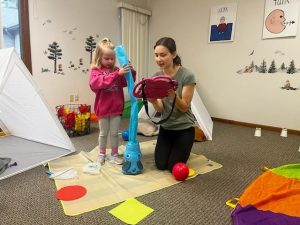
Teaching a child to use a communication board is a warm, interactive, and ongoing process. At Resources at Lakeshore Speech, given our vast clinic experiences we promote modeling, engagement and functional communication rather than drills or memorization.
1. Model, Model, Model
Children learn by watching. When adults use the communication board while talking, the child builds understanding and confidence. This is called AAC modeling or aided language input.
For example:
- During snack, you might touch want + cracker while saying, “You want a cracker!”
- When a child seems frustrated, you may point to help while asking, “Do you need help?”
Over time, your child begins to imitate or explore the board independently.
2. Follow the Child’s Lead
Communication should be fun—not forced. Instead of asking children to repeat or “say the word,” observe what interests them and model language related to their goals.
If the child reaches for bubbles, you might model open, more, go, or big bubbles. This naturalistic approach increases carryover and engagement.
3. Start With Core Words
It’s tempting to fill a communication board with every picture imaginable. Instead, begin with high-frequency, versatile words that help children express many ideas.
Core words such as want, go, more, stop, and look are powerful because they fit into countless routines.
4. Celebrate All Communication
A child may first use the communication board by:
- Touching random symbols
- Pointing to a single word
- Using gestures and symbols together
- Looking at the board instead of touching it
Every attempt is communication. Celebrate it and respond meaningfully to reinforce participation.
5. Practice Across Routines
Children need consistent exposure. Using the board during meals, play, transitions, and community outings helps them understand that they can communicate everywhere—not just at therapy.
Using Communication Boards at Home
Home is the perfect environment to practice communication in natural, supportive ways. When families engage daily, progress accelerates.
Daily Routines for Natural Communication Opportunities
Daily routines help children learn because they are repetitive and predictable.
Morning Routine
Post a communication board near the child’s bedroom or bathroom. Model words such as:
- wake up, brush teeth, done, help, go, more, different shirt
This also supports autonomy and reduces frustration.
Mealtime
During meals, communication boards can help children request, comment, and interact. Encourage family engagement by inviting siblings or caregivers to also model words.
Try modeling:
- more, all done, yummy, drink, help, hot, cold
- Emotion words such as happy or tired
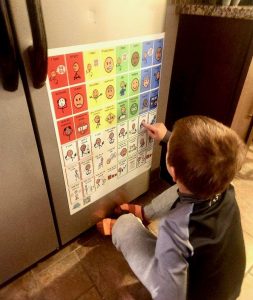
Place boards in easy-to-reach spots—on the refrigerator, on a table, or on the child’s highchair tray.
Playtime
Play is one of the richest opportunities for communication. Whether a child uses cars, dolls, blocks, or pretend kitchens, a communication board supports vocabulary and imagination.
Model words like:
- go, stop, up, down, make, turn, big, little, look
Children using customizable communication boards may benefit from toy-specific pages (e.g., farm animals, vehicles, dress-up items).
Partnering With Schools and Therapists
Collaboration is key to helping children thrive. When communication boards are used consistently across environments, children gain confidence, independence, and expressive language skills.
Working With Your Child’s School Team
Teachers, paraprofessionals and therapists all play important roles. Share the board your child uses at home and ask how school teams integrate AAC and communication supports.
Encourage:
- Consistency in symbol layout
- Shared vocabulary sets
- Clear strategies for modeling and prompting
- Staff training on AAC and communication boards
- Opportunities for peer interaction
When home and school mirror one another, children experience a smoother learning curve.
Partnering With Speech-Language Pathologists
Speech-Language Pathologists provide collaborative support to schools, preschools, early-intervention programs and families. SLPs
- Assess communication needs
- Select appropriate communication boards
- Train staff in AAC modeling
- Provide progress monitoring and updates
- Coordinate goals across settings
Bringing Boards to Playgrounds and Community Spaces
Children deserve to communicate everywhere—not just in structured settings. Community environments offer exciting, motivating contexts that spark communication.
Playgrounds
Playgrounds encourage movement, sensory exploration and social learning. Use communication boards to support:
- Requests (swing, slide, climb, go faster)
- Social interactions (your turn, my turn, help me)
- Sensory needs (loud, quiet, break)
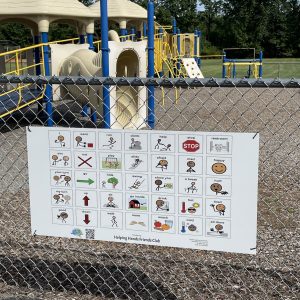
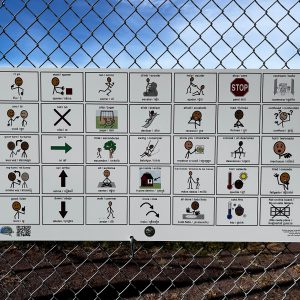
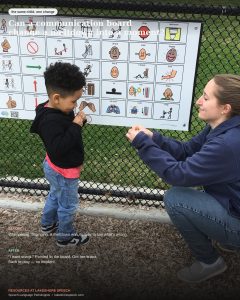
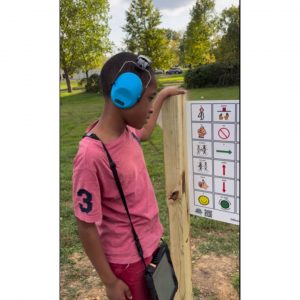
Many communities now install outdoor communication boards in public parks. These boards create inclusive play spaces where all children can express themselves.
Libraries and Stores
Bring a portable communication board in a bag or on a lanyard. Model functional vocabulary such as open, look, read, buy, stop, or help.
These outings help children generalize communication skills to real-world environments.
Restaurants
A small laminated communication board (or one stored on your phone) can help your child communicate choices, preferences, and needs. Words like hungry, drink, wait, different, or bathroom are helpful.
Tips for Creating Customizable Communication Boards
A one-size-fits-all communication board does not exist—and that’s a good thing. Children thrive when boards reflect their unique personalities, routines, and goals.
Here are tips from our speech-language pathologists for building customizable communication boards:
1. Start With Core Words
Core vocabulary makes the board functional across routines and environments. Even children with very limited communication skills benefit from core-first boards.
2. Add Fringe Vocabulary as Needed
Include words related to:
- Favorite toys
- Food preferences
- School supplies
- Sensory needs
- Community outings
Fringe boards support daily success and reduce frustration.
3. Keep the Layout Consistent
Children develop muscle memory for symbol locations. Keep the most important symbols in the same spots across different boards.
4. Use Real Photos When Helpful
For children who respond better to actual images, include photos of family members, familiar foods, or personal items. This is especially helpful for early communicators and children with autism.
5. Make Boards Durable and Portable
Laminated boards, keychain-size symbols, clip-on binders, and waterproof materials help children communicate across all settings—even at the beach or on a hike.
6. Include Emotion and Regulation Supports
Emotion symbols and sensory vocabulary empower children to communicate feelings, needs, and strategies for self-regulation, such as break, quiet, or hug.
7. Revisit and Update Boards Regularly
Communication evolves. If a child outgrows a favorite toy or gains new interests, update the board so it continues to meet their needs.
Empowering Your Child Through Communication
Communication boards are powerful, flexible tools that help children express themselves across home, school, and community environments. Whether you’re using a simple low-tech board or a high-tech device, the goal remains the same: to provide your child with a reliable voice.
Ready to make your local park or school more inclusive? Request a FREE Quote for a customizable playground communication board today.
Contact Resources at Lakeshore Speech today for guidance and support on providing access to communication in public spaces in YOUR community.


2 Comments
[…] clinical science. To build true topical authority and clinical effectiveness, boards must balance Core Vocabulary and Fringe […]
[…] is the most common concern parents have. According to ASHA, the answer is a resounding no. Research consistently shows that AAC can […]
Comments are closed for this article!