How to Survive After School Routines: A Guide for Parents

school

The after-school hours are a crucial time for reinforcing what your child has learned in school, but they’re also an opportunity for growth in other areas. We’ll share some practical tips to help you and your child navigate these busy hours.

Continue reading

New School Year: A Guide for a Smooth Start

child in therapy coloring

Preparing for a new school year can be both exciting and overwhelming. With a bit of planning and some practical tips, we can make this transition smoother and more enjoyable for both you and your child.

Continue reading

How To Create Genuine Connections:Powerful Impact of Communication Boards

young man with cochlear implant pointing to a message on a playground communication board.

Playground communication boards have emerged as a powerful solution to bridge the gap and facilitate meaningful relationships, especially for individuals with communication challenges.

Continue reading

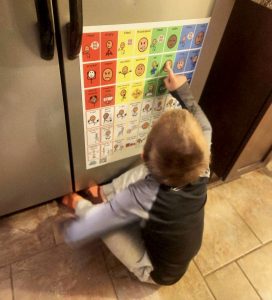
How To Help Navigate Emotions: Emotional Balance Communication Boards

Introduction:

As parents, caregivers, teachers, therapists, humans, we strive to help children navigate the complex world of emotions. Feelings are a fundamental part of our daily lives, influencing how we think, feel, and behave. For children, understanding and managing emotions can be especially challenging. Understanding and managing these feelings are  crucial for their well-being. Learning how to effectively and clearly express your emotional state can be challenging for children and adults alike.  A powerful tool that can assist in this process is emotional balance communication boards. These boards not only assist with effective communication but provide clear options for dealing with these big emotions. 

Understanding Emotional Balance/Regulation: 

Being able to clearly explain to adults and children alike how being emotionally balanced or regulated involves recognizing and managing one’s feelings in a healthy and constructive way.

Organizing and naming emotions:

Giving children and adults the exact words to name specific feelings is extremely powerful. When emotions run high (or low) having the tools to either give a child a voice by using a communication board or provide a visual reminder is imperative. 

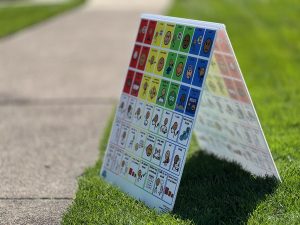
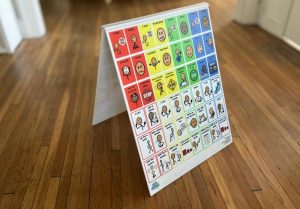
Grouping emotions is a common way to organize  a communication board specific for emotional balance/regulation. For example: 

  • Sad, Tired, Sick, Bored: Low states of alertness and down feelings.
  • Happy, Calm, Focused: The optimal state for learning and socializing.
  • Frustrated, Anxious, Nervous: Elevated states of alertness and intense feelings.
  • Angry, Terrified, Jealous: Extremely heightened states of alertness and intense feelings.

Providing visual reminders

Once an emotion is communicated, providing options to support the child or adult as they manage validates their feelings and teaches life long skills for maintaining emotional balance. 

For each group of emotions identified above are specific techniques that are easy to incorporate in any situation. For example: 

  • Sad, Tired, Sick, Bored: eating or drinking something, asking for a break, talking to a trusted person
  • Happy, Calm, Focused: ready to work, ready to learn, listen for instructions
  • Frustrated, Anxious, Nervous: counting to 10, taking deep breaths, asking for a break
  • Angry, Terrified, Jealous: asking for space, taking a walk, getting a drink of water


Benefits to Children and Adults

  • Increased Independence: Using emotional balance communication boards empower children and adults to express their emotions independently, leading to increased confidence and self-esteem.
  • Improved Emotional Literacy: Consistent use of emotional balance communication boards can improve an individual’s emotional literacy, helping them better understand and manage their feelings.
  • Empathy and Understanding: Using emotional balance communication boards promotes empathy and understanding by encouraging children and adults to recognize and respect others’ emotions.

Tips for Use

  • Daily Check-ins-  Use the emotional balance communication board for daily check-ins 
  •   Practice Techniques and Strategies:  practice the strategies that can help children move from one emotional group to another (e.g., deep breathing for moving from heightened state to calm state).
  • Encourage Open Communication: Create a safe space for individuals to discuss their emotions and ask for help when needed

Conclusion:

In conclusion, incorporating emotional balance communication boards can be a powerful way to help children and adults identify, understand, and regulate their emotions. By using this framework, parents and caregivers can support individuals in developing essential emotional skills and techniques that will benefit them throughout their lives.

emotional balance board

Following Your Schedule: How to get Back on Track

school

Holidays can be a time when the normal routine is disrupted. It’s time to get back on track and follow your daily routine.

Continue reading

Talking & Growing: New Year’s Resolutions for Speech Therapy

child giving high five to adult

A brand new year is days away, and that means we get a chance to make some new resolutions! This year, let’s think about making  some special resolutions for speech therapy.

**Practice Every Day:**

One resolution could be  to practice your speech exercises every day. Turn practice into playing a game.  The more you practice, the better you will become!

**Use My Special Words:**

Use the special words your speech therapist teaches you as much as possible. These words help you talk smoothly, and they make you  feel super proud!

**Speak Slowly and Clearly:**

Work on speaking slowly and clearly. This way, everyone can understand you when you talk. 

**Tell More Stories:**

Make a resolution to tell more stories or help your child tell more stories. Share your adventures, dreams, and funny moments. It’s a fun way to practice talking.

**Ask Questions:**

 Ask more questions and join in conversations. Questions help you learn new things, and it’s a cool way to make friends!

**Read Out Loud:**

Reading out loud is like a speech party! Pick your favorite books and read them to friends, family, or even to a pet. It’s great practice!

**Be Patient and Positive:**

Sometimes, it might feel tricky, but you might want to promise to be patient. Stay positive and celebrate even the small wins. Every step is a step forward!

**Thank Your Speech Helpers:**

We help each other, and this year, thank your speech buddies. We’re in this together!

**Try New Sounds:**

Be adventurous and try new speech sounds. It’s like a fun challenge to make your speech even more awesome!

**Celebrate Progress:**

At the end of each month, celebrate the progress you’ve made. Maybe treat yourself to something special. Yay for progress!

So there you go, friends! These speech therapy resolutions are yours for the taking. Let’s make it an amazing year of talking, growing, and reaching new speech goals together. Here’s to a fantastic year ahead! 

boy reading book to dog
children working with teachers at a table
child giving high five to adult

How to Prepare for Gift Giving & Receiving

Getting and giving gifts can be exciting but hard for some individuals. Preparing for this time of the year helps to make everyone’s celebration special.

Continue reading

5 Teletherapy Tips for Families – What You Need to Know

drawing of therapist performing teletherapy

As we are all beginning to adjust to teletherapy as well as online or elearning, we thought it best to share some tips to make you and your loved ones time in therapy, albeit significantly different than ever before, more successful. 

  1. Count on some sort of technology failure – if you count on the fact that the mic won’t turn on or your wifi will be running slow, you won’t panic when it does happen.  If there is a technology failure (on your side or on the therapist’s side), the first thing to do is breathe. Next calmly begin to troubleshoot. Prior to the appointment, you may want to trial the mic and speakers on the device you intend to use for therapy.  If your bandwidth on your wifi is slow, as those in your home to stay off the network or not engage in activities (streaming videos) that use a lot of bandwidth. If the session can’t happen, you can reschedule. Flexibility is key.
  2. Create a “Therapy Space” or designate a “Therapy Space” for the duration of the session.  You may want to create a ‘Therapy in Session’ sign with your loved one and hang it on the door of the room you are in for the session.  If you will be in a shared living area, you may want to consider the use of a headphone and mic combination. This will decrease the amount of background noise your loved one will hear as well as the therapist. Consider scheduling therapy at a time when others in your family would be napping or engaged in more quiet activities as well.  Creativity is key. 
  3. Count on staying with your loved one for the onset of the therapy session. For individuals that may need support to pay attention, consider this time extra snuggle time.  Have your loved one sit on your lap or very close to you during the session to help guide her/his attention to the therapist. This is time for your loved one to receive the critical therapy services needed as well as a time for YOU to better understand the techniques used to elicit specific behaviors, actions, and sounds from your child.  Teamwork is key. 
  4. Listen to the therapist and therapy session.  Remember, this is your loved one’s therapy time, not necessarily yours.  While it may be hard, refrain from answering the therapist’s questions for talking for your loved one. You may consider the situation/task that the therapist is asking your loved one to do is too difficult, but creating these situations to ‘push’ your loved one to the next level is necessary in progress towards mastery of goals. Trust is key. 
  5. Carryover of all the new skills learned during the therapy session (both for you and your loved one) is extremely important for everyone! You will have new skills to support your loved one as he/she works on speech-language skills.  Share what you have learned with others in your family. Help everyone realize the necessary supports to help your loved one succeed. Practice is key. 

Keeping in mind the importance of flexibility, creativity, teamwork, trust and practice will ensure your loved ones success with this different approach to speech-language therapy.  

More information about the telepractice services offered at Lakeshore Speech can be found at www.lakeshorespeech.com/telepractice or by calling 1-440-417-4190.

Yours in Speech, 
Lakeshore Speech Therapy, LLC