Inspiring Connections: Communication Board Design for Fun

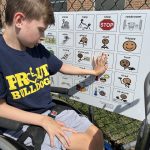
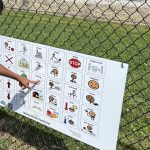
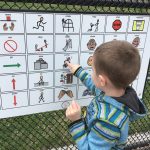
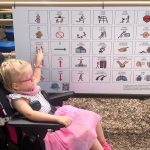
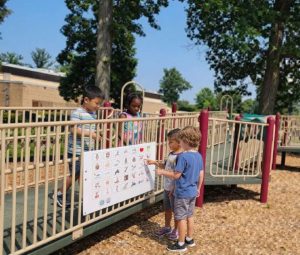
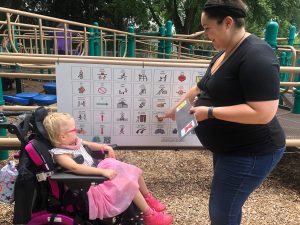
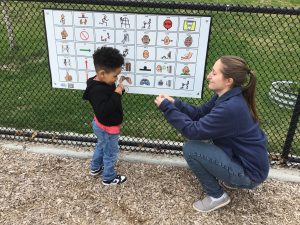
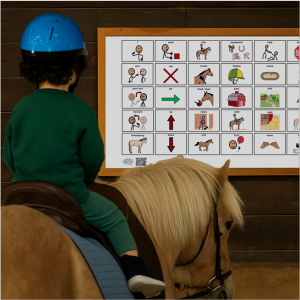
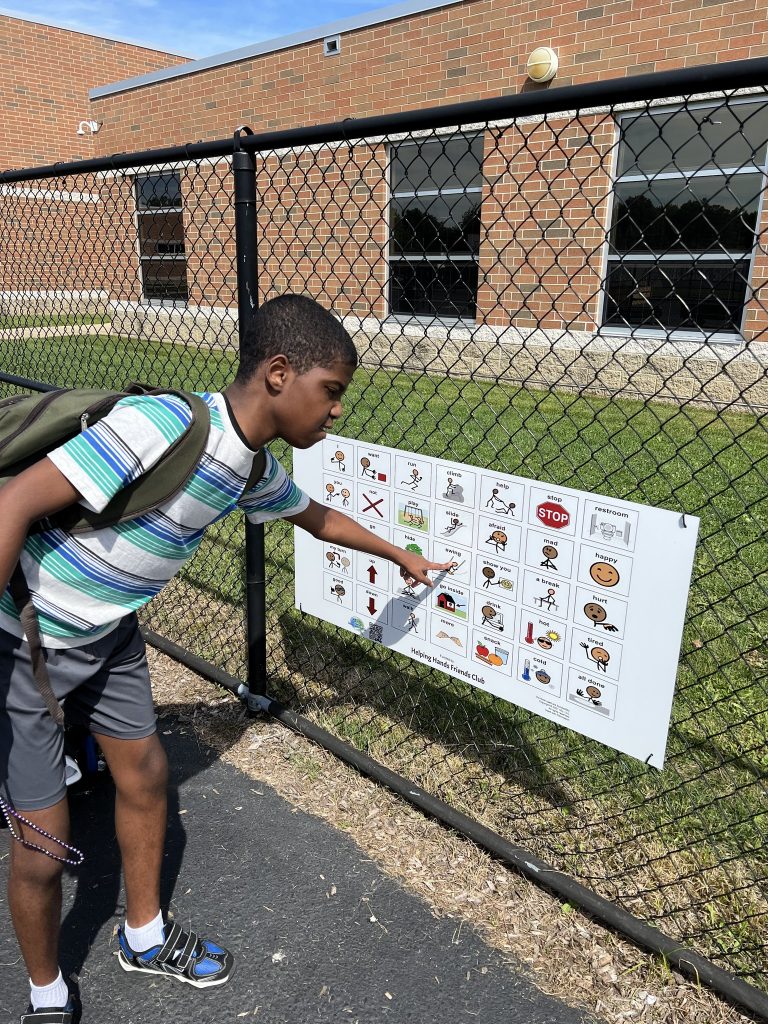
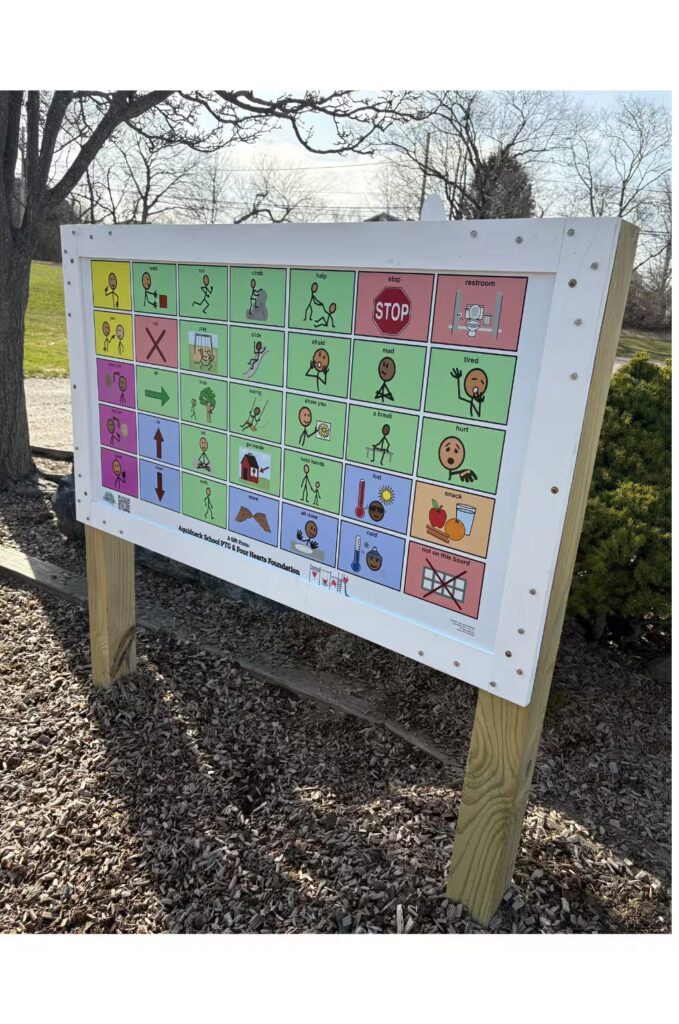
Teacher communicating with student using playground communication board.

Communication Board Design:
A Speech Pathologist’s Guide to Inclusive Play

At Resources at Lakeshore Speech, we’ve seen firsthand that a child’s “voice” doesn’t stop at the classroom door. As SLPs, we know that the playground is where some of the most vital social-emotional learning happens. However, for many children, these spaces can feel isolating without the right tools.

Communication board design is one of the most effective ways to bridge that gap. By bringing Augmentative and Alternative Communication (AAC) into the sunshine, we aren’t just providing a tool—we’re validating a language. This guide explores how to design these boards so they truly serve the families who need them most.

As we enter the “Spring into Action” season, many park departments and school boards are looking for ways to refresh their outdoor spaces. In our clinical experience, there is no better way to “spring into action” than by ensuring the very foundation of your community—the playground—is accessible to every single child, regardless of how they communicate. When we look at a park, we don’t just see equipment; we see opportunities for connection, and communication boards are the physical manifestation of that opportunity.

What exactly is a Communication Board?

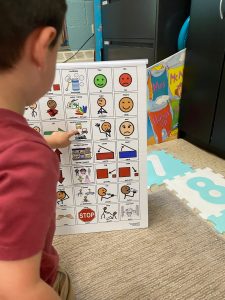
We refer to these as a form of “Light-Tech” AAC. These boards use symbols and pictures to help children—especially those with Autism, apraxia, or Down syndrome—express their thoughts when verbal speech is difficult.

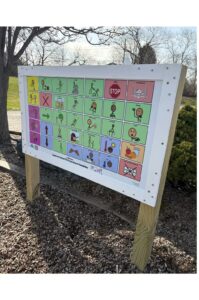
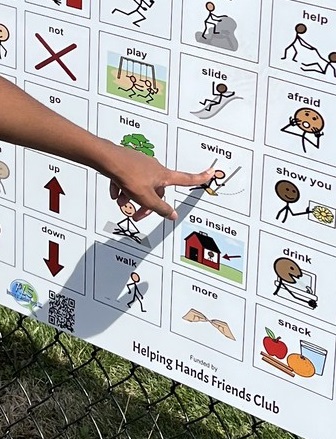
On a playground, a board acts as a “point-and-talk” station. Instead of a child feeling frustrated because they can’t ask for the “swing,” they can simply point to a symbol. This reduces the “communication breakdown” and invites neurotypical peers to interact in a way that is natural and visual.

It is important to remember that AAC is not a “replacement” for speech; rather, it is a tool that supports and enhances it. For many of our clients, having a visual representation of a word actually reduces the cognitive load required to produce speech. When a child isn’t struggling to find the motor plan for the word “slide,” they are free to focus on the joy of the activity itself. This is why communication board design must be intuitive—if a child has to hunt for a symbol for more than a few seconds, the “teachable moment” has often passed.

The Shift Toward Universal Design

Historically, we kept communication aids in small, portable folders. But as we move toward Universal Design, we are seeing these tools installed as permanent fixtures in parks. This shift tells our families: “We didn’t just build a park for some kids; we built it for yours, too.”

Universal Design is a framework that suggests environments should be usable by all people to the greatest extent possible, without the need for adaptation or specialized design. By integrating communication board design into the initial blueprint of a park, we move away from “special needs” being an afterthought and toward “human needs” being the primary focus. It turns a segregated experience into a shared one.

Why do Communication Boards Matter in Public Spaces?

As clinicians, we look at the playground as a “naturalistic environment” for language growth. Here is why inclusive playground design is so impactful:

  • Modeling in the Wild: For a child to learn AAC, they need to see others use it. When a parent points to “go” while pushing the swing, they are modeling language in real-time.
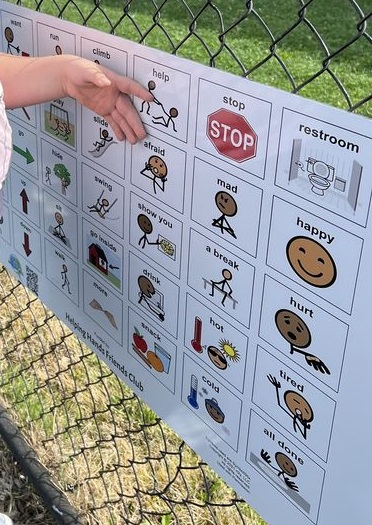
  • Reducing “Behavior” via Expression: We often say “behavior is communication.” When a child has a functional way to say “help” or “all done,” the frustration that leads to meltdowns often melts away.
  • Normalizing Neurodiversity: When every child in the neighborhood sees a communication board, AAC becomes “normal” rather than “different.” It builds a community of empathy from the ground up.

Furthermore, these boards serve as a safety net. Imagine a child who wanders or “elopes” (a common safety concern in the neurodivergent community). If that child is non-speaking and becomes separated from their caregiver, a communication board at the park entrance can be a literal lifesaver, allowing the child to point to symbols like “lost” or “mom” to communicate with a helping adult. This safety aspect is a frequently overlooked but vital component of communication board design in public infrastructure.

SLP Tips for Effective Communication Board Design

When you start planning, it’s easy to get overwhelmed by materials. Here is what we recommend focusing on to ensure the board is actually functional for the kids.

1. Durability and “Play-Proof” Materials

Since playground communication boards live outdoors, they need to be tough. We look for:

  • High-density polyethylene (HDPE) or heavy-duty aluminum.
  • UV-resistant coatings so the symbols don’t fade (if the “Stop” sign turns white, it loses its meaning!).
  • Non-glare surfaces to help children with visual processing needs see the icons clearly even in midday sun.

From an SLP perspective, the “tactile” feel of the board matters too. Children often “tap” or “slap” the icons with enthusiasm. We need materials that can take the vibration of a heavy-handed “Point” without rattling or degrading. We also have to consider the “cleaning” factor. Playgrounds are high-germ environments; effective communication board design ensures the surface can be wiped down with industrial-grade disinfectants without the ink running or the symbols peeling away.

2. The “Gold Standard” of Layout: Core Vocabulary

The most important part of communication board design is the vocabulary. We advocate for a “Core Vocabulary” approach.

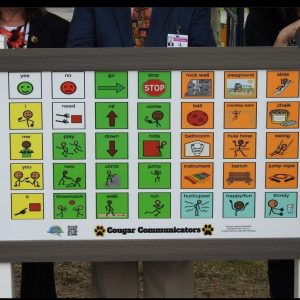
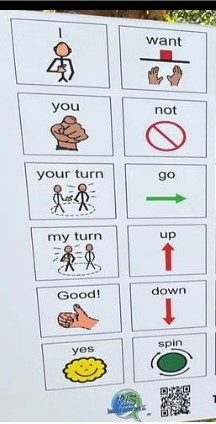
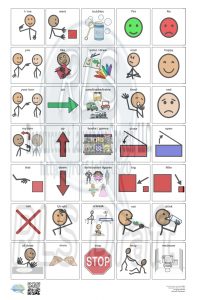
  • Core Words: These are high-frequency words like want, more, stop, go, help, I, you. They should take up the bulk of the board because they can be used in almost any situation.
  • Fringe Words: These are specific nouns like slide, swing, ball, or snack.
  • Consistency: Symbols should be placed where a child can reach them—ideally with the most used icons at chest height for a child or someone in a wheelchair.

In the world of AAC, “Motor Memory” is everything. Think about how you type on a keyboard without looking—that’s motor memory. If we change the location of the “Help” button every time we design a new board, the child has to relearn the “map.” Professional communication board design respects the user by keeping core words in consistent, predictable grids. This allows a child to become a “fast” communicator, which is essential when they are trying to keep up with the fast-paced world of playground play.

Can I Customize My Board for My Community?

Yes! One size rarely fits all in speech therapy, and the same goes for playgrounds.

  • Bilingual Support: If your neighborhood has many Spanish-speaking families, your board should absolutely be bilingual.
  • Site-Specific Symbols: A board at a pool needs different “fringe” vocabulary (like splash or cold) than a board at a wooded nature trail.
  • Symbol Sets: Whether you use Boardmaker (PCS) or SymbolStix, try to match what the local school district uses so the children have a “fluent” transition from school to play.

We also suggest thinking about the “Social-Emotional” vocabulary. Inclusion isn’t just about asking for a turn on the slide; it’s about making friends. Does your communication board design include icons for “My turn,” “Your turn,” “Play with me,” or “I like that”? These are the building blocks of friendship. By including social bridge words, we give neurodivergent children the tools to initiate play, which is one of the hardest—but most rewarding—social skills to master.

Let’s Build a More Inclusive Playground Together

Transitioning from a traditional playground to an inclusive one is a big step, and it’s okay to have questions about the clinical side of the process. At Resources at Lakeshore Speech, we don’t just “sell” boards—we partner with communities to make sure the communication board design is linguistically sound and culturally relevant.

As you look to “Spring into Action” this month, think about the voices in your community that are currently unheard.

Are you curious about which symbols would work best for your specific park or how to fund an installation? We’d love to chat!

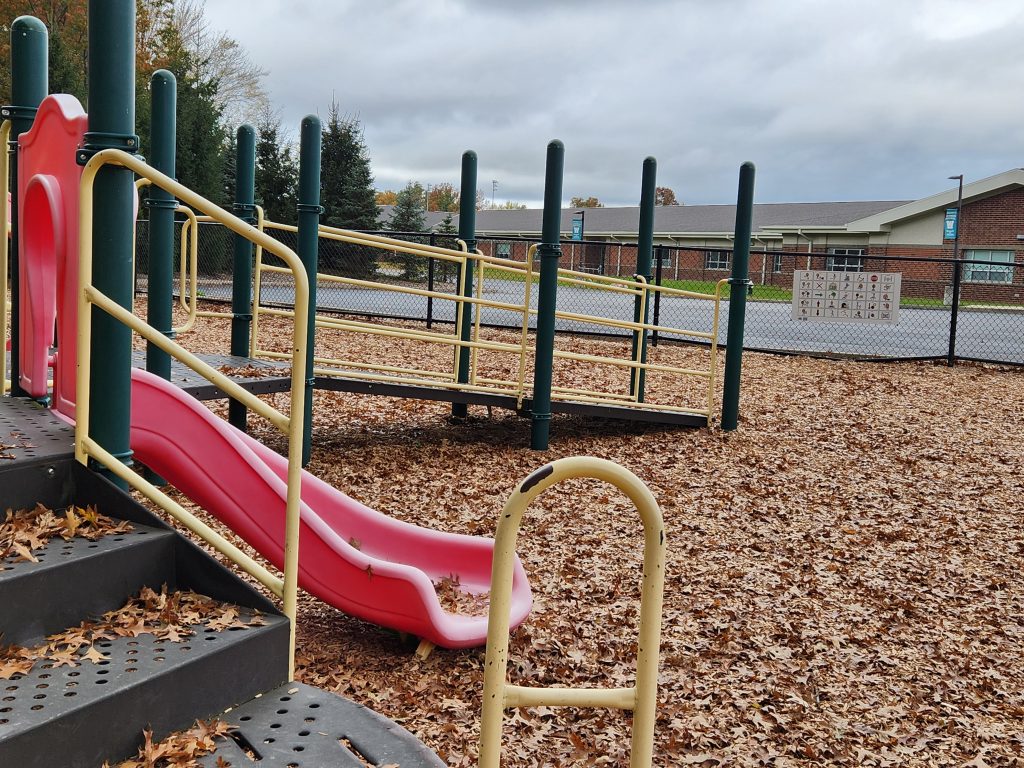
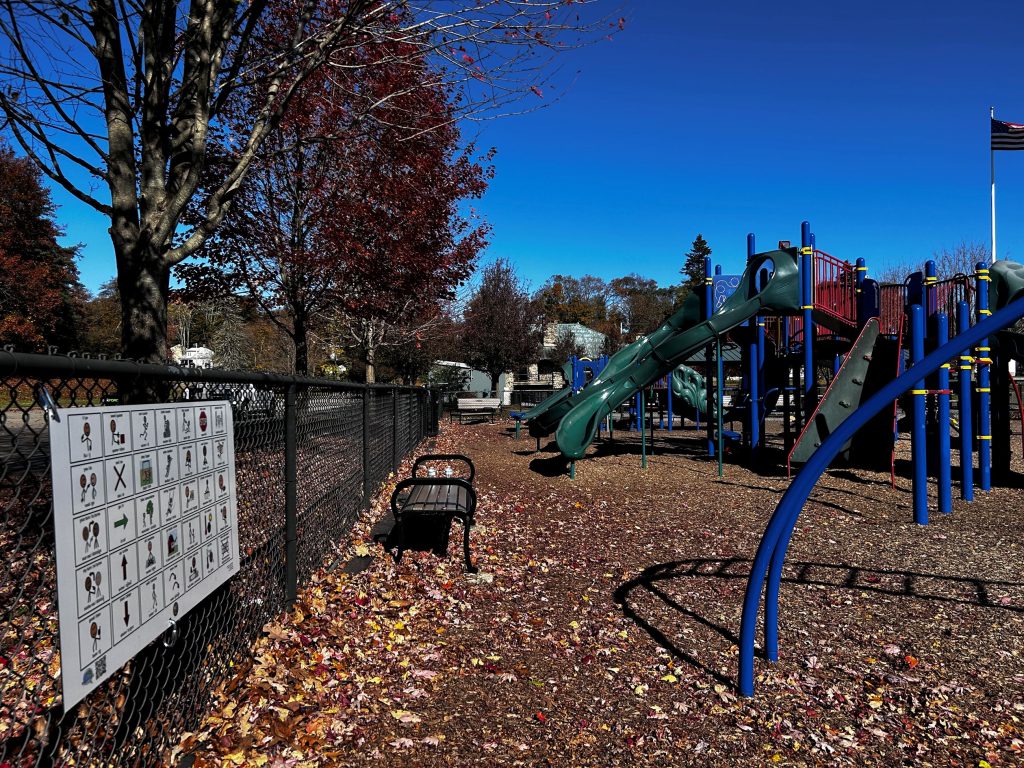
communication board design at Fairview Park Ohio
how to create sentences with AAC
playground communication board design - motor memory
communication board design

Inspiring Connection Through Weatherproof Communication Boards

playground communication board design - motor memory

Engineering Inclusion for the Outdoors with Weatherproof Communication Boards

The playground is a child’s primary laboratory for social development, a space where negotiation, cooperation, and friendship are forged through play. However, for many children with complex communication needs, these vibrant environments can feel like silent islands. At Resources at Lakeshore Speech, our mission is to provide functional communication tools and expertise that empower families and communities to foster inclusion. We believe that true accessibility requires more than just a physical ramp; it requires a voice. This is why we are advocating for a shift in community design through the strategic implementation of a weatherproof communication board.

As Speech-Language Pathologists (SLPs), we write from a collective perspective of experts, advocates and peers. We view the “anatomy” of a communication tool through a clinical lens, ensuring every design choice facilitates functional connection. By integrating outdoor AAC boards into public spaces, we bridge the gap between classroom learning and real-world play, allowing children to communicate their needs and feelings in real-time. In this analysis, we explore the clinical foundations, technical durability, and transformative community impact of these essential tools.

The Clinical Blueprint: Why AAC Belongs Outdoors

In the world of Speech-Language Pathology, a primary goal is “Generalization”—the ability of a student to take a skill learned in a quiet therapy room and apply it in a loud, chaotic environment like a park. A weatherproof communication board is the ultimate tool for this transition.

The Power of Aided Language Stimulation

When a weatherproof communication board is present, it allows for “modeling,” a professional term for when a communication partner points to symbols on the board while speaking. This practice helps children understand how symbols represent spoken words in natural contexts. For a child using Augmentative and Alternative Communication (AAC), seeing others use a communication board validates their way of speaking. It moves AAC from a “special education” tool to a community-wide language.

Breaking Down Barriers to Social Play

Without a dedicated tool, a child who is non-speaking may struggle to initiate play. A durable communication board acts as a social “anchor,” providing a shared visual language that all children—regardless of their abilities—can use to interact. When a communication board is available, a child can point to the “swing” or “slide” symbol to invite a peer to play, removing the frustration of being misunderstood.

Technical Specifications: Engineering for Longevity

Not all signs are created equal. To withstand the elements—from the salty air of Rhode Island to the intense heat of California—a weatherproof communication board must be engineered for extreme durability. Our designs are rooted in over 60 years of collective SLP experience to ensure they are as functional as they are tough.

Material Excellence: Aluminum Communication Boards

We prioritize aluminum communication boards because of their resilience. Unlike plastic or wood, high-grade aluminum does not warp, crack, or fade significantly under UV exposure.

  • Vandal Resistance: A weatherproof communication board should feature protective coatings that allow for the easy removal of graffiti, ensuring the “voice” of the community stays clear.
  • UV Protection: High-quality inks ensure that symbols remain vibrant and legible for years, which is critical for visual processing.
  • Safety First: Rounded corners and smooth edges are non-negotiable for a communication board placed in play areas.

Symbol Consistency: SymbolStix and Boardmaker/PCS

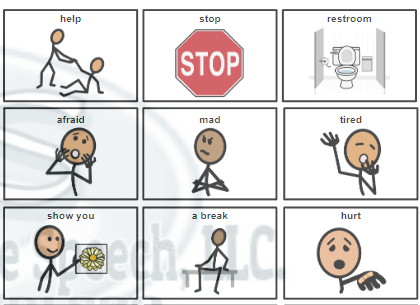
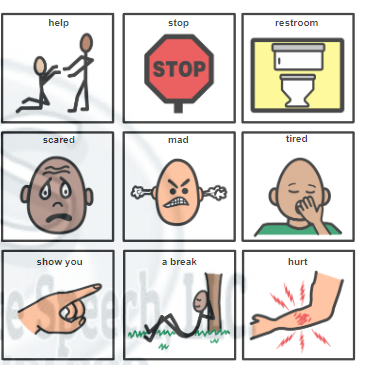
A key differentiator for Resources at Lakeshore Speech is our commitment to symbol consistency. We offer both SymbolStix and Boardmaker/PCS systems to match exactly what students are using in their local classrooms.

  • The Clinical Benefit: When a communication board matches the symbols a child already knows, the cognitive load is reduced, making communication spontaneous rather than exhausting.
  • Integrated Education: Every communication board we produce features a QR code. When a parent scans this code, they are instantly linked to a “how-to” modeling video for immediate caregiver support.

Understanding the Anatomy of Symbol Systems

To engineer a truly inclusive space, one must understand the “why” behind the symbols chosen for a weatherproof communication board. Much like the blog on symbol systems, we categorize language into two main groups to maximize functionality:

Core Vocabulary: The Foundation of Play

On a communication board, core vocabulary consists of high-frequency words that make up about 80% of what we say daily. These include:

  • Verbs: Go, stop, want, play.
  • Prepositions: Up, down, in, out.
  • Social: Hi, help, more, my turn.

Because these words are versatile, they allow a child to communicate across different playground activities without needing a different board for the swings than they do for the sandbox.

Fringe Vocabulary: The Specifics of the Park

Fringe vocabulary refers to words that are specific to a particular topic or setting. On a communication board, this might include:

  • Equipment: Swing, slide, monkey bars, tunnel.
  • Descriptive: Fast, high, loud, fun.

By combining core and fringe vocabulary, the communication board provides a robust linguistic environment that supports both basic needs and complex social interactions.

Deep Dive: People Also Ask

How do we choose the right symbol system for our weatherproof communication board?

This choice often depends on what the local school districts use. If most students in your area use Boardmaker in the classroom, installing a weatherproof communication board with those same symbols ensures a seamless transition from school to community play.

Can a weatherproof communication board be customized for our city?

Yes. We believe in 100% customization. We offer agency or donor logo additions at no extra cost, allowing local Rotary Clubs or school districts to take pride in their contribution to community inclusion through the communication board.

Why is a weatherproof communication board better than a personal tablet?

While personal AAC devices are vital, they are often fragile and expensive. A communication board provides a permanent, stationary backup that won’t run out of battery or get damaged by sand and water. Furthermore, the communication board allows multiple children to interact simultaneously, fostering group play.

Establishing Topical Authority: The SLP Perspective

As SLPs, we don’t just care about the hardware; we care about the “why”. Research in the field of Speech-Language Pathology consistently shows that environmental supports increase the frequency of communication attempts. We rely on clinical evidence and the real-world impact seen across the country. The decision to install a communication board should be based on the validated challenges families face.

Feature of a Weatherproof Communication Board

Professional Rationale

Community Impact

Clinical Roots

Designed by SLPs with 60+ years of experience.

Reliable, evidence-based tools.

Symbol Consistency

Matches school-based AAC systems.

Seamless transition from school to play.

QR Integration

Provides immediate modeling support.

Empowers parents as communication partners.

Durable Materials

Uses high-grade aluminum.

A long-term investment in accessibility.

Conclusion: Engineering a More Inclusive Future

The installation of a weatherproof communication board is a powerful statement. It tells every family in your community that their child’s voice is valued and protected. By combining clinical expertise with durable engineering, we can transform public spaces into inclusive havens where communication is celebrated.

Resources at Lakeshore Speech is proud to be your partner in this mission, providing the functional tools and expertise necessary to foster true inclusion. Whether you are an educator, a parent, or a community leader, we are here to support your journey toward a more accessible world.

Would you like us to help you advocate for a communication board in your local park?

Contact Resources at Lakeshore Speech for a consultation on which symbol system fits your community best.

weatherproof communication boards
playground communication board
weatherproof communication board - winter
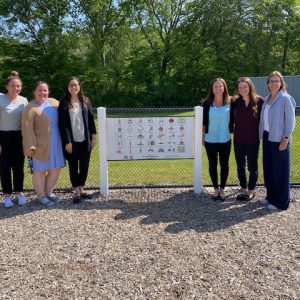
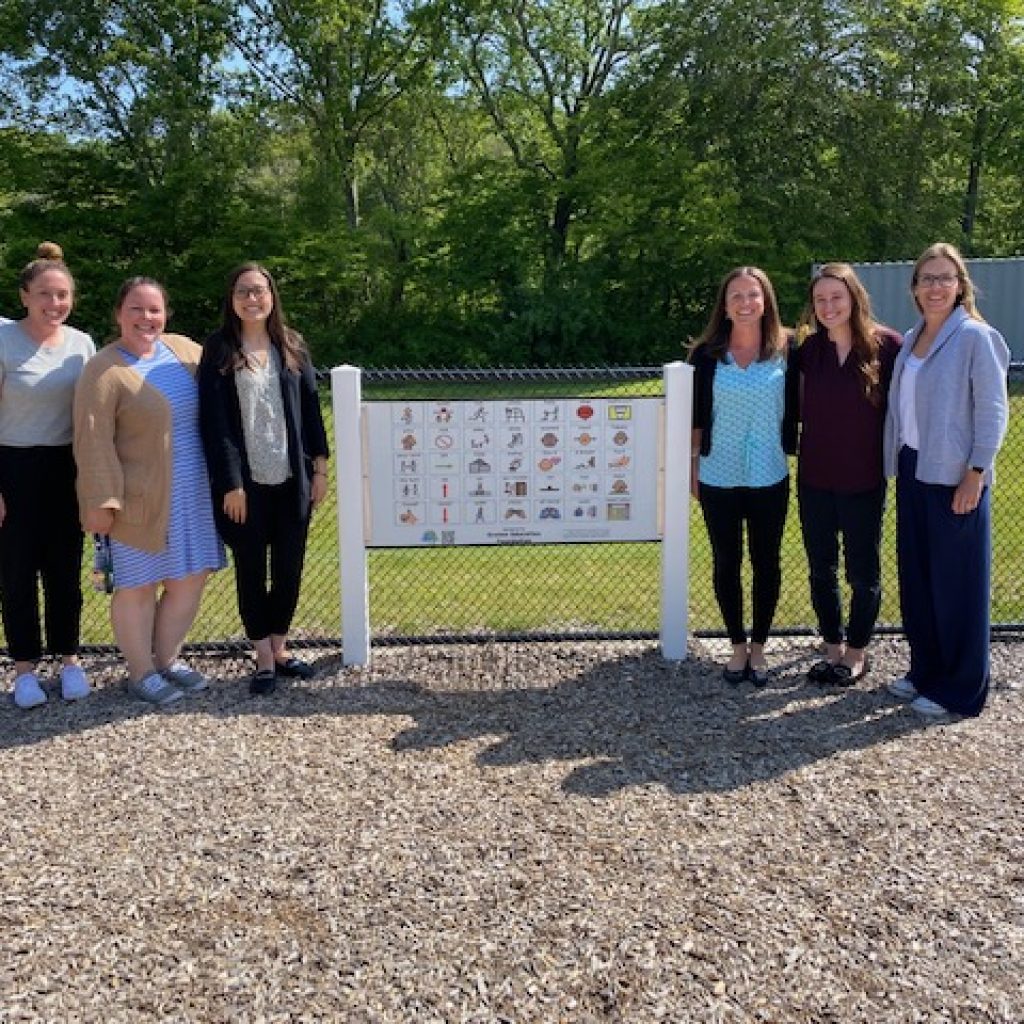
Smiling teachers, therapists, administrators and students standing around a newly installed playground communication board

Communication in Spring: Boosting Playground Engagement

communication board design at Fairview Park Ohio

Why Now is the Time for Playground Communication Boards

As the winter frost recedes and the first signs of spring emerge, communities across the country begin to look toward their local parks as hubs of connection, movement, and joy. However, for many families, a trip to the playground can be a reminder of the barriers that still exist for children with complex communication needs. At Resources at Lakeshore Speech, we believe that communication is a human right that should never be paused because a child stepped outside.

This guide marks the kickoff of our “Springing into Action” series. Our goal is to provide families, educators, and community leaders with a comprehensive, evidence-based roadmap to implementing playground communication boards before the peak summer season arrives. As Speech-Language Pathologists (SLPs) with over 60 years of combined experience, we are here to move beyond “marketing fluff” and provide the logical, professional solutions your community deserves.

Understanding the Foundation: What are Playground Communication Boards?

To “spring into action” effectively, we must first define our tools. A playground communication board is a large-scale, durable outdoor sign featuring symbols, icons, and text that allow non-speaking or minimally verbal individuals to communicate. In clinical terms, these are a form of Augmentative and Alternative Communication (AAC).

The Science of AAC Playground Boards

While some might see these as “just signs,” they are actually sophisticated clinical tools designed to facilitate motor planning and language acquisition. At Resources at Lakeshore Speech, we focus on Core Vocabulary—the set of words that make up approximately 80% of our daily communication. By placing these symbols (such as “more,” “want,” “help,” and “go”) in a functional play environment, we provide children with the building blocks of expression.

Why “Light-Tech” Works Outdoors

Unlike high-tech speech-generating devices (tablets), AAC playground boards are “light-tech.” They don’t require batteries, they don’t break when dropped, and they are visible to everyone in the area. This creates a “Universal Design” environment where communication is modeled for everyone, not just the child with a diagnosis.

The Case for Inclusion: Why Your Park Needs One Now

As we approach the warmer months, the “why” becomes urgent. Inclusion isn’t just about physical access (ramps and rubber surfacing); it’s about social-emotional access.

Breaking the Silence of the Playground

For a child who cannot use their voice to say “My turn” or “I’m scared,” the playground can be a frustrating place. Consequently, we often see “behaviors” that are actually just unmet communication attempts. Communication boards for parks offer a logical alternative, allowing a child to point to a symbol to express a thought immediately.

Clinical Roots and Evidence-Based Practice

At Resources at Lakeshore Speech, we don’t use “revolutionary” or “unbelievable” adjectives to sell our boards. Instead, we rely on our Clinical Roots. Research in our field consistently shows that visual supports reduce frustration and increase peer-to-peer engagement. When a neurotypical peer sees a communication board, they are often the first to use it to invite a non-verbal friend to play.

Key Differentiators: The RLS Standard

Not all boards are created equal. When you are advocating for inclusive playground signage, it is important to understand the technical standards that ensure long-term success.

Symbol Consistency: SymbolStix vs. Boardmaker/PCS

A child’s “voice” shouldn’t change when they leave the classroom. One of our non-negotiables is offering both SymbolStix and Boardmaker/PCS. This allows a community to match the symbol system already used in their local school district, ensuring the child doesn’t have to learn a new “language” just to play.

communication symbol system - SymbolStix
SymbolStix icon for "slide"
communication symbol system
Boardmaker icon for "slide"

100% Customization and Donor Support

Getting a board funded is often the biggest hurdle. To help, we offer 100% customization, which includes adding agency or donor logos at no additional cost. This is a key differentiator from our competitors and allows local businesses or rotary clubs to see their contribution permanently recognized in the community.

Integrated Education via QR Codes

The board itself is only half the battle; the caregivers need to know how to use it. Every board we produce features a QR code that links to a “how-to” modeling video. This provides immediate, professional SLP support to a parent standing in the park, right when they need it most.

playground communication board
inclusion - how to choose a playground communication board

People Also Ask: Addressing Community Concerns

“Who actually benefits from these boards?”

While primarily designed for children with Autism, Down Syndrome, or Cerebral Palsy, outdoor AAC boards help a much wider demographic. This includes toddlers who are “late talkers,” English Language Learners who may not know the specific word for “swing,” and even adults with aphasia or other communication disorders.

“Are they durable enough for our weather?”

We have a proven track record in 24 states, from the coastal humidity of Rhode Island to the intense heat of California. Our boards are designed to be “park-tough,” standing up to UV rays, rain, and the general wear-and-tear of a busy public space.

“How do we start the process?”

“Springing into action” starts with advocacy. We recommend contacting your local Parks and Recreation department or Town Council. You can approach them as a peer, using the evidence-based benefits of communication access to make your case.


Implementation Strategy: How to “Spring” into Action

If you want a board installed by summer, the time to start is now. Here is a professional checklist to guide your community:

  1. Site Selection: Choose a location that is central and visible, such as near the main play structure or the park entrance.
  2. Symbol Alignment: Talk to local school SLPs to see which symbol set (SymbolStix or Boardmaker) is most common in your area.
  3. Funding and Sponsorship: Identify local donors. Remember, we add their logos for free to help you secure that partnership.
  4. Order and Install: Once the design is finalized, our team at Resources at Lakeshore Speech handles the production to our high clinical standards

A Collective Mission for Inclusion

At Resources at Lakeshore Speech, we view ourselves as your partners in this journey. We aren’t just selling a product; we are providing a tool for inclusion that has been refined through 60+ years of professional practice. We validate the challenges families face, and we are here to provide the logical, professional solution that helps every child find their voice.

As the seasons change, let’s ensure that our playgrounds evolve too. Let’s move away from silent parks and toward communities where every child—regardless of how they communicate—is invited to the conversation.

Ready to get started?

Would you like us to help you advocate for a communication board in your local park?

Whether you need a consultation on symbol systems or a formal proposal to take to your city council, the team at Resources at Lakeshore Speech is ready to help. Contact us today to see how we can bring communication access to your community this spring.

Symbolstix communication board
SymbolStix Icon System
playground communciation board Boardmaker
Boardmaker Icon System

 How to Create Communication Boards for Water Play Areas

water safety

For children with communication differences, water play areas can be overwhelming and isolating. Read how to enhance accessibility and inclusivity, implementing communication boards.

Continue reading

Effective Communication Boards in Schools — What They Are and Why They Matter for School Leaders

Communication Boards in Schools Matter More Than Ever

As certified speech-language pathologists, we see firsthand how simple supports can transform a school’s culture. One tool that is gaining rapid traction, especially among district leaders who prioritize equity and inclusion, is the use of communication boards in schools.

These boards are not new to the world of AAC (augmentative and alternative communication), but their integration into hallways, classrooms, cafeterias, playgrounds, and common areas is a powerful—and necessary—shift. They ensure that all students, including autistic learners, multilingual students, and children with complex communication needs, have access to language throughout the school day.

And increasingly, district administrators are realizing something important: Case studies are essential.

At Resources at Lakeshore Speech, we are a small, SLP-owned company committed to supporting inclusive, language-rich school environments across the country. Every day, we partner with school districts, administrators and educators who want to create learning spaces where all students can thrive—especially those with communication differences or disabilities.

Real examples help leaders understand what implementation looks like, what challenges to expect, how outcomes are measured and why communication boards are more than “extra supports”—they are essential tools for inclusion, peer interaction, and accessible instruction.

In this blog, we explore:

  • What communication boards are
  • Why school case studies matter for leaders
  • Featured examples from districts across the country
  • Lessons learned
  • Recommendations for administrators ready to take the next step


Let’s begin by looking at the foundation.

What Is a Communication Board?

A communication board is a visual support system that uses symbols, pictures, words or icons to represent language. Students can point to the symbols to express needs, ask questions, interact socially, and participate meaningfully in school routines.

In the school setting, the term communication boards in schools refers to:

  • Classroom-based boards
  • Cafeteria or hallway boards
  • Playground boards
  • Portable or laminated boards
  • Wall-mounted communication supports in therapy or resource rooms
  • Communication boards tailored for specific subject areas (e.g., science lab vocabulary)

Communication boards can be used as:

  • A communication support for autistic students
  • A universal design tool for multilingual learners
  • A behavior-support tool
  • A scaffold for peer interaction
  • A low-tech backup for students who use high-tech AAC devices

Schools often request specialized versions such as a:

  • Communication board for autistic students (often emphasizing sensory, emotional regulation, and choice language)
  • Communication board for inclusion (broad, accessible vocabulary all students can use)
  • Communication board for special needs (adapted for motor, cognitive, or sensory access needs)
  • Communication board for peer interaction (playground, recess, small-group work, restorative circles, and SEL activities)

Regardless of the format or purpose, all communication boards in schools share the same goal: To give every student consistent access to language.

And that is where strong case studies help school leaders visualize, plan, and implement successful programs.

Communication boards in schools
inclusion - how to choose a playground communication board

Why Case Studies Matter for School Leaders

District leaders often ask:

  • “Will communication boards actually make a measurable difference?”
  • “What does implementation look like at scale?”
  • “How will we evaluate impact?”
  • “How much training do staff need?”
  • “How do we pick the right vocabulary?”
  • “Will typical peers use the boards too?”

Case studies answer these questions by showing real-world examples of what works (and what doesn’t).

Case studies give school leaders:

1. Evidence for decision-making

Stories with concrete results help justify funding, staffing, and resource allocation.

2. Models for implementation

Administrators can see how other districts introduced, taught, and sustained communication board use—not just in special education, but schoolwide.

3. Insight into challenges

Every district faces unique hurdles. Case studies help leaders anticipate and prevent obstacles.

4. Student-centered outcomes

Data is valuable, but stories—especially stories of communication growth—bring meaning and urgency to district decisions.

5. A roadmap for scaling

School leaders can learn how to integrate communication boards across buildings, grade levels, and programs.

This is why we’ve included several detailed, realistic case studies below.

Case Study #1:

A District Adds Communication Boards to All Common Areas

Project Overview

A mid-size district wanted to improve access to communication supports for students with autism and students with emerging expressive language skills. The special education director noticed that many students struggled during transitions—hallways, gym classes, arrival, and dismissal.

Challenges Identified

  • High-energy transitions overwhelmed many autistic students
  • Students using AAC devices often did not have access during out-of-class moments
  • Staff reported meltdowns and communication breakdowns in hallways

Solutions Implemented

  • Wall-mounted communication boards in schools were added in:
    • Main hallways
    • Near the office
    • By restrooms
    • In gym entrances
  • Boards included both core and fringe vocabulary (e.g., “stop,” “wait,” “help,” “go,” “line up,” “chair,” “tired,” “bathroom”).
  • SLPs trained staff in modeling and prompting strategies.

Outcomes

  • Reduction in hallway behavioral incidents
  • Increased independence for autistic students
  • Quicker transitions
  • Staff reported feeling better equipped to support students

Feedback

Teachers said the boards helped them communicate more efficiently with students who didn’t have access to devices during movement between classes.

A teacher shared:
“I didn’t realize how much my nonverbal students needed language between spaces. Now they always have a voice.”

Case Study #2:

Recess-Based Communication Boards for Peer Interaction

Project Overview

An elementary school wanted to improve recess engagement for students who rarely initiated or joined peer play. SLPs suggested adding a communication board for peer interaction near the playground and blacktop.

Challenges Identified

  • Students with language delays were isolated during recess
  • Peers wanted to include them but didn’t know how
  • AAC devices were usually not brought outdoors

Solutions Implemented

  • A large playground communication board was installed
  • Vocabulary targeted: games, feelings, requests, greetings, turn-taking
  • SLPs demonstrated usage during recess clubs
  • Student leaders (4th–5th grade “Play Buddies”) were trained to model symbols

Outcomes

  • More inclusive play groups
  • Peer-initiated social interaction increased
  • Students with complex needs used the board independently
  • Teachers reported fewer social conflicts

Feedback

A parent of an autistic student said:
“For the first time, my son came home and said he played with friends. This board changed recess for him.”

Case Study #3:

Classroom-Led Academic Boards to Support Inclusion

Project Overview

A district with a growing population of multilingual learners and autistic students wanted to support content access. SLPs partnered with teachers to create communication boards in schools tailored to academic units.

Challenges Identified

  • Vocabulary demands were high
  • Students struggled to participate in group discussions
  • High-tech AAC devices couldn’t be easily adapted for every academic topic


Solutions Implemented

  • Unit-specific boards for science, literacy, SEL, and math
  • Boards taped to student desks and posted on whiteboards
  • Teachers taught 2–3 symbols a day using explicit modeling
  • SLPs provided push-in support to demonstrate integration


Outcomes

  • Increased oral participation from multilingual and autistic students
  • Decreased frustration during writing and lab work
  • Stronger alignment with IEP communication goals


Feedback

Teachers reported that boards functioned as universal design tools—beneficial not only for students with special needs but for the entire class.

Case Study #4: 

Districtwide Rollout of Communication Boards for Special Needs Programs

Project Overview

A district undergoing a special education audit wanted consistency across programs. Some classrooms used communication supports; others did not.

Challenges Identified

  • Inconsistent vocabulary
  • Staff discomfort with AAC
  • Students struggling with transitions between schools

Solutions Implemented

  • Districtwide core vocabulary selection
  • Uniform branding and color coding
  • Boards installed in therapy rooms, resource spaces, calming areas, and cafeterias
  • Mandatory professional development for all staff—general education included
  • Family training sessions

Outcomes

  • Streamlined AAC support across schools
  • Increased consistency for students moving between grades or buildings
  • More collaboration between SLPs, teachers, and paras

Feedback

Administrators reported increased IEP team satisfaction and more cohesive programming.

Lessons Learned from Real District Implementations

Across all projects, we notice common themes. These lessons help school leaders plan effective, sustainable programs.

Lesson 1: Universal Access Matters

Boards cannot just be in special education rooms. When communication boards in schools are placed in:

  • hallways
  • cafeterias
  • recess areas
  • buses and arrival zones
  • music and art rooms

students use them more—and so do peers and staff.

Lesson 2: Training Is Essential

Even the best tools fall flat without training. Successful districts offered:

  • SLP-led modeling sessions
  • Coaching for paraprofessionals
  • Classroom demonstrations
  • Role-playing for peer leaders
  • Quick visual guides for teachers

Training doesn’t need to be lengthy—a 20-minute session before school can make a big difference.

Lesson 3: Vocabulary Should Be Purposeful

Communication boards in schools must be age-appropriate, culturally responsive and consistent.

Successful districts choose vocabulary that supports:

  • Social-emotional learning
  • Classroom engagement
  • Play and peer interaction
  • Functional communication
  • Academic content

Lesson 4: Visibility Equals Use

The more visible the board, the more likely it will be used.

Districts see the best results when boards are:

  • Large (3’x2’ or 4’x2’)
  • Eye-level (top of board no more than 36” off the ground)
  • Bright and friendly
  • Consistent in design
  • Integrated into routines

Lesson 5: Peers Are the Best Communication Partners

Inclusion improves when typical peers are taught how to use the board.

Student leaders, playground helpers, and recess buddies played essential roles in every successful case study.

community

Recommendations for Other Districts

If you are a school administrator or district leader exploring communication boards in schools, here are clear recommendations from the SLP team at Resources at Lakeshore Speech.

Example of a project involving funding communication boards in a local park

1. Start With One Pilot School

Choose a school with:

  • strong admin support
  • engaged SLPs
  • motivated teachers

Success spreads quickly.

2. Involve SLPs from Day One

SLPs understand:

  • symbol selection
  • AAC principles
  • accessibility needs
  • implementation strategies

Their expertise ensures the board is functional, not just decorative.

3. Focus on High-Impact Areas First

Prioritize:

  • playgrounds (for peer interaction)
  • cafeterias
  • hallways
  • arrival/dismissal zones
  • therapy and calming areas

These environments benefit immediately.

4. Train Staff Before Installation

One short, well-organized training session improves confidence and buy-in.

5. Add Family Training Opportunities

Families often want to extend communication access at home.

Offer:

  • take-home boards
  • evening workshops
  • multilingual materials

6. Track Outcomes

Look for:

  • changes in peer interaction
  • reduction in behavior incidents
  • increased independence
  • IEP progress
    teacher feedback

Use these data points to refine the system.

Replicating Success in Schools Across the Country

Communication boards in schools are more than visual tools—they are an investment in inclusion, equity and accessible communication for all students. They support autistic learners, multilingual students, children with special needs, and peers who want to connect but may not know how.

Case studies show us that when schools adopt these tools, the results are powerful:

  • improved peer interaction
  • increased independence
  • stronger inclusive practices
  • more efficient transitions
  • reduced frustration and behavior concerns
  • greater staff confidence
  • consistent support across classrooms and campuses

At Resources at Lakeshore Speech, we are passionate about helping districts create communication-rich environments where every student has a voice.

We would love to help your district build an inclusive, accessible communication system that benefits students, staff and families. Contact us today.

A Guide to Selecting the Right Symbol System : The Power of Choice

Funding guide for community playground communication boards.

The Power of Choice: A Guide to Selecting the Right Symbol System for Communication Boards

Communication is the heartbeat of human connection. For many individuals, finding the right way to express a thought, a need, or a dream requires more than just spoken words—it requires a visual language. At Resources at Lakeshore Speech, our team of dedicated speech-language pathologists (SLPs) is committed to providing individuals with communication differences a voice. With over 60 years of combined experience, our founders, VernaAnn Kotansky and Ellen Spear, have seen firsthand how the right symbol system can transform a child’s ability to interact with their world.

When designing inclusive environments—whether it’s a local park, a classroom, or a healthcare facility—the choice of visual icons is one of the most critical decisions you will make. This guide is designed to walk families, educators, and community leaders through the nuances of the most popular systems and help navigate the process of choosing symbol systems that empower every communicator.

What is a Symbol System?

In the world of Augmentative and Alternative Communication (AAC), a symbol system is a structured collection of graphic representations used to convey meaning. These can range from highly realistic photographs to abstract line drawings. For a child with autism, a student with Down syndrome, or an adult recovering from a stroke, these symbols serve as the building blocks of language.

When we create communication boards, we aren’t just placing pictures on a sign; we are selecting a linguistic framework. The goal is to create a bridge between an internal thought and an external expression. By understanding the different types of icons available, we can ensure that the “voice” provided is as clear and functional as possible. As we dive deeper into helping to better understand AAC symbol systems, it becomes clear that these systems are the very foundation of an individual’s ability to participate in their community.

Comparing the Most Popular Symbol Systems

Not all visual languages are created equal. Each symbol system has its own “logic,” aesthetic, and level of complexity. Here is a breakdown of the systems most commonly used:

1. Picture Communication Symbols (PCS) by Boardmaker

PCS is perhaps the most widely recognized symbol system in the world. Developed by Mayer-Johnson, these icons are characterized by their simple, clear line drawings.

  • Classic PCS: These are the familiar “egghead” figures. They are intentionally gender-neutral and minimalist to reduce visual clutter.
  • Thinline PCS: These offer a more modern, realistic look with detailed figures.
  • High Contrast PCS: Specifically designed for individuals with visual impairments (such as CVI), these use bright colors against black backgrounds.

2. SymbolStix

If you have used popular AAC apps like Proloquo2Go or TouchChat, you have likely encountered SymbolStix.

  • Pros: SymbolStix is excellent for representing verbs and abstract concepts because the figures are often shown in action.
  • Integration: It is the standard for many educational curricula, making it a common choice for school-based communication boards.

3. Widgit Symbols

Widgit is a highly structured symbol system featuring a very consistent “schema”—for example, all symbols related to time might share a specific visual element. This internal logic can help some learners “decode” new words more easily.

How to Choose the Symbol System to Use When Making a Communication Board

Selecting the right visual language is a process known in the SLP world as “feature matching.” It is not about aesthetic preference; it is about finding the most functional tool for the user. When choosing symbol systems, consider the following clinical criteria:

1. Evaluate the Learner’s Visual Profile

Before picking a symbol system, we must look at the user’s vision. Can they see fine lines, or do they need bold, high-contrast icons? For individuals with Cortical Visual Impairment (CVI), a high-contrast system is often the only way to ensure the symbols are actually processed by the brain.

2. Consider Iconicity and Transparency

Iconicity refers to how closely a symbol resembles the real-world object it represents.

  • Transparent Symbols: A picture of a “ball” that looks exactly like a ball is highly transparent.
  • Opaque Symbols: Abstract symbols (like the word “more” or “want”) are opaque and must be taught.
    A robust symbol system should balance clear nouns with recognizable representations of “core vocabulary”—the verbs, adjectives, and pronouns that make up 80% of what we say.

3. Environmental Consistency

Consistency is a cornerstone of AAC success. If a child uses SymbolStix on their personal tablet at home, it is often best to use the same symbol system on the communication boards at their school or local playground. This reduces the “cognitive load,” allowing the user to focus on what they want to say rather than learning a new language every time they change locations.

4. The Science of Placement and Organization

There is a specific clinical science to where icons are placed on a communication board that SLPs utilize to foster language development. This is not arbitrary; it is rooted in motor planning and linguistic mapping.

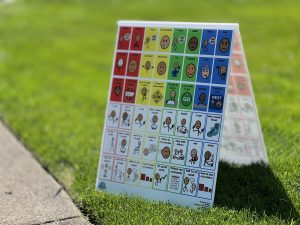
The Modified Fitzgerald Key is a color-coding system that organizes vocabulary by grammatical category (e.g., yellow for pronouns, green for verbs). By keeping the placement of “Core Vocabulary” consistent, we help the user develop motor memory. Just as a touch-typer doesn’t look at the keyboard, a proficient AAC user learns the “geography” of their board. When the layout is predictable, it allows for faster, more spontaneous communication.

Symbol system
symbol system - symbolstix

The Role of Communication Boards in the Community

At Resources at Lakeshore Speech, we believe that communication should never be restricted to a therapy room. Public spaces like playgrounds, pools and public spaces are where social-emotional growth happens.

Why Community Boards Matter

When a park installs a board using a recognized symbol system, they are creating a truly inclusive environment. These boards:

  • Model Language: They allow peers and parents to “point while they talk,” showing AAC users that their language is valued.
  • Reduce Frustration: They provide a quick way for a child to express a need or emotion in real-time.
  • Foster Connection: They bridge the gap between neurotypical children and those with communication differences.

Opening Doors with Multilingual Support

Inclusion also means respecting the linguistic diversity of our communities. While English is the standard for many systems, we believe in opening doors that were once closed. By offering the ability to add up to three additional languages per cell, we ensure the symbol system is accessible to families from all backgrounds, making the community space welcoming for everyone.

Designing for Success: Best Practices

Once you have settled on a symbol system, the physical design and layout are the next steps in ensuring the board is functional.

  • Focus on Core Vocabulary: Prioritize high-frequency words like “go,” “stop,” “help,” and “more.” These are the most versatile tools for any communicator.
  • Limit Visual Clutter: Proper spacing between icons is essential for users with motor challenges to select the right symbol accurately.
  • Use High-Quality Materials: We utilize high-grade aluminum composite for our boards because it does not rust, warp, or delaminate. It is vital that the symbol system remains vibrant and legible through years of environmental exposure.
  • Sensory Considerations: Using a matte finish helps prevent “sun flare” or glare, which is critical for individuals with light sensitivity or visual processing needs.

Frequently Asked Questions About Symbol Systems

Q: Can I mix different symbol systems on one board?

Generally, we advise against this. Mixing icons from PCS and SymbolStix can be confusing. It is much more effective to stick to one cohesive symbol system to support literacy and cognitive ease.

Q: What if the user only understands real photographs?

Photographs are a helpful starting point. However, because they are so specific (a photo of your chair doesn’t always represent all chairs), we often use them as a bridge toward a more representative symbol system like PCS or SymbolStix for better generalization.

Q: Is there a “best” system?

There is no “best” system—only the best fit for the individual’s specific needs, visual abilities, and existing communication tools.

Empowering Every Voice

At Resources at Lakeshore Speech, our mission is to ensure that everyone has a voice. The world of AAC can feel complex, but the goal is simple: connection. Whether you are a parent, an educator, or a community leader, choosing the right symbol system is a foundational step in building a more inclusive world.

When we prioritize the needs of the user and maintain consistency across environments, we break down barriers and open up a world of possibility. Our resources are grounded in clinical experience and a deep commitment to the families we serve. To see how these boards have impacted others, we invite you to refer to the customer reviews on our website for real-world stories of connection and success.

Conclusion: Moving Toward Inclusion

By understanding the differences between icons and selecting a framework that supports motor memory and linguistic growth, you are providing a lifeline of connection.

If you are ready to explore how a communication board can support your local playground or community space, or if you need guidance on navigating the funding process, we invite you to check the funding page on our website for information on grants and community support.

Visit us at www.lakeshorespeech.com to learn more about our mission or to request more information. Let’s work together to make sure every voice is heard!

symbol system
symbols system - symbolstix

Creating Joyful Connections: Communication on Valentine’s Day

expressions of love

Love Without Limits: Meaningful Communication on Valentine’s Day Through Connection and Inclusion

Valentine’s Day is a season that naturally turns our hearts toward connection, friendship, and the joy of telling someone they matter. For many of us, it involves the rustle of paper cards, the sweetness of a candy heart, and the warmth of a simple “I like you.” At Resources at Lakeshore Speech, we believe that every individual has a beautiful message to share, but we also know that for some children, the traditional ways of speaking those messages can be a challenge.

Ensuring successful communication on Valentine’s Day isn’t just about the words spoken; it’s about opening doors so that every child—regardless of their verbal abilities—can participate in the magic of the holiday. Whether your child is navigating autism, a speech delay or simply needs a little extra visual support, communication boards serve as a gentle bridge to connection. In this post, we’ll explore how these tools create a more inclusive world where every “expression of love” is heard and celebrated.

What Are Communication Boards? A Tool for Every Heart

If you are new to the world of Augmentative and Alternative Communication (AAC), you might wonder exactly how a board helps. Simply put, a communication board is a collection of symbols, pictures, or words that a child can point to in order to express a thought. As we often discuss in our community guides, these boards provide a “visual anchor” for language.

When we focus on communication on Valentine’s Day, we use these boards to lower the pressure. Holidays can be overwhelming! Between the noise of classroom parties and the social expectations of card exchanges, a child’s verbal speech might “take a break” due to sensory overload. A communication board remains a steady, reliable tool. It allows a child to point to a picture of a “heart,” a “friend,” or the word “more” to stay engaged without the stress of finding the right sounds in a busy moment.

Expressions of Love: Beyond the Spoken Word

In one of our favorite past blog posts, Expressions of Love, we shared a truth that sits at the core of our practice: expression cannot be limited to talking. Love comes in a variety of shapes, colors, and sounds.

When we prioritize communication on Valentine’s Day, we are validating all the different ways children show they care. Here are some of the beautiful ways children can express themselves using tools and strategies we love:

  • The Power of Sign: Teaching a child the sign for “I love you” is a portable, silent, and deeply personal way to connect.
  • Speech Bubble Photos: As shared in our Expressions of Love post, having a child hold a heart or a speech bubble with a written message for a photo is a wonderful way to send a Valentine to a grandparent or friend.
  • Lip Print Art: Using lipstick or chapstick to make “kisses” on paper isn’t just adorable—it’s also a great oral motor exercise that supports the physical side of speech development!

By expanding our definition of “talking,” we ensure that no child is left out of the celebration.

Enhancing Social Interaction and Communication on Valentine’s Day

The social landscape of mid-February is filled with opportunities for growth. For educators and parents, the goal is often to help a child move from being a “bystander” to a “participant.” Utilizing specialized tools for Communication on Valentine’s Day makes this transition smoother.

Creating a Language-Rich Environment

Whether you are using a portable board from our clinic resources or a large-scale playground board, the key is to model the language. If you are handing out valentines, point to the “give” or “friend” symbol on the board as you do it. This shows the child that the board is a real, living part of how we interact. As we noted in our recent post about Enhancing Holiday Joy, providing these visual scaffolds during festivities reduces frustration and invites the child into the heart of the activity.

Supporting Educators in Building Inclusive Classrooms

Educators have the incredible task of making sure every student feels like they belong. When a teacher integrates communication on Valentine’s Day into their classroom, they are teaching empathy to the entire class.

We recommend setting up “Communication Stations” near Valentine’s Day mailboxes. These stations can feature:

  • Core vocabulary boards with words like “like,” “you,” “me,” and “happy.”
  • Visual schedules that show the steps of the Valentine’s party.
  • “Choice boards” for selecting which treats or crafts a student prefers.

Create easy-to-clean boards that can handle the sticky fingers and high energy of a school party to ensure that the tool is always ready when the child has something to say.

Empowering Families to Communicate at Home

Some of the most meaningful moments happen at the kitchen table or during a bedtime routine. To keep the momentum of communication on Valentine’s Day going, families can practice “Expressions of Love” in low-stress environments.

Try creating a “Family Code” or a special ritual. As suggested in our Expressions of Love blog, you might use a Valentine’s-themed communication board as part of your bedtime routine, allowing your child to pick a “sweet dream” symbol or point to “I love you” before they go to sleep. Practice doesn’t have to be a chore; when it’s wrapped in the love of a family tradition, it becomes a permanent part of the child’s communication toolkit.

Building Inclusive Communities and Public Spaces

At Resources at Lakeshore Speech, we are passionate about taking communication supports out of the clinic and into the world. When we see communication on Valentine’s Day being supported in libraries, parks and local businesses, we know we are moving toward a more compassionate community.

Inclusion in Every Season

Whether it is a playground communication board that helps a child find a playmate in February or a pool board for the summer, these tools tell families: “You are welcome here. Your child’s voice is heard here.” Community leaders who install these boards are laying the foundation for true inclusion, ensuring that every public space is accessible to those who communicate differently.

Selecting the Right Tools for Your Journey

Choosing the right way to support communication on Valentine’s Day depends on your child’s unique needs. At Resources at Lakeshore Speech, we offer a variety of resources designed to fit different environments:

  • Clinic and Therapy Boards: Perfect for focused practice sessions.
  • Playground and Community Boards: Large, weather-resistant displays that foster peer-to-peer interaction.
  • Emotional Balance Boards: Helpful for checking in on how a child is feeling during the excitement of a holiday.

Every resource we provide is rooted in the belief that communication is a human right. When a child has the tool they need, they can finally let the world hear their message “loud and clear”.

A Season of Growth and Connection

The research behind AAC is clear: providing children with multiple ways to communicate—through signs, pictures, and boards—actually supports their long-term language development. It gives them the “wins” they need to stay motivated. When a child uses a board to successfully navigate communication on Valentine’s Day, they aren’t just getting a piece of candy; they are gaining the confidence that comes from being understood.

We’ve seen it time and again a child who was once frustrated by their inability to share a thought begins to blossom when they realize they have a “voice” on their board. This Valentine’s Day, we invite you to join us in celebrating those breakthroughs.

Final Thoughts: Let Love Lead the Way

As we celebrate this month of affection, let’s remember that the most loving thing we can do is listen. communication on Valentine’s Day is about more than just a holiday; it’s a reminder that every day is an opportunity to help someone express their heart.

Whether you are a parent, a teacher or a community member, your support of inclusive communication makes a difference. You are helping to build a world where “I love you” can be spoken, signed, or pointed to—and where every version is equally beautiful.

Communication boards are more than just boards; they are tools of empowerment. They allow for meaningful communication on Valentine’s Day by providing a visual path for children to share their feelings, interact with friends, and participate in traditions. 

We invite you to explore the resources and stories on our blog for more inspiration. From parent guides to community success stories, we are here to walk this journey with you.

How can we help you today?

If you’re looking for the perfect tool to support your child’s voice, or if you’re a community leader ready to make your park more inclusive, reach out to us.

Click here to request a free quote or learn more about our communication boards.

Let’s work together to give everyone a way to express their love. Happy Valentine’s Day!
savings
child in therapy putting stickers on a page
communication of valentine's day
girl in therapy putting stickers on a page

Communication Boards = Inclusive Public Spaces: 5 Questions

Inclusive Public Spaces

Inclusive Playground Communication Boards: What They Are and Why They Matter in Public Spaces

The Shift Toward Inclusive Play

At Resources at Lakeshore Speech, our team of speech-language pathologists works every day with children who communicate in diverse ways. Across the country, we collaborate with families, schools, community leaders and parks and recreation teams who share one common goal: to create environments where every child can play, connect and feel included.

As inclusive design becomes the standard—not the exception—communities are increasingly turning their attention to tools that support meaningful social participation. One tool is rising to the top of playground equipment trends: playground communication boards.

Communication boards have existed for decades in clinical and educational settings, but their expansion into public play areas represents a powerful step toward equity. When paired with evolving ADA-compliant playground standards, sensory-friendly features and universal design principles, they help ensure that every child—regardless of communication ability—can participate in play.

In this blog, we’ll answer the questions:

  • What is a communication board?
  • Why are playground communication boards so important in public spaces?
  • How do they support neurodivergent children and those who use AAC (augmentative and alternative communication)?
  • How do boards fit into broader playground equipment trends?
  • How does one stay informed as inclusive playground solutions continue to evolve?

As SLPs, we are thrilled to see communities asking not just “Is this playground fun?” but “Is this playground accessible, welcoming and communicatively inclusive?”

What Is a Communication Board?

A communication board is a visual tool containing a selection of symbols, illustrations, or words that represent commonly used vocabulary. Individuals point to or touch these symbols to express needs, ideas, and emotions. Communication boards are one of the simplest and most widely used forms of AAC (augmentative and alternative communication).

On playgrounds, communication boards typically include core vocabulary such as:

  • “Help”

  • “Stop”

  • “Go”

  • “Want”

And fringe vocabulary such as: 

  • ”Slide”

  • “Swing”

  • “My turn”

  • “Let’s play”

  • “Friend”

  • Emotion symbols for happy, scared, tired, excited

Though often mounted near entrances, next to high-traffic activities like slides or swings or even installed directly on the playground equipment.

Why Do Communication Boards Work?

Communication boards allow children to:

  • Interact with peers even without spoken language

  • Clarify their wants and needs during play

  • Build functional vocabulary in real-world environments

  • Increase social participation

  • Reduce frustration, meltdowns and misunderstandings

For children with autism, developmental delays, apraxia, down syndrome, ADHD, sensory processing differences or selective mutism, the presence of a board can be the difference between accessing play and watching play happen around them.

But communication boards don’t just support children—they support adults, too: teachers, paraeducators, SLPs, playground staff and caregivers who may need a quick, low-tech tool to model language or support a child in a moment of need.

How do boards fit into broader playground equipment trends?

Latest Equipment Innovations in Inclusive Playgrounds

The rise of playground communication boards fits into a broader movement toward inclusive play spaces that support children of all abilities. These projects are driven by evolving standards for ADA compliance playground design, updated research on sensory-rich environments, and global conversations about the importance of universal design.

Below are some of the biggest equipment and design trends shaping today’s playgrounds.

1. Sensory-Friendly Features

Sensory-friendly playground equipment is becoming a non-negotiable element in inclusive design. Communities and manufacturers are integrating sensory play to support children with autism, sensory processing disorders, ADHD, developmental disabilities and motor challenges.

Common sensory-friendly features include:

Visual

  • Calming color palettes

  • High-contrast pathways for safe navigation

  • Visual schedules mounted near entry points

Auditory

  • Musical elements like chimes or drums

  • Noise-buffering materials to reduce overwhelming echoes

Tactile

  • Textured climbing features

  • Sand, water and sensory tables

  • Smooth and rough sensory borders

Proprioceptive & Vestibular

  • Cozy nooks and quiet zones

  • Swings that support varied body positioning

  • Spinning elements with safety modifications

Playground communication boards naturally complement these features by helping children label sensory experiences, request breaks or communicate discomfort—critical tools for self-regulation.

2. Universal Design Principles

Universal design principles ensure that built environments can be accessed and used by the greatest number of people without the need for adaptation.

When applied to playgrounds, universal design encourages:

  • Equipment that is multilevel and approachable from multiple angles

  • Wide, clearly delineated pathways

  • Ramp access to elevated play structures

  • Equipment usable by children with and without mobility devices

  • Clear signage and visual supports

  • Social-communication tools like playground communication boards

By incorporating boards directly into playground pathways, communities send a powerful message: communication access is as essential as physical access.

3. Growth of Special Needs Playground Equipment

Demand for special needs playground equipment has surged. Not because children with disabilities require separate areas, but because appropriately designed equipment can elevate participation for all children.

These adaptations include:

  • High-back, harnessed swings

  • Spinner bowls with supportive seating

  • Ground-level merry-go-rounds accessible to wheelchairs

  • Safe-entry slides with guardrails

  • Motion-controlled interactive panels

  • Social-emotional learning panels

  • Play structures designed for lower sensory load

Adding communication boards alongside this inclusive equipment promotes collaborative, accessible, language-rich play.

Why are playground communication boards so important in public spaces?

The Role of Playground Communication Boards in Public Spaces

Playgrounds are more than recreational zones—they are learning labs for social communication.

Below are the key reasons these boards are becoming essential across the United States.

1. Promoting Social Inclusion

Children who struggle to communicate often withdraw during play. A communication board levels the playing field by giving access to shared vocabulary. Children who are minimally verbal, emerging communicators, or new to English can all participate more fully.

Boards also help typically developing children initiate communication with peers who communicate differently—leading to friendships that may not have formed otherwise.

2. Supporting AAC Users

Many children rely on digital AAC devices such as tablets with speech-generating apps. However:

  • Devices may not be allowed in sand or water areas

  • Families may worry about damage

  • The device may not be available at the moment

  • Devices can glitch, freeze or lose power

Playground communication boards provide a reliable low-tech backup, recommended by SLPs and AAC guidelines.

This ensures that communication doesn’t disappear when a device is inaccessible.

3. Increasing ADA and Accessibility Compliance

While ADA regulations do not yet explicitly require communication boards, they strongly encourage inclusive, accessible communication options in public spaces.

Boards support:

  • Functional communication

  • Emotional regulation

  • Safety and emergency communication

  • Equal participation

Communities striving for an inclusive ADA compliance playground often adopt communication boards proactively, recognizing that communication access is a fundamental right.

4. Supporting Children With Autism and Other Developmental Disabilities

For many autistic children or others with language-based disabilities, play can be overwhelming. Communication boards help them:

  • Request space or breaks

  • Communicate emotions

  • Ask for specific sensory experiences (“swing,” “spin,” “quiet”)

  • Navigate turn-taking and social rules

  • Reduce frustration and dysregulation

Boards also serve as visual anchors—helping children anticipate what’s available and what to expect next.

5. Encouraging Language Modeling by Adults

Boards create instant opportunities for adults to model language. An SLP, parent, paraeducator, or even a peer can point to symbols to demonstrate:

  • Requesting

  • Commenting

  • Greeting

  • Problem-solving

  • Emotional expression

This is especially valuable because children learn language through experience—not drills.

inclusive
inclusion - how to choose a playground communication board

How do they support neurodivergent children and those who use AAC?

Below are composite but realistic examples our SLPs encounter across the country.

Example #1: A Child With Autism Finds His Voice at the Playground

“Evan,” age 5, visited his neighborhood playground weekly. His parents worried because he typically paced the perimeter rather than joining other children. He often became frustrated and melted down when approached or redirected.

After the city installed playground communication boards, Evan’s mom showed him how to point to “swing” and “my turn.”

Within two weeks, Evan began initiating play for the first time. He pointed to “go,” looked at another child, and climbed onto the swings—smiling.

Today, Evan uses 15–20 playground vocabulary symbols independently. His parents credit the board for giving him social confidence and reducing meltdowns.

Example #2: A Parks and Recreation Team Improves Safety and Communication

A mid-size parks department wanted more inclusive features but had limited funds. After consulting with SLPs and community disability advocates, they chose communication boards as a cost-effective first step.

The results were immediate.

Staff members noticed that communication breakdowns—especially among toddlers and neurodivergent children—decreased dramatically.

Common phrases children used:

  • “I’m hurt.”

  • “I need help.”

  • “Bathroom.”

  • “I’m sad.”

This is the smallest investment with the biggest impact.

Example #3: Integrating Boards Into Special Needs Playground Equipment

A school district upgraded several playgrounds with sensory-friendly equipment. However, teachers noticed children struggled to communicate during group play activities.

SLPs collaborated with the district to install:

  • A large main communication board at the entrance

  • Smaller boards near the swings and slides

Students communicate more effectively across settings—from recess to therapy to the classroom.

How does one stay informed as inclusive playground solutions continue to evolve?

Staying Current With Playground Communication Trends

The landscape of inclusive design is evolving quickly. Here’s how parks departments, educators, SLPs, and families can stay informed.

1. Follow Industry Research and Standards

Key organizations include:

These groups frequently issue updates on safety, accessibility and inclusive design best practices.

2. Collaborate With SLPs and AAC Specialists

SLPs bring expertise in:

  • Vocabulary selection

  • Symbol organization

  • Cultural and linguistic inclusivity

  • Evidence-based AAC strategies

Partnerships between SLPs and parks & recreation departments ensure boards are functional, accessible and impactful. As practicing SLPs, we at Resources at Lakeshore Speech encourage a meeting with parks and recreation departments to discuss customizing communication boards specific to the community. 

3. Explore Emerging Playground Equipment Trends

Manufacturers are increasingly integrating:

  • QR-code-linked digital boards

  • Multilingual symbol sets

  • Weather-resistant materials

  • ADA-friendly layouts

  • Integrated communication boards on equipment

  • Sensory zones supported by communication guides

Staying informed helps communities choose equipment that meets both immediate needs and future accessibility goals.

4. Gather Community Feedback

Ask families, teachers, and children:

  • What vocabulary is missing?

  • Is the board easy to understand?

  • Should more boards be installed in different zones?

  • Do caregivers want training on how to use them?

Co-designing with the community ensures communication boards truly reflect local needs.

Investing in the Future of Play

Playgrounds are not simply places to climb, swing, and slide. They are places where children learn to negotiate, cooperate, express themselves, and build relationships.

By incorporating playground communication boards, communities promote:

  • Inclusive play

  • Language development

  • Social-emotional learning

  • Safety and accessibility

  • Equal participation for all children

At Resources at Lakeshore Speech, we believe communication access is a foundational part of inclusive design. Boards are simple, cost-effective, and profoundly transformative.

Whether you are a parks and recreation leader planning renovations, an SLP advocating for your school district, or a parent seeking support for your child—we are here to help.

Partner with Resources at Lakeshore Speech to bring communication boards to your school, park or community space.

We would love to support your team, help choose vocabulary or consult on the design of your next inclusive play project.

playground Communication boards
communication board with 4 languages

Communication Boards Enhance Holiday Joy

communication board in wintery weather

Discover how a communication board can transform holiday experiences for children with Autism and speech differences. Resources at Lakeshore Speech explores AAC strategies for inclusive celebrations.

Continue reading

How Communication Boards Boost Speech and Language: Simple Guide

communication boards

Learn how AAC communication boards support speech development, language learning and student independence in schools and communities.

Continue reading