
Unlock Language Confidence: How Communication Boards Empower Kids & Toddlers
Every parent knows the frustration of a toddler pointing, grunting, or crying, unable to find the right words to tell you what they need. Is it hunger? A scrap? A lost toy? For families of late talkers or children with Autism, these communication breakdowns can feel like a daily hurdle.
At Resources at Lakeshore Speech, we believe every child deserves to be heard. As certified Speech-Language Pathologists with over 60 years of combined experience, we have seen firsthand how the right tools can transform frustration into connection. One of the most effective tools we use is the communication board.
You might be wondering, “Does pointing at pictures actually help my child learn to speak?” It is a common question in speech therapy. The answer is a resounding yes. Far from replacing verbal speech, a communication board acts as a stepping stone, providing a visual roadmap for language development.
Whether you are looking for a communication board for autism, a tool for a busy playground or support for a toddler with a speech delay, understanding how these boards work is the first step. Below, we will explore 5 proven ways these visual supports build vocabulary, reduce anxiety, and foster independence in early learners.
#1: Bridging the “Frustration Gap” for Late Talkers
One of the most heart-wrenching parts of being a parent to a late talker is witnessing their frustration. They know what they want—that specific blue cup, the red ball, or a turn on the slide—but their motor skills haven’t quite caught up to their cognitive desires.
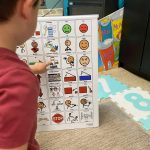
A communication board serves as an immediate bridge across this gap. By providing a clear, visual representation of words, it allows toddlers to express “want,” “help,” or “more” without needing to articulate the sounds perfectly.
The Power of Cause-and-Effect
In speech therapy, we focus heavily on “cause-and-effect.” When a toddler points to the symbol for “juice” on a board, and a parent immediately hands them the juice while saying the word, a powerful connection is made. The child learns that communication allows them to control their environment. This success motivates them to try again, laying the foundational groundwork for verbal speech.
#2: Supporting Visual Processing in Autism
For many children on the autism spectrum, spoken language can be overwhelming. Auditory information is “fleeting”—the moment a word is spoken, it disappears into the air. If a child has processing delays, they might miss the meaning entirely.
A communication board for autism works differently. It provides a “static” (permanent) visual representation of language.
- Reduced Anxiety: Because the symbol stays on the board, the child has as much time as they need to look, process, and understand.
- Visual Strengths: Many children with autism are strong visual learners. A communication board plays to this strength, making language tangible rather than abstract.
Expert Note: Parents often fear that using a board will make their child “lazy.” Research confirms the opposite! Using Augmentative and Alternative Communication (AAC) relieves the pressure of speaking, which often lowers anxiety enough for verbal words to emerge naturally.

#3: Encouraging Social Interaction and Peer Play
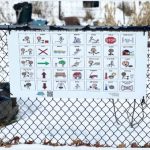
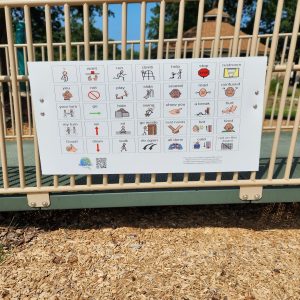
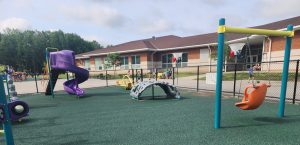
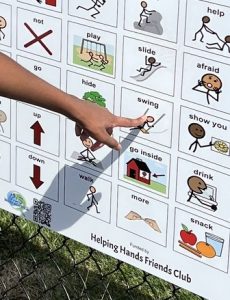
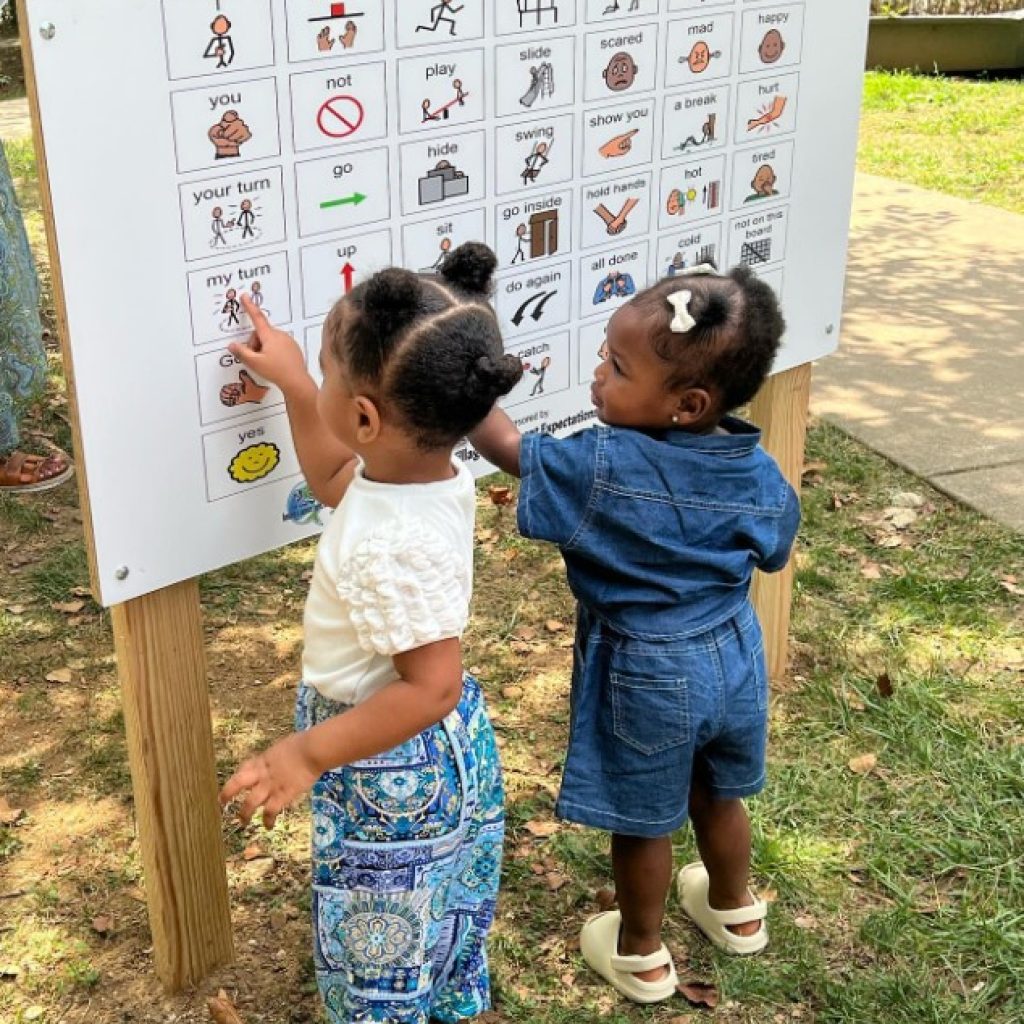
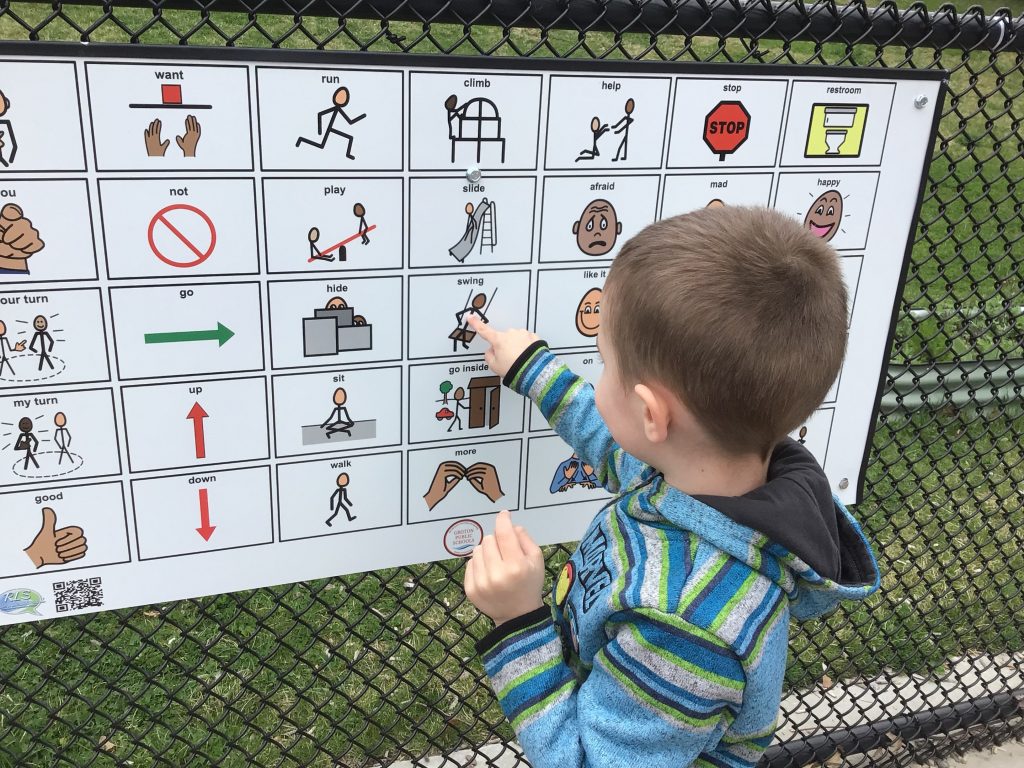
Playgrounds and pools are the classrooms of childhood, but they can be isolating for a child who cannot shout, “Hey, wait for me!” A publicly accessible communication board invites inclusion and turns solitary play into social play.
When we install these boards in parks and pools, we often see neurotypical children flock to them out of curiosity. This creates a natural “icebreaker.”
- Shared Attention: Peers can stand together at the board, pointing to “swing” or “fast.”
- Leveling the Playing Field: It allows a non-verbal child to direct the play—choosing the game or the speed—rather than always following the lead of others. This autonomy is crucial for building social confidence.
#4: Modeling Language in Real-Time (The “Show & Tell” Method)
You don’t need a degree in speech therapy to use these tools effectively. The most proven way to build language skills is through a technique called “modeling”.
Simply put: You point to the symbols on the communication board as you speak. This helps the child associate the spoken word with the picture and the action. Here are three fun ways to practice this at the park using our boards:
Activity A: The “Stop and Go” Game
- The Skill: Impulse control and core vocabulary.
- The How-To: Stand at the top of the slide. Point to “Stop” on the board and hold the child gently. Then, dramatically point to “Go!” and let them slide. Eventually, pause and wait for them to point to “Go” before you release them.
Activity B: Playground Scavenger Hunt
- The Skill: Noun identification and vocabulary building.
- The How-To: Ask, “Where is the swing?” Point to the symbol on the communication board, then run together to the actual swing. This helps toddlers connect the 2D symbol to the 3D world.
Activity C: Poolside Turn-Taking
- The Skill: Social reciprocity (my turn/your turn).
The How-To: Using our durable, water-resistant aluminum boards at the pool, point to “My turn” before you jump in. Then, point to “Your turn” for the child. This simple routine teaches the rhythm of conversation.
#5: Fostering Emotional Regulation and Safety
Language isn’t just about naming objects; it is about managing big feelings. Meltdowns often stem from an inability to communicate emotions like frustration, fear, or overstimulation.
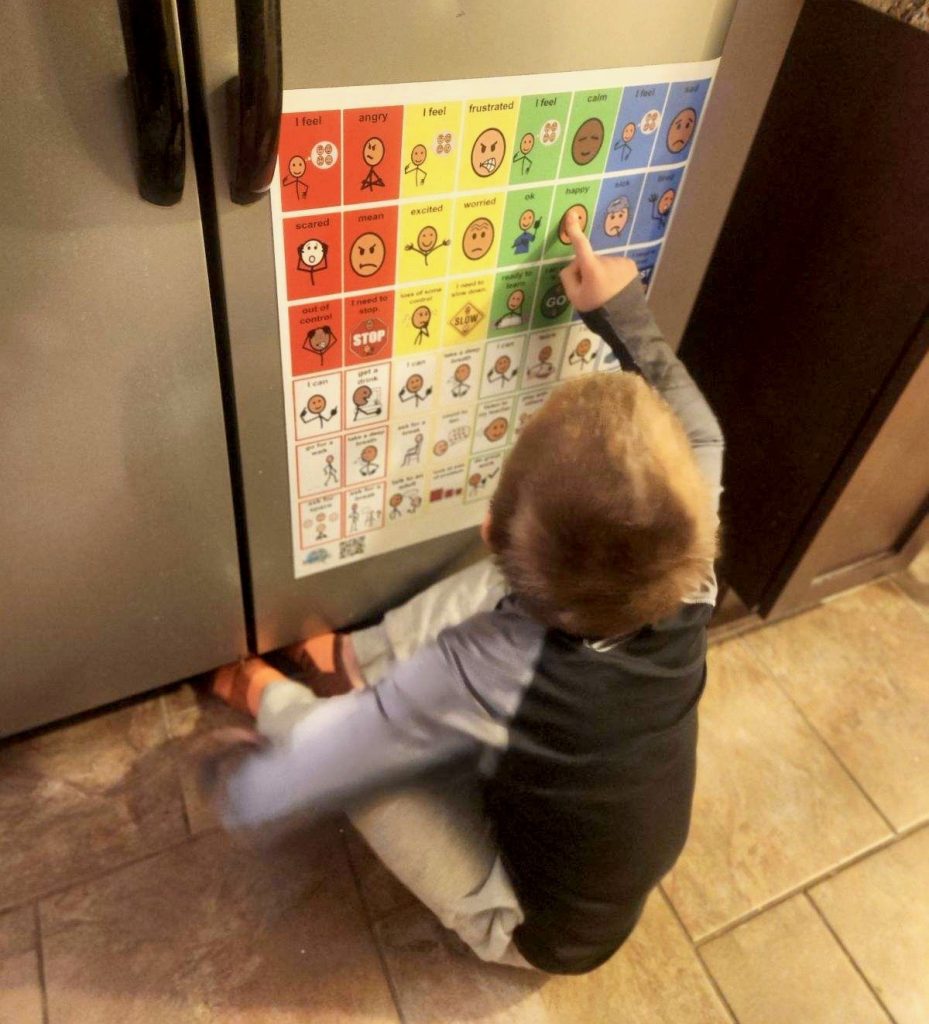
At Resources at Lakeshore Speech, we go beyond standard vocabulary by offering Emotional Balance Boards. These specialized communication boards allow children to:
- Identify the Feeling: Pointing to “Mad,” “Sad,” or “Overwhelmed.”
- Choose a Strategy: Selecting a coping mechanism like “Take a breath,” “Count to 10,” or “Walk away.”
By giving a child the words (and symbols) to describe their internal state, we empower them to regulate their emotions rather than acting them out physically. This is a critical skill for school readiness and lifelong mental health.
Why Choose “Resources at Lakeshore Speech” Boards?
Not all visual supports are created equal. To truly support language development, a communication board must be accessible, consistent, and durable. As Speech-Language Pathologists, we designed our boards to meet the highest clinical and community standards.
- Clinically Accurate Symbols: We use Boardmaker© or SymbolStix© icon libraries. These are the same symbols used in schools and private speech therapy clinics, ensuring that what a child learns on the playground reinforces what they learn in the classroom.
- Built to Last: Our boards are crafted from aluminum alloy/Alumalite. They are designed to withstand rain, snow, pool chemicals and the summer sun without fading or warping.
- Inclusive Design: We believe a communication board should speak the language of its neighborhood. Our boards are customizable in English and up to 3 additional languages.
What Our Community Is Saying
“I could not wait to get them up! We love these boards and appreciate the opportunity to have them!” — Satisfied Community Partner
“Extremely Satisfied – 10/10. We had a GREAT experience working with you.” — Parent & Customer
Conclusion: Giving Every Child a Voice
Language is the key to connection, but it doesn’t always have to be spoken to be heard. By integrating a communication board into our play spaces, schools, and homes, we open up a world of development for toddlers and kids.
Whether you are supporting a child in speech therapy, helping a student with autism navigate social rules, or simply helping a toddler ask for “more,” these 5 proven ways demonstrate that visual communication benefits everyone.
At Resources at Lakeshore Speech, we are dedicated to providing affordable, high-quality resources for individuals with communication differences. We invite you to join us in making every playground, pool, and school a place where every voice matters.
Ready to make your community more inclusive? Contact Resources at Lakeshore Speech today. Let’s work together to create a custom communication board that fits the unique needs of your park or school.