
How a Communication Board Can Transform Seasonal Experiences
Introduction: The Gift of Connection
The holiday season is often painted as a time of magical wonder, filled with bustling family gatherings, festive community events, and the excitement of tradition. However, for families supporting children with communication differences, this time of year can also bring unique challenges. At Resources at Lakeshore Speech, our team of dedicated speech-language pathologists understands that true holiday magic lies in connection. When a child cannot express their wants, needs or feelings amidst the chaos of the season, that connection can feel out of reach.
This is where the power of Augmentative and Alternative Communication (AAC) comes into play. Specifically, we want to shine a light on a simple yet profound tool: the communication board. Whether a child has a diagnosis of Autism, a specific language impairment, or is just beginning their journey in speech therapy, these visual supports can bridge the gap between isolation and participation.
In this guide, we will explore exactly how a communication board impacts holiday experiences, turning potential frustration into moments of shared joy and meaningful interaction.
What is a Communication Board and Why Does It Matter?
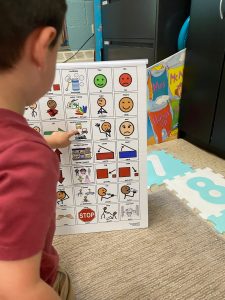
Before diving into holiday specifics, it is essential to define our tools. A communication board is a low-tech form of AAC. It is typically a sheet (paper, laminated card, or digital display) featuring symbols, pictures, or words that represent core vocabulary and specific messages.
For a child who struggles with verbal speech, the holidays are a sensory minefield. Routines are disrupted, houses are decorated differently, and unfamiliar relatives fill the rooms. In moments of high dysregulation access to verbal language can decrease. A communication board offers a stable, visual anchor. It allows the child to point to a symbol to say “stop,” “more,” “eat,” or “I’m overwhelmed,” without the intense cognitive demand of retrieving spoken words.
The Role of Speech Therapy in Holiday Prep
As speech-language pathologists, we understand the need to spend the weeks leading up to December preparing children for these changes. Social stories are created and practicing the use of a communication board specifically tailored to holiday vocabulary becomes an important part of any child’s intervention. By integrating these tools early, we empower children to enter the season with a voice.
How a Communication Board Enhances Family Gatherings
Family dinners and gift exchanges are the centerpieces of many holiday traditions. However, they are also language-heavy events.
Empowering Choices at the Dinner Table
Imagine a Christmas or Hanukkah dinner. The table is full of food, typically passed around with verbal requests like “Please pass the potatoes.” For a non-speaking child, this can be isolating. By placing a holiday-themed communication board at the child’s setting—or even making a large placemat version for the whole table—you level the playing field.
- Autonomy: The child can point to “turkey,” “drink,” or “all done.”
- Inclusion: When family members model this behavior (pointing while speaking), it validates the child’s method of communication.
- Reduced Anxiety: Knowing the vocabulary is right there in front of them reduces the performance anxiety often associated with speech therapy goals in public settings.
Navigating Gift Exchanges
Opening gifts is highly emotional. There is pressure to react “appropriately,” say thank you, and take turns. A communication board designed for this activity might include symbols for “my turn,” “your turn,” “open,” “like it,” and “thank you.” This visual support helps manage the flow of the event. Instead of a meltdown because a child doesn’t understand whose turn it is, the communication board provides a concrete visual map of the social interaction.
Tip: If you are looking for ways to support AAC users, check out our previous discussion 5 Important Tips for Supporting AAC Users: How to Empower Communication.
Facilitating Inclusion at Community Events and AAC
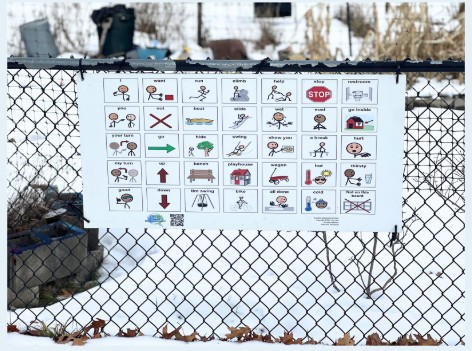
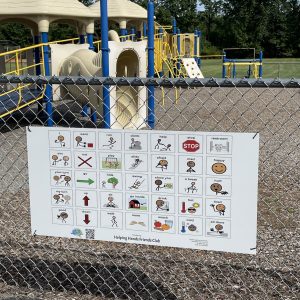
One of the most significant barriers to inclusive holidays is accessibility in the community. From visits to Santa to menorah lightings, public spaces are rarely designed with AAC users in mind. This is where community leaders can make a massive impact by installing a large-scale communication board.
The Impact of Playground and Event Boards
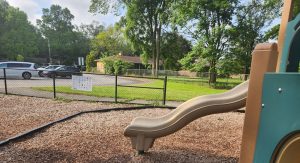
We are seeing a wonderful trend of parks and public spaces installing permanent communication boards. During holiday events, these boards become vital safety and social nets.
- Safety: In a crowded light display, a child can point to “help” or “bathroom.”
- Socialization: Children can interact with peers by pointing to “play” or “look.”
- Autism Acceptance: When a community prioritizes these boards, it sends a message that neurodivergent individuals are welcome.
If a public board isn’t available, parents can bring a portable communication board attached to a lanyard or stroller. This ensures that whether the child is waiting in line to see Santa or watching a parade, they have the vocabulary to comment on what they see (“red,” “lights,” “loud,” “fun”).
Reducing Frustration and Behavioral Challenges
A significant portion of what is labeled “bad behavior” during the holidays is actually communication breakdown. When a child with Autism or sensory processing differences reaches their limit, they may not be able to verbally articulate, “It is too loud in here, and the lights are hurting my eyes.” Without a way to communicate this, they may scream, run away, or shut down.
The Communication Board as a Regulation Tool
A well-designed communication board for the holidays should always include regulation and emotional vocabulary.
- “I need a break”
- “Too loud”
- “Go home”
- “Headphones”
When a child has access to a communication board, they have an alternative to behavior. They can communicate their distress effectively and receive the support they need. This doesn’t just help the child; it lowers the stress levels of the entire family, allowing for a more peaceful holiday experience.
Educational Settings: The Holiday Party
Schools are hubs of holiday activity. For students utilizing AAC, the class holiday party can be chaotic. Routine changes, sugary foods and unstructured time can be difficult.
Teacher and Peer Involvement
Educators can transform the classroom experience by integrating a communication board into the party planning.
- Station Boards: Create mini boards for different activity stations (e.g., cookie decorating, craft table). The cookie station board might have: “frosting,” “sprinkles,” “eat,” “more.”
- Peer Modeling: Teach neurotypical peers how to use the board. This fosters genuine friendship and inclusion.
- Consistency: ensuring the child has access to the same core vocabulary they use in speech therapy sessions ensures they don’t lose their voice just because the schedule changed.
By normalizing the use of the communication board in the classroom, educators teach the next generation that communication comes in many forms.
How to Create a Holiday-Specific Communication Board
You might be wondering how to get started. While many high-tech AAC devices have folders for holidays, a low-tech communication board is an excellent backup or primary tool for specific events.
Steps for Families and Educators:
- Identify Core Words: These are words used frequently across all contexts (go, stop, help, more, want).
- Select Fringe Vocabulary: These are specific to the holiday (Santa, present, latke, tree, dreidel).
- Use Visuals: Use standard symbols (like Boardmaker or SymbolStix) that the child is familiar with from speech therapy.
- Make it Durable: Laminate the communication board! It will likely encounter spilled hot cocoa or sticky candy canes.
- Make it Accessible: Ensure it is always within the child’s reach.
The Long-Term Impact on Language Development
A common myth we encounter at Resources at Lakeshore Speech is that using a communication board will prevent a child from learning to speak verbally. Research consistently shows the opposite.
Using AAC and visual supports actually stimulates language development. It provides a constant visual model of language structure. During the holidays, when input is high and stress is high, the communication board acts as a scaffold. It supports understanding (receptive language) and expression.
When a family uses a communication board consistently through the holiday season, they are often surprised to see their child attempting more verbal approximations or showing increased engagement. The pressure to “perform” speech is removed, allowing communication to flourish naturally.
Advocacy: Why We Need More Communication Boards in Public
As we advocate for children using AAC, we must look beyond the home. The presence of a communication board in public spaces—malls, town squares, libraries—during the holidays is a civil rights issue.
Families raising children with Autism often stay home because the logistics of going out are too daunting. By advocating for inclusive signage and communication boards, community leaders can invite these families back into the fold.
A Call to Action for Community Leaders
If you manage a public space or organize holiday events, consult with a speech-language pathologist at Resources at Lakeshore Speech. Creating a large, weatherproof communication board is a low-cost investment with a high return on community well-being. It signals that your holiday event is for everyone.
Conclusion: Making Spirits Bright for Everyone
The holidays should be a time of belonging. For children with communication differences, a communication board is more than just a piece of paper with pictures—it is a ticket to participation. It empowers them to choose their food, ask for a specific gift, express love and set boundaries.
By integrating these tools into our family gatherings, schools and community events, we move beyond simple awareness of Autism and speech therapy needs toward true acceptance and inclusion.
At Resources at Lakeshore Speech, we are passionate about helping every child find their voice, whether that voice is spoken, signed or pointed to on a board. If you are navigating the world of AAC or need guidance on supporting your child’s communication this holiday season, you are not alone.
Let’s Connect
Contact Resources at Lakeshore Speech today. Let us partner with you to ensure your child has the tools they need to communicate confidently and enjoy the magic of the season.