
Communication boards support speech development, language learning and student independence in schools and communities.
At Resources at Lakeshore Speech, our team of ASHA certified speech-language pathologists works every day to empower children, educators, families and communities through effective communication supports. One of the most versatile—and often misunderstood—tools we rely on is the AAC communication board. These boards offer meaningful speech support, help children learn language more effectively and promote successful communication across every environment, from classrooms to playgrounds to community spaces.
Whether you’re a teacher, school administrator, SLP, or caregiver seeking to better understand AAC tools, you are in the right place. In this comprehensive guide, we share what communication boards are, how they work, why they support speech and language development, and how they can be used successfully with students, including those with autism. You’ll also learn how to measure progress, collaborate with professionals, and implement simple activities that make language learning engaging and inclusive.
What Is an AAC Communication Board?
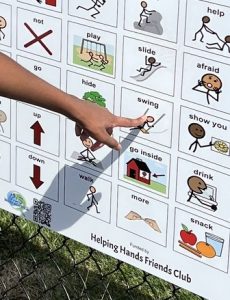
A communication board is a tool that displays symbols, pictures, words, or icons that a person can point to in order to express their thoughts, wants, needs, and ideas. When the board is used as part of an AAC (augmentative and alternative communication) system, it becomes an AAC communication board, designed to support individuals who have difficulty using spoken words alone.
Communication boards may include:
- Core vocabulary words such as go, want, help, more, and stop
- Fringe vocabulary related to school, home, or community activities
- Symbols representing feelings, actions, places, and people
- The alphabet or small groups of written words
- A combination of text and pictures
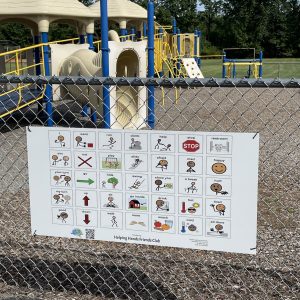
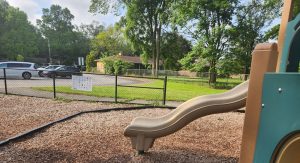
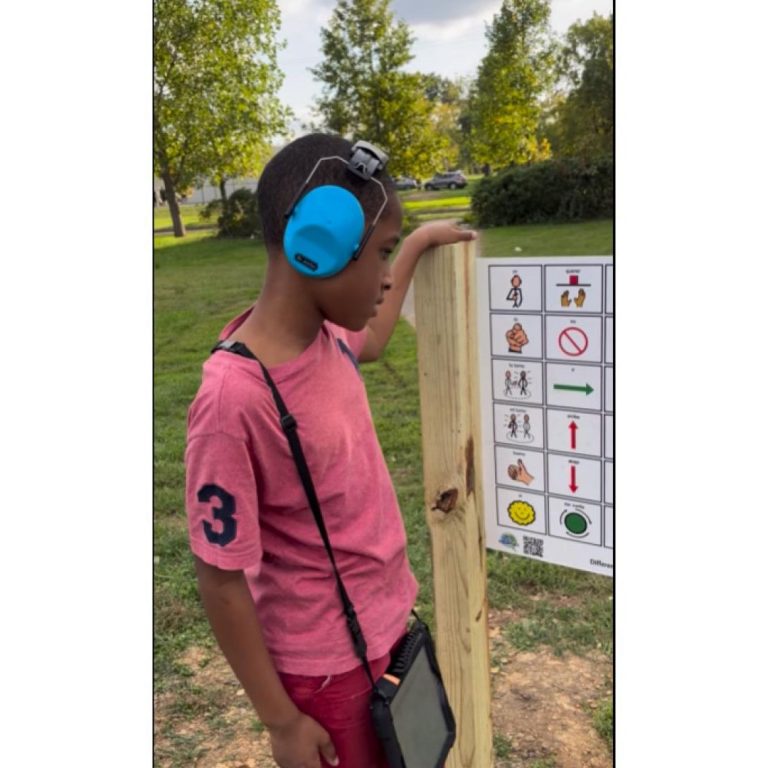
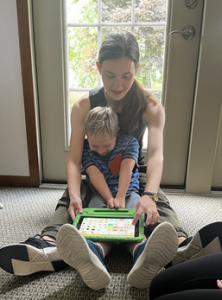
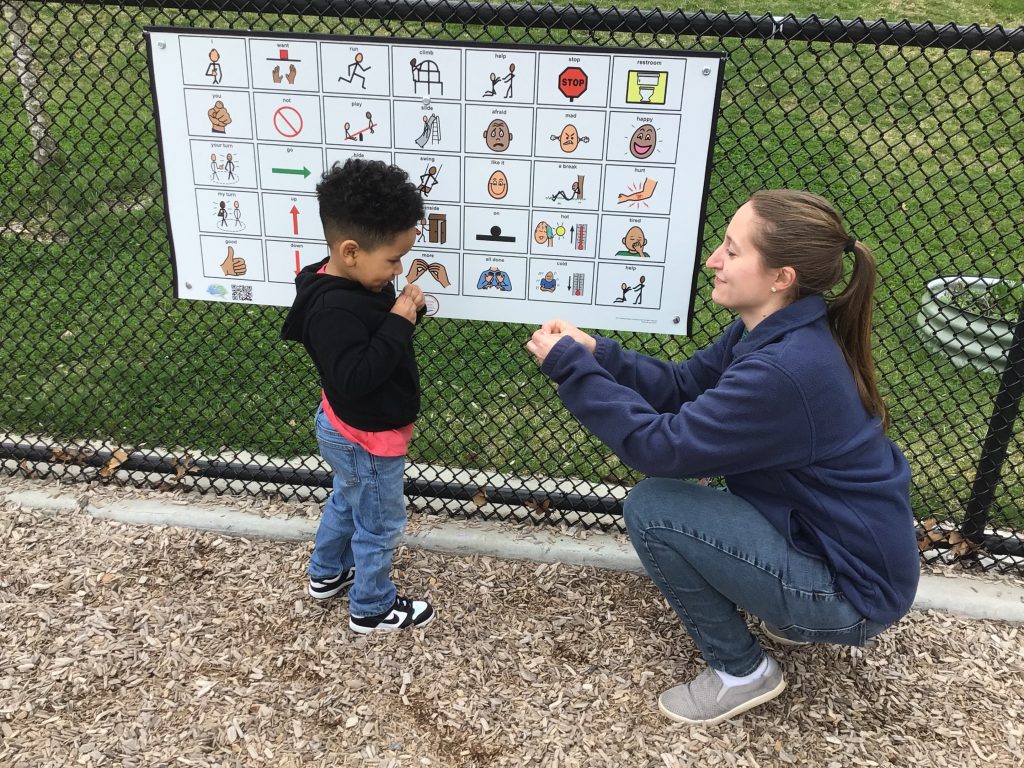
Some boards are high-tech (built into an app), but many are low-tech—laminated, printed, weather-resistant or installed in schools and playgrounds. At Resources at Lakeshore Speech, we focus on high-quality, accessible, low-tech AAC communication boards because they are durable, affordable and available to everyone anywhere, without batteries or devices.
What Is a Communication Board for Students With Autism?
We are frequently asked: “What is a communication board for students with autism, and how does it actually help?”
A communication board for autism is simply an AAC communication board designed with:
- Predictable layouts
- Visual organization
- Clear and consistent symbols
- Options for sensory-friendly use
- Words that support social connection, emotional regulation and functional communication
Communication boards for students with autism offer:
✔ Speech support for students who are developing verbal language
Children with autism often benefit from visual language models. Seeing a word in picture form reinforces spoken language and increases understanding.
✔ A reliable tool for children who communicate nonverbally or inconsistently
The board becomes a stable communication method when speech is difficult under stress, sensory overload or transitions.
✔ Increased independence and reduced frustration
When a student can point to a word or symbol independently, behaviors often diminish and confidence grows.
✔ Opportunities for social engagement
Boards allow peers, teachers, and staff to communicate with autistic students—not around them.
How AAC Communication Boards Support Speech Development
One of the most common misconceptions is:
“If we use a communication board, the child won’t talk.”
Research shows the opposite.
When students use AAC, they tend to:
- Increase verbal attempts
- Strengthen receptive language
- Learn new functional vocabulary faster
- Build the foundations for expressive speech
Here’s how:
1. AAC Boards Model Language Visually
Children learn language by hearing words used repeatedly in meaningful contexts. A visual model—such as pointing to symbols on a communication board—reinforces how language works. This dual input (hearing + seeing) is especially effective for students with autism and students with language delays.
2. AAC Boards Reduce Pressure to Speak
When a child feels “on the spot,” speech can shut down. AAC creates a safe, supportive, low-stress communication channel. We often see verbal language increase once pressure decreases.
3. AAC Encourages More Frequent Communication
With a board available at all times, children communicate more often—during play, transitions, lunch, or recess. The more they communicate, the stronger their language skills become.
4. AAC Supports Speech Sound Practice
SLPs can use AAC communication boards during articulation or phonological therapy:
- Pairing a symbol with a target sound
- Helping students request items needed for speech tasks
- Supporting practice in conversation
AAC does not replace speech therapy; it enhances it.
The Role of Communication Boards in Language Learning
AAC communication boards support all areas of language development:
✔ Vocabulary Development
Communication boards expose children to core vocabulary—simple, flexible words used all day, in every environment. Core vocabulary builds powerful language foundations.
✔ Sentence Building
With visual symbols, children can learn to create:
- Two-word combinations (e.g., want + more)
- Functional requests (e.g., go swing, help me)
- Longer sentences (e.g., I want to play outside)
Educators often notice that once students learn how to combine symbols, spoken language begins to reflect that structure.
✔ Social Language
AAC communication boards support:
- Greetings
- Peer interaction
- Requesting turns
- Asking questions
- Sharing information
Social connection is easier when everyone understands the communication tools.
✔ Emotional Regulation
Vocabulary on communication boards help students identify and express emotions like sad, mad, scared, excited, or OK. This improves self-advocacy and reduces frustration.
✔ Literacy Skills
Symbol + text boards provide early exposure to printed words, which supports:
- Phonological awareness
- Sight word recognition
- Reading readiness
Speech Support and Language Learning in the Classroom
Educators often tell us that communication boards transform classroom routines. Here’s how:
Daily Routines Become Predictable
Teachers can model language during:
- Morning meeting
- Arrival and dismissal
- Centers and choice time
- Specials (art, music, gym)
- Transitions and hallway use
Modeling throughout the day gives students predictable, repeated access to language learning.
Inclusive Participation Improves
Boards allow students with different communication styles to participate in group instruction, partner work, and whole-class discussions.
Behavior Challenges Reduce
When communication becomes easier, frustration decreases. Students gain:
- Emotional control
- Clear expectations
- Tools to express needs without escalation
Real-World Benefits for Students
1. Increased Independence
Students learn to initiate communication without waiting for an adult to guess what they want.
2. Stronger Peer Relationships
Peers quickly learn to use boards during recess or lunch, strengthening social bonds.
3. Improved Academic Participation
Individuals can answer questions, follow directions, and demonstrate what they know.
4. Enhanced Emotional Regulation
Communication boards give students the tools to label feelings, ask for breaks, or request help.
5. Greater Confidence and Self-Advocacy
When students communicate successfully they are more willing to engage, explore, and take risks in learning.
Partnerships With SLPs and Teachers: A Collaborative Approach
AAC communication boards are most successful when SLPs and educators work as a team. Here’s how collaboration can strengthen outcomes:
SLPs Support Teachers By:
- Recommending communication board layouts
- Providing modeling strategies
- Helping select vocabulary that matches classroom routines
- Offering training for paraprofessionals and support staff
- Monitoring progress and adjusting boards as needed
Teachers Support SLPs By:
- Using the board throughout daily routines
- Incorporating AAC into instruction and transitions
- Encouraging peers to use the board during group work
- Sharing observations with the SLP
- Reinforcing modeling strategies
Administrators Play a Key Role By:
- Ensuring AAC tools are accessible across school environments
- Supporting professional development
- Allocating resources for high-quality low-tech boards
Encouraging communication-friendly school culture
Practical Ways to Use AAC Communication Boards in a Day
Here are simple, activity-based examples that educators and SLPs can use immediately. These also make great downloadable resources for families:
1. Morning Meeting Board Pathway
A mini-activity where students:
- Say hello
- Identify the weather
- Choose a feeling
- Pick a classroom job
2. Recess Communication Support
Use playground communication boards to:
- Request turns
- Describe play equipment
- Ask for help
- Comment on actions (e.g., go fast, stop, my turn)
3. Literacy Integration
Point to symbols while:
- Reading stories aloud
- Exploring characters’ feelings
- Describing events
4. Choice Time Activity
Model words like:
- build, make, look, play, want, more
5. Sensory Break Toolkit
Use a simple AAC communication board with:
- break
- quiet
- stretch
- breathe
- squeeze
- help
Measuring Outcomes: How Educators and SLPs Track Progress
Communication boards support measurable growth in many areas:
1. Frequency of Communication Attempts
More pointing, more symbols used, more initiations.
2. Increased Vocabulary
Students begin using more core and fringe words across environments.
3. Growth in Sentence Length
From single symbols to 2–3 word combinations and beyond.
4. Reduced Behavior Incidents
Clear communication often reduces frustration.
5. Improved Participation and Engagement
Teachers see more involvement in group activities, turn-taking, and academics.
6. Verbal Speech Improvements
Speech often increases as students gain language understanding through AAC models.
SLPs may use informal checklists, structured language sampling, progress monitoring, and observation to track student growth over time.
Conclusion
Communication boards are powerful, accessible and transformative tools that support speech development, language learning, social connection and student success. From classrooms to playgrounds and community spaces, communication boards help children express themselves, build independence and participate fully in their world.
At Resources at Lakeshore Speech, we are proud to support educators, administrators, SLPs and families nationwide. Our team brings decades of experience in AAC, school-based therapy and communication accessibility. Whether you need high-quality AAC communication boards for your school or community, professional consultation or guidance from practicing speech-language pathologists, we are here to help.
Call to Action
If you are ready to bring communication accessibility to your classroom, school, or community, we invite you to connect with Resources at Lakeshore Speech today. Explore our communication board products, schedule a consultation with our expert SLPs or reach out for personalized support.
Together, we can create communication-friendly environments where every child has a voice.