Communication Boards in Schools Matter More Than Ever
As certified speech-language pathologists, we see firsthand how simple supports can transform a school’s culture. One tool that is gaining rapid traction, especially among district leaders who prioritize equity and inclusion, is the use of communication boards in schools.
These boards are not new to the world of AAC (augmentative and alternative communication), but their integration into hallways, classrooms, cafeterias, playgrounds, and common areas is a powerful—and necessary—shift. They ensure that all students, including autistic learners, multilingual students, and children with complex communication needs, have access to language throughout the school day.
And increasingly, district administrators are realizing something important: Case studies are essential.
At Resources at Lakeshore Speech, we are a small, SLP-owned company committed to supporting inclusive, language-rich school environments across the country. Every day, we partner with school districts, administrators and educators who want to create learning spaces where all students can thrive—especially those with communication differences or disabilities.
Real examples help leaders understand what implementation looks like, what challenges to expect, how outcomes are measured and why communication boards are more than “extra supports”—they are essential tools for inclusion, peer interaction, and accessible instruction.
In this blog, we explore:
- What communication boards are
- Why school case studies matter for leaders
- Featured examples from districts across the country
- Lessons learned
- Recommendations for administrators ready to take the next step
Let’s begin by looking at the foundation.
What Is a Communication Board?
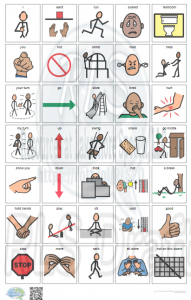
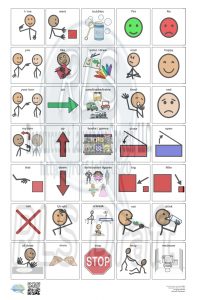
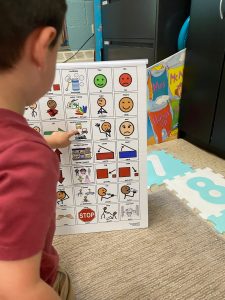
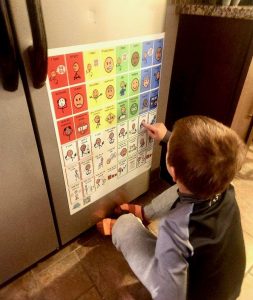
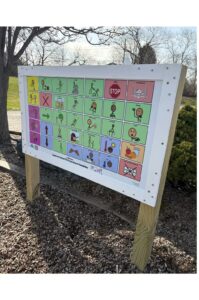
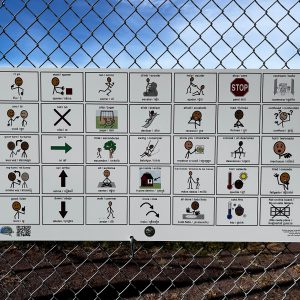
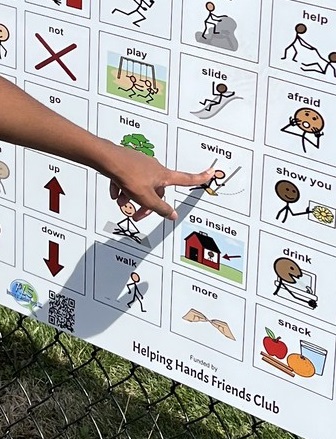
A communication board is a visual support system that uses symbols, pictures, words or icons to represent language. Students can point to the symbols to express needs, ask questions, interact socially, and participate meaningfully in school routines.
In the school setting, the term communication boards in schools refers to:
- Classroom-based boards
- Cafeteria or hallway boards
- Playground boards
- Portable or laminated boards
- Wall-mounted communication supports in therapy or resource rooms
- Communication boards tailored for specific subject areas (e.g., science lab vocabulary)
Communication boards can be used as:
- A communication support for autistic students
- A universal design tool for multilingual learners
- A behavior-support tool
- A scaffold for peer interaction
- A low-tech backup for students who use high-tech AAC devices
Schools often request specialized versions such as a:
- Communication board for autistic students (often emphasizing sensory, emotional regulation, and choice language)
- Communication board for inclusion (broad, accessible vocabulary all students can use)
- Communication board for special needs (adapted for motor, cognitive, or sensory access needs)
- Communication board for peer interaction (playground, recess, small-group work, restorative circles, and SEL activities)
Regardless of the format or purpose, all communication boards in schools share the same goal: To give every student consistent access to language.
And that is where strong case studies help school leaders visualize, plan, and implement successful programs.
Why Case Studies Matter for School Leaders
District leaders often ask:
- “Will communication boards actually make a measurable difference?”
- “What does implementation look like at scale?”
- “How will we evaluate impact?”
- “How much training do staff need?”
- “How do we pick the right vocabulary?”
- “Will typical peers use the boards too?”
Case studies answer these questions by showing real-world examples of what works (and what doesn’t).
Case studies give school leaders:
1. Evidence for decision-making
Stories with concrete results help justify funding, staffing, and resource allocation.
2. Models for implementation
Administrators can see how other districts introduced, taught, and sustained communication board use—not just in special education, but schoolwide.
3. Insight into challenges
Every district faces unique hurdles. Case studies help leaders anticipate and prevent obstacles.
4. Student-centered outcomes
Data is valuable, but stories—especially stories of communication growth—bring meaning and urgency to district decisions.
5. A roadmap for scaling
School leaders can learn how to integrate communication boards across buildings, grade levels, and programs.
This is why we’ve included several detailed, realistic case studies below.
Case Study #1:
A District Adds Communication Boards to All Common Areas
Project Overview
A mid-size district wanted to improve access to communication supports for students with autism and students with emerging expressive language skills. The special education director noticed that many students struggled during transitions—hallways, gym classes, arrival, and dismissal.
Challenges Identified
- High-energy transitions overwhelmed many autistic students
- Students using AAC devices often did not have access during out-of-class moments
- Staff reported meltdowns and communication breakdowns in hallways
Solutions Implemented
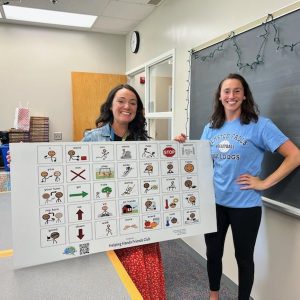
- Wall-mounted communication boards in schools were added in:
- Main hallways
- Near the office
- By restrooms
- In gym entrances
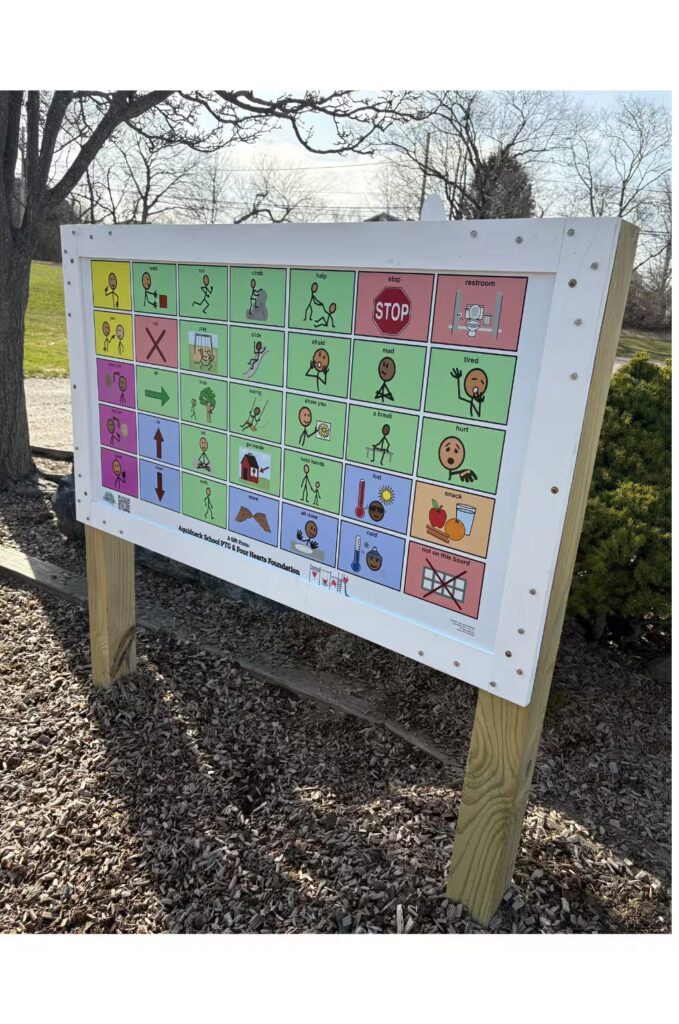
- Boards included both core and fringe vocabulary (e.g., “stop,” “wait,” “help,” “go,” “line up,” “chair,” “tired,” “bathroom”).
- SLPs trained staff in modeling and prompting strategies.
Outcomes
- Reduction in hallway behavioral incidents
- Increased independence for autistic students
- Quicker transitions
- Staff reported feeling better equipped to support students
Feedback
Teachers said the boards helped them communicate more efficiently with students who didn’t have access to devices during movement between classes.
A teacher shared:
“I didn’t realize how much my nonverbal students needed language between spaces. Now they always have a voice.”
Case Study #2:
Recess-Based Communication Boards for Peer Interaction
Project Overview
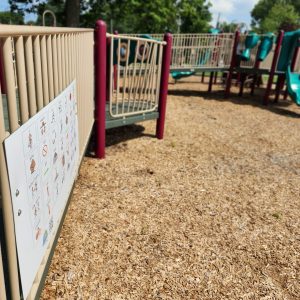
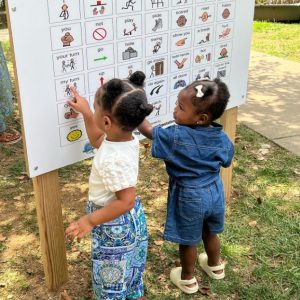
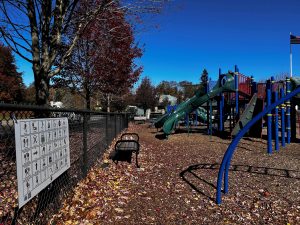
An elementary school wanted to improve recess engagement for students who rarely initiated or joined peer play. SLPs suggested adding a communication board for peer interaction near the playground and blacktop.
Challenges Identified
- Students with language delays were isolated during recess
- Peers wanted to include them but didn’t know how
- AAC devices were usually not brought outdoors
Solutions Implemented
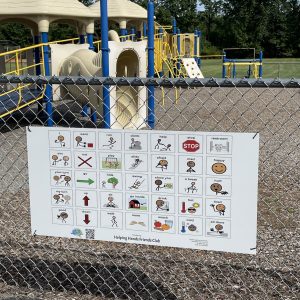
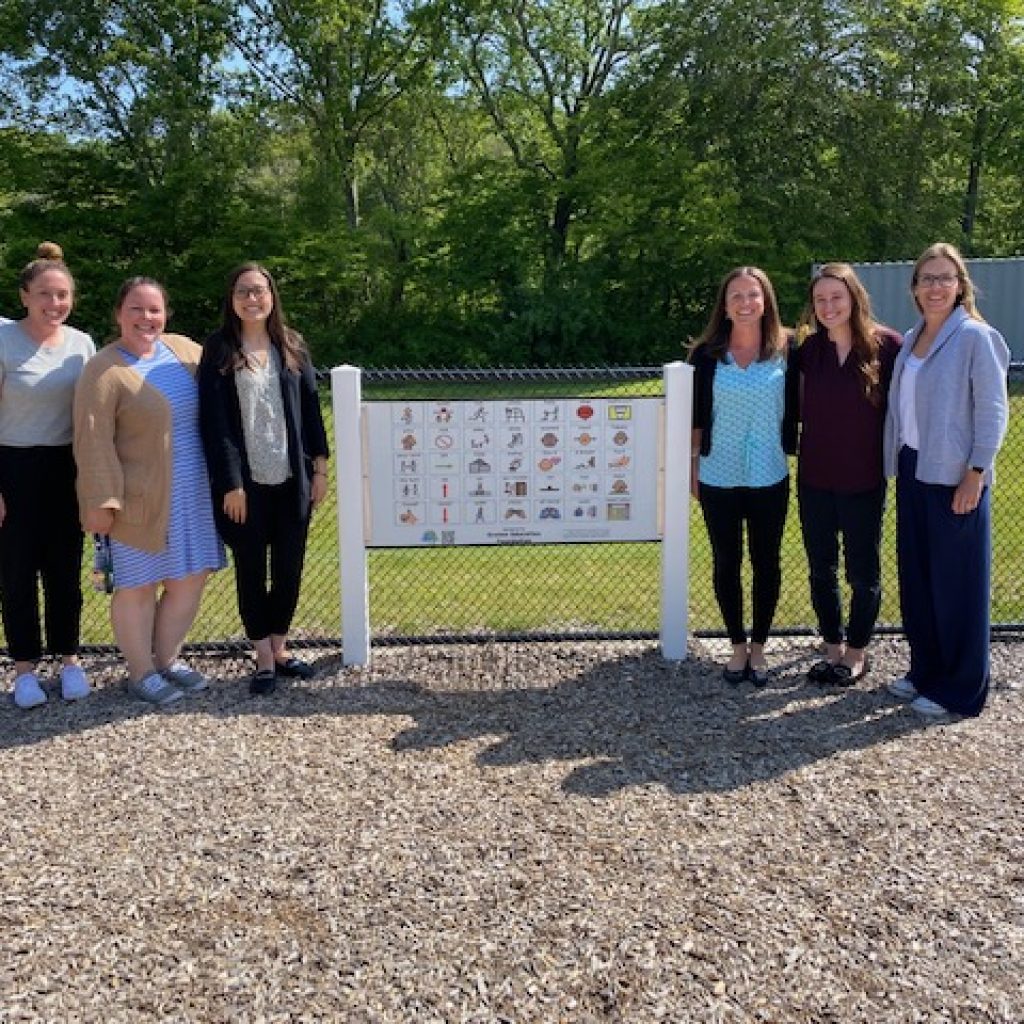
- A large playground communication board was installed
- Vocabulary targeted: games, feelings, requests, greetings, turn-taking
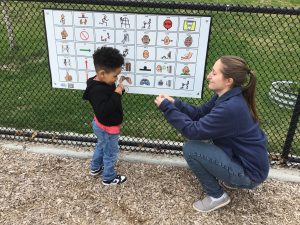
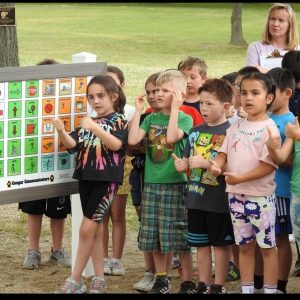
- SLPs demonstrated usage during recess clubs
- Student leaders (4th–5th grade “Play Buddies”) were trained to model symbols
Outcomes
- More inclusive play groups
- Peer-initiated social interaction increased
- Students with complex needs used the board independently
- Teachers reported fewer social conflicts
Feedback
A parent of an autistic student said:
“For the first time, my son came home and said he played with friends. This board changed recess for him.”
Case Study #3:
Classroom-Led Academic Boards to Support Inclusion
Project Overview
A district with a growing population of multilingual learners and autistic students wanted to support content access. SLPs partnered with teachers to create communication boards in schools tailored to academic units.
Challenges Identified
- Vocabulary demands were high
- Students struggled to participate in group discussions
- High-tech AAC devices couldn’t be easily adapted for every academic topic
Solutions Implemented
- Unit-specific boards for science, literacy, SEL, and math
- Boards taped to student desks and posted on whiteboards
- Teachers taught 2–3 symbols a day using explicit modeling
- SLPs provided push-in support to demonstrate integration
Outcomes
- Increased oral participation from multilingual and autistic students
- Decreased frustration during writing and lab work
- Stronger alignment with IEP communication goals
Feedback
Teachers reported that boards functioned as universal design tools—beneficial not only for students with special needs but for the entire class.
Case Study #4:
Districtwide Rollout of Communication Boards for Special Needs Programs
Project Overview
A district undergoing a special education audit wanted consistency across programs. Some classrooms used communication supports; others did not.
Challenges Identified
- Inconsistent vocabulary
- Staff discomfort with AAC
- Students struggling with transitions between schools
Solutions Implemented
- Districtwide core vocabulary selection
- Uniform branding and color coding
- Boards installed in therapy rooms, resource spaces, calming areas, and cafeterias
- Mandatory professional development for all staff—general education included
- Family training sessions
Outcomes
- Streamlined AAC support across schools
- Increased consistency for students moving between grades or buildings
- More collaboration between SLPs, teachers, and paras
Feedback
Administrators reported increased IEP team satisfaction and more cohesive programming.
Lessons Learned from Real District Implementations
Across all projects, we notice common themes. These lessons help school leaders plan effective, sustainable programs.
Lesson 1: Universal Access Matters
Boards cannot just be in special education rooms. When communication boards in schools are placed in:
- hallways
- cafeterias
- recess areas
- buses and arrival zones
- music and art rooms
students use them more—and so do peers and staff.
Lesson 2: Training Is Essential
Even the best tools fall flat without training. Successful districts offered:
- SLP-led modeling sessions
- Coaching for paraprofessionals
- Classroom demonstrations
- Role-playing for peer leaders
- Quick visual guides for teachers
Training doesn’t need to be lengthy—a 20-minute session before school can make a big difference.
Lesson 3: Vocabulary Should Be Purposeful
Communication boards in schools must be age-appropriate, culturally responsive and consistent.
Successful districts choose vocabulary that supports:
- Social-emotional learning
- Classroom engagement
- Play and peer interaction
- Functional communication
- Academic content
Lesson 4: Visibility Equals Use
The more visible the board, the more likely it will be used.
Districts see the best results when boards are:
- Large (3’x2’ or 4’x2’)
- Eye-level (top of board no more than 36” off the ground)
- Bright and friendly
- Consistent in design
- Integrated into routines
Lesson 5: Peers Are the Best Communication Partners
Inclusion improves when typical peers are taught how to use the board.
Student leaders, playground helpers, and recess buddies played essential roles in every successful case study.

Recommendations for Other Districts
If you are a school administrator or district leader exploring communication boards in schools, here are clear recommendations from the SLP team at Resources at Lakeshore Speech.
1. Start With One Pilot School
Choose a school with:
- strong admin support
- engaged SLPs
- motivated teachers
Success spreads quickly.
2. Involve SLPs from Day One
SLPs understand:
- symbol selection
- AAC principles
- accessibility needs
- implementation strategies
Their expertise ensures the board is functional, not just decorative.
3. Focus on High-Impact Areas First
Prioritize:
- playgrounds (for peer interaction)
- cafeterias
- hallways
- arrival/dismissal zones
- therapy and calming areas
These environments benefit immediately.
4. Train Staff Before Installation
One short, well-organized training session improves confidence and buy-in.
5. Add Family Training Opportunities
Families often want to extend communication access at home.
Offer:
- take-home boards
- evening workshops
- multilingual materials
6. Track Outcomes
Look for:
- changes in peer interaction
- reduction in behavior incidents
- increased independence
- IEP progress
teacher feedback
Use these data points to refine the system.
Replicating Success in Schools Across the Country
Communication boards in schools are more than visual tools—they are an investment in inclusion, equity and accessible communication for all students. They support autistic learners, multilingual students, children with special needs, and peers who want to connect but may not know how.
Case studies show us that when schools adopt these tools, the results are powerful:
- improved peer interaction
- increased independence
- stronger inclusive practices
- more efficient transitions
- reduced frustration and behavior concerns
- greater staff confidence
- consistent support across classrooms and campuses
At Resources at Lakeshore Speech, we are passionate about helping districts create communication-rich environments where every student has a voice.
We would love to help your district build an inclusive, accessible communication system that benefits students, staff and families. Contact us today.