The Monumental Benefits of Communication Boards for Children

Design consultation with certified SLP

Quick Facts & Key Takeaways – Benefits of Communication Boards

  • Total Inclusivity: Outdoor communication boards bridge the gap between physical accessibility and social inclusion on public playgrounds, pools, and splash parks.
  • The “Device Burdens” Solution: Traditional high-tech speech tablets (AAC systems) risk overheating in the sun, experiencing water damage at splash pads, or getting lost during active play. Large-scale, permanent weather-proof boards completely remove this obstacle.
  • Peer-to-Peer Bridges: By using a shared symbol space, neurotypical and neurodivergent children interact directly, dropping social barriers and mitigating the loneliness often felt by kids with limited speech.
  • Universal Learning Tool: In addition to assisting children with neurodivergent needs, these community installations support toddlers developing language, late talkers, and multilingual families navigating new languages.

What's Inside

How Outdoor Communication Boards Give Every Child a Voice

Imagine a vibrant local park on a sunny Saturday. Children are sprinting toward the swings, climbing up the slide, and playing a noisy game of tag. But for a child who is non-verbal, has autism, or experiences a significant language delay, this bustling environment can present unique challenges. They may want to ask for a turn or tell a peer “That’s cool!”, but the verbal words might not be accessible in that high-energy moment.

Now, imagine you want to join that game of tag. You know exactly what you want to say: “Can I play too?” But your vocal muscles or neurological pathways refuse to coordinate. You try to catch a peer’s eye, but they run past, caught up in the fast-paced auditory world around them. You have a personal speech-generating device, but it is safely tucked away in your parent’s backpack across the park because it is too heavy to carry while climbing, or because your family is terrified it will get wet near the pool.

For millions of minimally verbal or non-speaking children, this heartbreaking sense of isolation is a daily reality.

This is where playground communication boards serve as a vital tool. At Resources at Lakeshore Speech, we view these boards not just as equipment, but as an essential component of a truly inclusive environment. By providing a visual language system, we can ensure that “play for all” includes every child’s voice. When we look at how communities can foster truly accessible environments, understanding how communication boards benefit children is the first step toward transforming public recreation spaces into hubs of unconditional belonging.

What Are Playground Communication Boards?

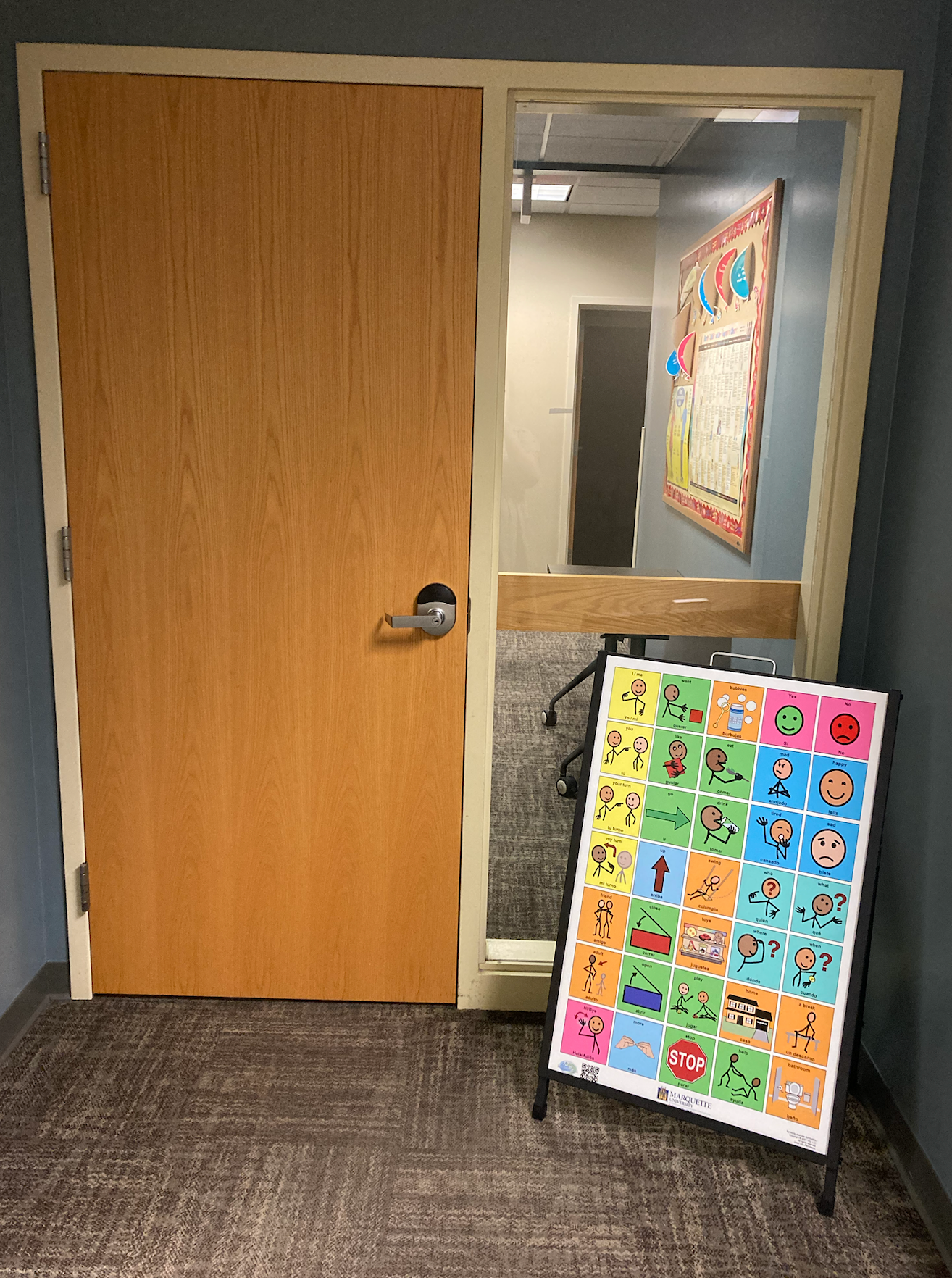
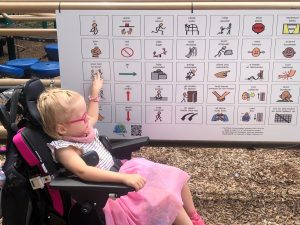
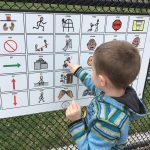
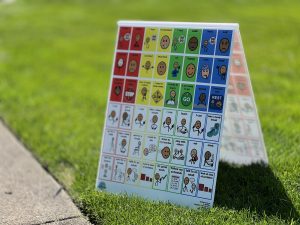
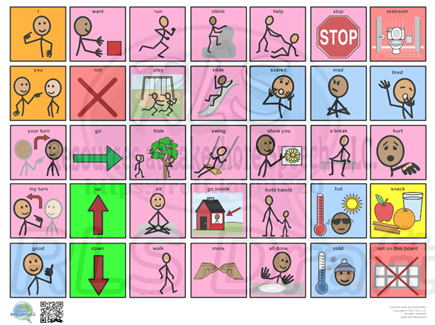
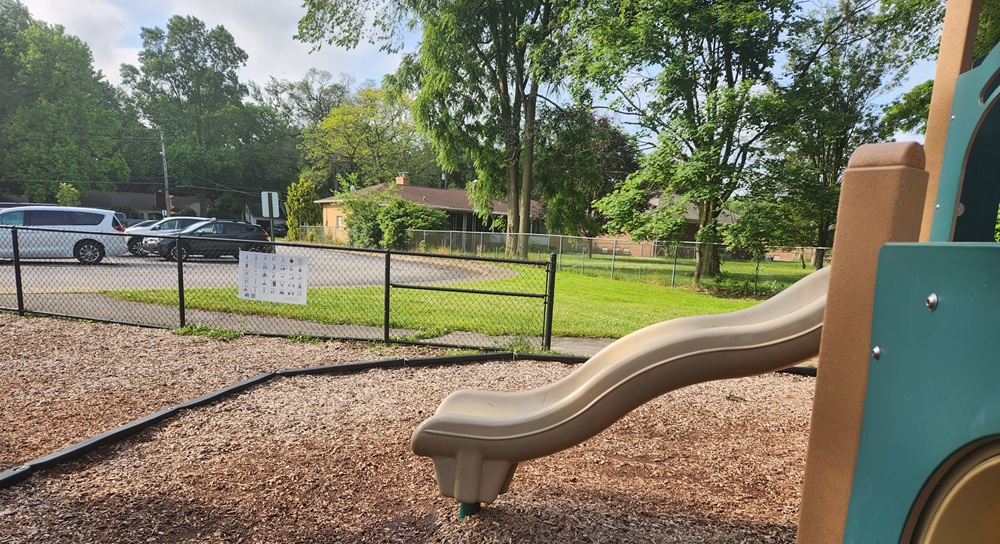
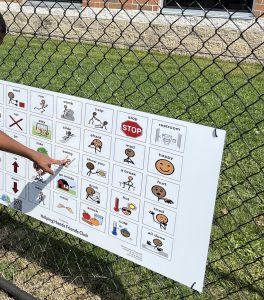
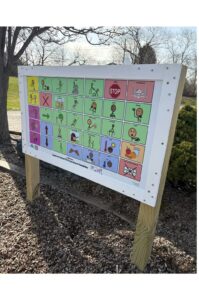
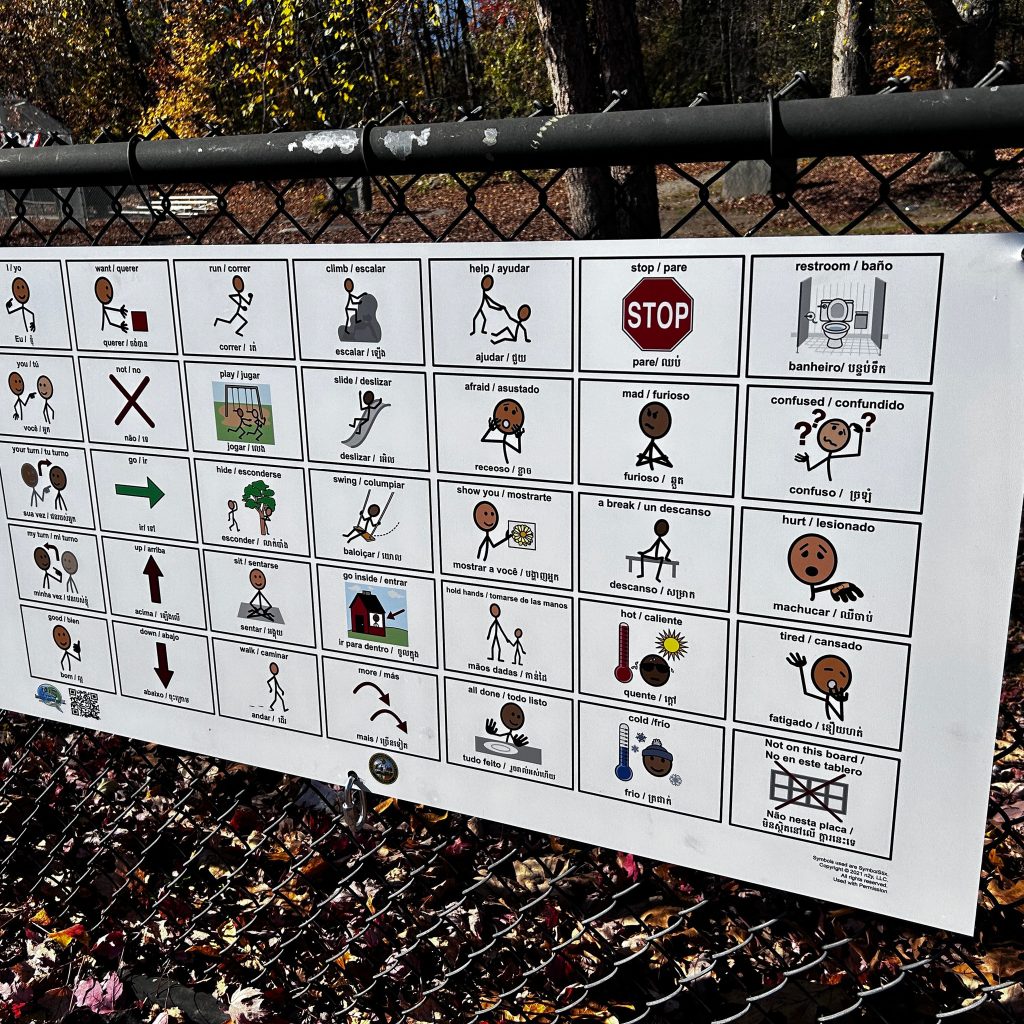
At their core, playground communication boards are large, durable signs installed in public play areas. They feature a grid of symbols, pictures, and words that represent common playground activities, needs, and social interactions. These boards are a functional form of Augmentative and Alternative Communication (AAC).

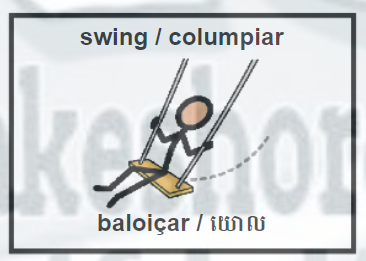
By pointing to a symbol for “swing” or “stop,” a child can communicate effectively without needing to rely on verbal speech. These AAC playground boards act as a bridge for children who are non-verbal, minimally verbal, or even those who simply find the sensory environment of a park too overwhelming to speak clearly. They are a reliable, permanent “voice” available to anyone in the play area, providing a low-tech backup for when a child might not have their personal speech device handy.

At Resources at Lakeshore Speech, we view these boards not just as equipment, but as an essential component of a truly inclusive environment. By providing a visual language system, we can ensure that “play for all” includes every child’s voice.

Why Public Spaces Require a Shift in How We View Accessibility 

For years, community accessibility discussions centered almost entirely on physical infrastructure. Cities built poured-in-place rubber surfacing, installed wheelchair-accessible ramps, and integrated adaptive swing sets. While these engineering steps are vital, true play requires more than just getting a child’s body onto a playground structure—it requires connecting their mind and voice to the children around them.

Research indicates that children who experience complex communication challenges encounter deep social barriers on public playgrounds that go far beyond basic physical access (Therrien et al., 2022). Unstructured environments like neighborhood parks, community pools, and public splash pads are incredibly high-stimulation, fast-paced environments. In these settings, verbal speech moves quickly. If a child cannot rapidly express a need, share an idea, or establish a boundary, they are frequently excluded from cooperative play groups.

Furthermore, traditional Augmentative and Alternative Communication (AAC) systems—such as high-tech dedicated speech tablets or personal communication binders—are highly vulnerable to the elements (Derse, 2008). A family spending an afternoon at a neighborhood splash park cannot easily risk exposing an expensive electronic device to water, sand, heat, or heavy impacts. Consequently, many children are left entirely “voiceless” during the exact hours of the day when they should be experiencing absolute freedom and play. Large, permanently anchored AAC communication boards solve this exact problem by embedding functional, universal language directly into the recreational environment.
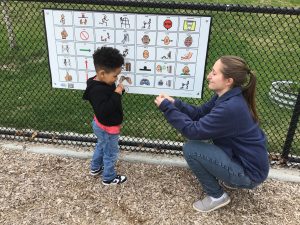
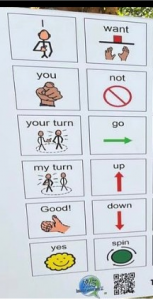
benefits of Communication boards for children
benefits of communication boards

What Are the Benefits of Communication Boards for Children?

When looking at child development, we must address a core question: What are the benefits of communication boards for children? From a speech-language pathology perspective, these tools do far more than replace spoken words. They fundamentally alter how a child interacts with their environment, processes information, and builds relationships with the world around them.

1.  Reducing Communicative Frustration and Cognitive Load

When a child cannot express their thoughts, anxiety and frustration skyrocket. This often leads to behavioral meltdowns. One of the primary benefits of communication boards for children is that they lower the cognitive load required to speak. In high-energy public spaces, coming up with the motor plans for speech can be exhausting. Visual boards give children an instant, stress-free path to express exactly what they need without the pressure of vocalization.

2.  Supporting Receptive and Expressive Language Growth

Many individuals mistakenly believe these tools slow down speech development. However, clinical evidence shows the exact opposite. Visual aids provide a stable, permanent anchor for spoken language. While a spoken word disappears the moment it is muttered, a picture symbol remains static. This gives the child crucial time to process the word’s meaning. By pairing visual icons with spoken words, children build stronger vocabulary connections, boosting both their receptive understanding and their expressive output.

3.  Fostering Autonomy and Self-Advocacy

True independence means having control over your own choices. Public communication boards allow children to choose their own activities, direct their own play, and set personal boundaries. Instead of relying on a parent or caregiver to guess what they want, a child can confidently walk up to a board and state their mind. This early experience with self-advocacy builds lifelong confidence.

4.  Supporting Visual Learners

Many children with complex communication needs are visual learners. In a clinical setting, we often see that visual supports reduce frustration and lower cognitive load. Communication boards for parks provide a static reference point. Unlike spoken words, which are fleeting, a symbol on a board remains visible, allowing a child the time they need to process information and express a thought at their own pace.

5.  Encouraging Peer Connections

These boards are not exclusively for children with disabilities. They serve as a universal language for the entire playground. When neurotypical children see a peer using the board, it often sparks curiosity and social modeling. This naturally facilitates interaction, teaching children from a young age that there are many valid ways to communicate and connect with others.
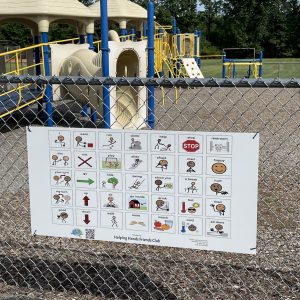
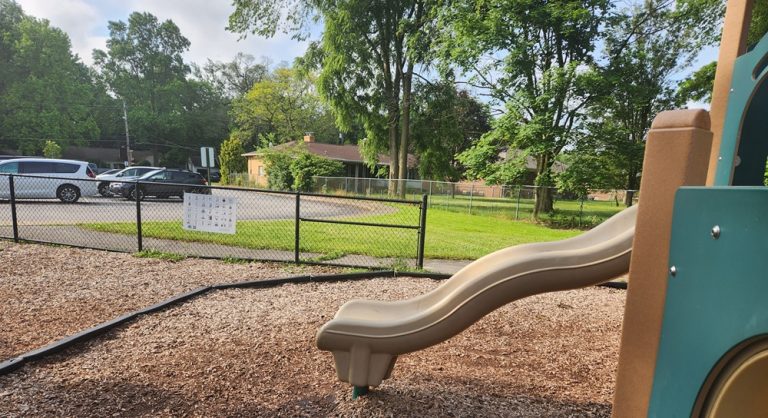
communication boards for playgrounds
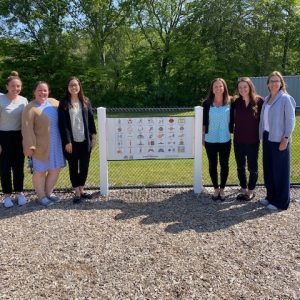
communication board design at Fairview Park Ohio

The Core Benefits of Communication Boards for Children in Public Parks

When cities and community leaders install permanent communication panels in recreational spaces, they change the entire dynamic of public play. Let’s break down the distinct clinical, emotional, and social advantages of these incredible community tools.

1. Eliminating the “Device Burden” and Protecting Speech Tools

As early intervention and school-based speech-language pathologists have long noted, carrying an external communication book or a dedicated electronic tablet during vigorous physical play is highly burdensome for a child (Derse, 2008). If a child has to hold a heavy device while climbing a ladder or traversing monkey bars, their safety is compromised. If they leave the device with a caregiver on a park bench, they lose their voice the moment they step onto the play equipment.

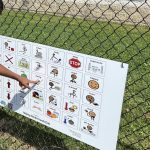
Permanent outdoor panels ensure that language is permanently present, accessible, and impervious to the elements. Whether a child is dripping wet at a municipal pool or covered in woodchips at a playground, they can simply walk up to the panel and point to “Go,” “Stop,” “More,” or “Water” to make their desires instantly known.

2. Equalizing the Social Playing Field

The magic of an outdoor communication panel lies in its status as a shared tool. It is not an isolated piece of medical equipment attached to a single child; it is an interactive fixture of the park available to everyone.

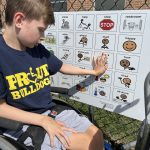
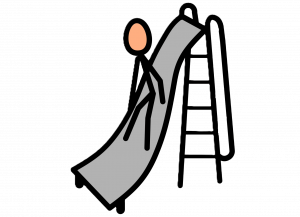
When neurotypical children see the board, they naturally become curious. They begin using the symbols to communicate with one another or to model language for their peers. This common visual interface reduces the “burden of initiation” on the neurodivergent child. Instead of trying to force a verbal greeting or figure out how to bridge a social gap, a child can walk up to the board, point to the symbol for “Play,” and point to the image of the slides. The communication barrier evaporates, paving the way for organic peer-to-peer relationships.

3. Immediate Access to Safety and Boundary Language

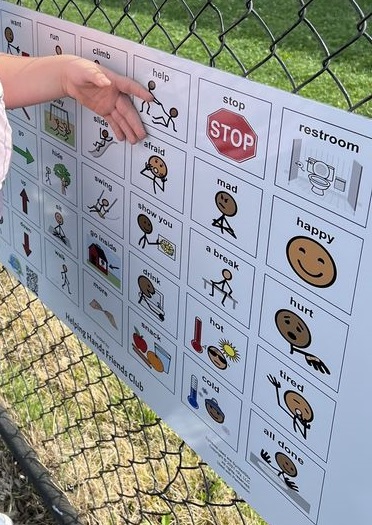
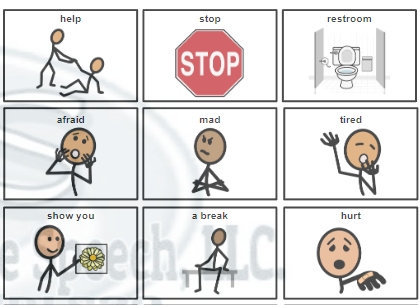
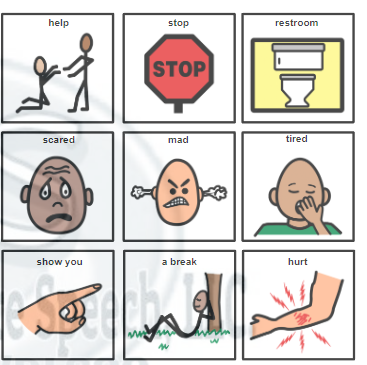
High-stimulation environments like splash pads and busy parks require rapid self-regulation and safety communication. If a child is feeling overwhelmed, hot, or frightened, they need to communicate that state instantly to prevent a sensory meltdown or a dangerous situation. Outdoor boards feature clearly visible, highly intuitive core vocabulary symbols for concepts like “Stop,” “Help,” “Hot,” “Cold,” “Hurt,” or “All Done.” This grants children the immediate power to advocate for their physical needs and personal boundaries in real-time, giving caregivers peace of mind.

Who Benefits from Outdoor AAC Boards?

The impact of outdoor AAC boards extends across a diverse range of park visitors. Based on our clinical experience at Resources at Lakeshore Speech, we see these tools benefiting a wide variety of users:

  • Children with Autism Spectrum Disorder (ASD): Visual symbols help navigate social transitions and reduce the stress of environmental changes.
  • Late Talkers and Toddlers: Even typically developing toddlers who are still building their vocabulary can use the board to express needs, often reducing the frustration common in early childhood.
  • Children with Childhood Apraxia of Speech: For those who struggle with the motor planning required for speech, the board provides an immediate functional outlet.
  • English Language Learners (ELL): Symbols are a universal bridge. A child who does not yet speak the local language can still engage with peers through visual icons.
  • The “Device-Free” Moment: Personal high-tech AAC devices can be fragile or hard to see in the sun. A board allows a child to leave their expensive tech with a caregiver while they climb and play freely.

Design and Functionality: A Speech-Language Perspective

Effective playground communication boards require a thoughtful design rooted in linguistic principles. It isn’t just about putting pictures on a sign; it’s about how those symbols facilitate genuine language development.

Symbol System Consistency

Consistency is one of the most important factors in language learning. To support this, Resources at Lakeshore Speech offers both SymbolStix and Boardmaker/PCS (Picture Communication Symbols) sets. These are the two most common systems used in schools and on personal speech devices. Providing this choice allows communities to align their park signage with what local students are already learning in the classroom, making the tool much more intuitive.

Core vs. Fringe Vocabulary

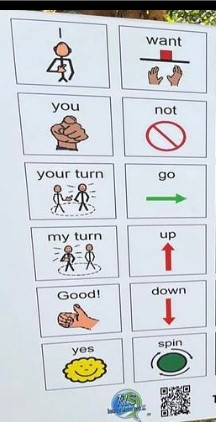
A functional board balances “Core Vocabulary”—high-frequency words like go, help, stop, more, and me—with “Fringe Vocabulary”—specific nouns like slide, ball, or sandbox. This allows a child to move beyond simple labeling and begin constructing functional phrases like “more swing” or “I go.”

Durability and Customization

Because these are communication boards for parks, they must withstand heavy use and the elements. We utilize high-grade aluminum composite materials that do not rust or warp. Furthermore, we believe these boards should reflect the community. Unlike many providers, Resources at Lakeshore Speech provides 100% customization, including adding agency or donor logos at no additional cost. This helps foster a sense of community ownership and acknowledges the sponsors who make these projects possible.

Improving Accessibility with Integrated Technology

Even the best tool is only effective if people feel confident using it. To support parents and caregivers, every board provided by Resources at Lakeshore Speech includes a specialized QR code.

When scanned, this code links directly to an educational video. This resource demonstrates how to “model” language on the board in real-time. This immediate support helps adults feel more comfortable with AAC, ensuring the board becomes an active part of the playground experience rather than a static fixture.

Frequently Asked Questions About Outdoor Communication Boards

As public interest in universal design grows, parents, town council members, and park directors frequently reach out to us with questions. Below are the most common inquiries we address regarding the implementation and benefits of communication boards for children.

Do communication boards stop a child from learning how to talk?

This is the single most common concern we hear from families, and the scientific answer is an absolute, definitive NO. Decades of speech-language pathology research and official statements from the American Speech-Language-Hearing Association (ASHA) demonstrate that augmentative and alternative communication tools support and encourage verbal language development rather than hindering it.

Visual symbols provide a concrete cognitive anchor for fleeting acoustic spoken words. When a child points to a symbol while an adult says the word aloud, it reinforces language comprehension and reduces the immense cognitive pressure of speech production. Often, as comprehension increases through visual aids, verbal attempts follow close behind.

How do cities select the right vocabulary symbols for an outdoor park board?

Selecting vocabulary is a careful clinical science. To build true topical authority and clinical effectiveness, boards must balance Core Vocabulary and Fringe Vocabulary.

  • Core Vocabulary (80% of what we say): High-frequency words that can be used across multiple contexts (e.g., more, stop, go, look, want, help, I, you, it). These are typically placed in a consistent grid layout on the left and center of the board to assist with motor planning.
  • Fringe Vocabulary (20% of what we say): Specific nouns and context-dependent words unique to that environment (e.g., swing, water, slide, towel, ladder, splash). These are generally grouped by category along the edges or right-hand side.

At Resources at Lakeshore Speech, our specialists collaborate directly with city planners and manufacturers to ensure that symbol selection meets ASHA’s highest standards of cultural responsiveness and clinical validity.

Successful Implementations Nationwide

The move toward more accessible play is a national movement. Resources at Lakeshore Speech has been proud to assist various communities in implementing these tools. Successful installations have already taken place in:

    • Lowell, MA
    • Rocky River, OH
    • Fairview, OH
    • Middletown, RI
    • Jackson County, AL
    • Lackawanna, NY
  • North Olmsted, OH

Feedback from these communities often highlights how the boards have opened up new social opportunities for children who previously felt like observers rather than participants.

Conclusion: Empowering Every Child to Have a Voice in the Community

At Resources at Lakeshore Speech, our work is grounded in over six decades of combined clinical experience. We understand that a playground is more than just a place to run; it is a place to connect, to learn, and to belong.

Every single child deserves to experience the absolute joy, physical development, and social bonding that comes from unstructured public play. Playground equipment can challenge a child’s muscles, but a shared communication environment stretches their mind, builds empathy, and nurtures lasting peer friendships.

By investing in permanent outdoor communication boards, civic leaders, parent-teacher associations, and parks departments do more than just install a sign—they make a profound statement. They signal to every family that enters the park that their child is seen, valued, and welcome exactly as they are. These installations effectively eliminate the fear of damaged personal electronics, dismantle social isolation, and provide a vibrant, visual bridge that unites children of all abilities.

By integrating AAC playground boards into our public spaces, we are making a statement that every child’s voice is valued. We are proud to serve as a resource for communities looking to make their parks a little more welcoming, one symbol at a time.

Are you ready to spearhead a movement for true communication accessibility in your neighborhood, school district, or city park? Our dedicated team at Resources at Lakeshore Speech is here to guide you through every stage of the journey. From initial symbol mapping and custom vocabulary selection to sourcing ultra-durable, weather-proof manufacturing partners, we provide the expert clinical oversight needed to bring your vision to life.

Contact Resources at Lakeshore Speech today

Multi-Lingual Communication Boards: The Ultimate Guide to Inclusive Play

multi-lingual communication boards

Why Every Park Needs Multi-Lingual Communication Boards

Communication Boards:

Quick Facts & Key Takeaways

  • What they are: Large, weather-resistant signs featuring symbols and text (icons) that allow non-verbal or multi-lingual children to communicate.

  • The Goal: To ensure every child, regardless of their native language or physical ability, can ask to “swing,” “slide,” or “play together.”

  • Evidence-Based: Supported by ASHA standards for Augmentative and Alternative Communication (AAC).

  • Community Impact: Enhances social-emotional learning and fosters a sense of belonging for English Language Learners (ELL).

funding

Breaking the Silence on the Playground

At Resources at Lakeshore Speech, we believe that communication is a fundamental human right, not a privilege. Yet, for many children, the playground—a place meant for joy and connection—can be a source of profound isolation. Imagine a child who has the perfect idea for a game but lacks the spoken words to invite a peer. Now, imagine that same child is also navigating a world where their home language isn’t the primary one spoken at the park.

This is where communication boards step in as a transformative tool for equity. In our rapidly diversifying communities, the need for inclusive signage has never been greater. By integrating bilingual and multi-lingual AAC (Augmentative and Alternative Communication) systems into public spaces, we are not just installing a sign; we are building a bridge. This guide serves as the definitive resource for families, educators, and community leaders on how “The Multi-Lingual Playground” can change the landscape of childhood forever.


What Are Communication Boards and Why Do They Matter?

To understand the impact of a communication board, one must first understand AAC. In the world of Speech-Language Pathology, AAC encompasses all the ways we share our ideas and feelings without talking.

The “Why” Behind the Board

For a child with Autism, a speech delay or a child who is an English Language Learner (ELL), the playground is a high-sensory environment. The noise, the movement, and the social pressure can make verbalizing thoughts difficult. A communication board provides a static, visual reference. It doesn’t move, it doesn’t disappear after it’s said, and it provides a “common language” for everyone on the mulch.

Furthermore, these communication boards act as a safety net. If a child is hurt or overwhelmed, they can point to “hurt” or “stop” even when their words fail them. By placing these tools in public view, we normalize different ways of communicating, reducing the stigma surrounding disabilities and language differences.

The Power of Multi-Lingual Communication Boards

While a standard English board is a great start, a truly inclusive community looks at its demographic data. In many neighborhoods, Spanish, Mandarin, Arabic, or Vietnamese are spoken just as frequently as English.

Supporting ELL and Bilingual Students Outdoors

Dual-language communication boards provide a unique “scaffolding” effect. For a child learning English, seeing the word “Slide” paired with the Spanish word “Tobogán” and a clear icon of a slide provides immediate context. It honors their native language while supporting their acquisition of a second one.

Key Benefits of Dual-Language Boards:

  • Validation: It tells families, “You belong here, and your language is valued.”

  • Cognitive Development: Research shows that bilingualism enhances executive function; these communication boards encourage all children to engage with multiple languages.

  • Social Equity: It levels the playing field, ensuring that a language barrier doesn’t prevent a child from making a friend.


Layout Strategies: Designing for Clarity

A common concern among community leaders is: “Won’t adding a second language make the board too cluttered?” The answer lies in strategic design. As experts in visual communication, we follow specific layouts to ensure the board remains functional.

Stacking English and a Second Language

To maintain “scannability,” we often recommend a consistent hierarchy.

  1. Symbol First: The icon (the picture) should be the largest element, as it is the universal language.

  2. Color Coding: Using the Modified Fitzgerald Key—a system where different parts of speech (verbs, nouns, social words) are color-coded—helps the eye find what it needs quickly.

  3. Language Placement: We typically place the English word at the top and the second language directly beneath it in a slightly different font or color. This consistency allows the brain to “filter” for the language it needs without losing the icon’s meaning.


Translation vs. Localization: Capturing the Spirit of Play

One of the biggest mistakes in creating multilingual boards is relying on “Literal Translation.” A dictionary might tell you one thing, but the “spirit” of the play-word is what matters.

Clinical Insight: In Speech-Language Pathology, we call this “localization.” For example, the English word “cool” might mean “chilly” or “awesome.” On a playground, we want the “awesome” version.

When we design these boards at Resources at Lakeshore Speech, we work with native speakers to ensure that the terms used are the ones children actually use in their culture. We aren’t just translating words; we are translating the experience of joy.


Evidence-Based Practice: What the Research Says

Our recommendations aren’t just based on “good feelings”—they are rooted in science. The American Speech-Language-Hearing Association (ASHA) emphasizes that AAC should be provided in a child’s primary language to support identity and family bonding.

The Robustness of Visual Supports

Studies in the Journal of Speech, Language, and Hearing Research indicate that visual supports significantly reduce “communication breakdowns.” On a playground, a breakdown often looks like a tantrum or a child withdrawing from play. When a communication board is present, the “success rate” of social interactions increases because both the speaker and the listener have a visual anchor.

Additionally, the “Modeling” method (where a parent or peer points to the icons while speaking) has been proven to accelerate language learning for both neurotypical and neurodivergent children.

communication boards
create sentences

Addressing “People Also Ask” 

How do I choose which languages to include?

Start with your local school district’s data. Which languages are most represented in their ESL/ELL programs? Most communities opt for a bilingual board (e.g., English/Spanish), but tri-lingual communication boards are becoming increasingly popular in metropolitan hubs.

Where is the best place to install a communication board?

Visibility is key. We recommend placing communication boards near the entrance of the play area and at the “hub” (usually near the swings or the main play structure). It should be at a height accessible to children in wheelchairs and toddlers alike.

Will these boards get vandalized?

Our communication boards are manufactured using high-grade, UV-resistant, and graffiti-proof materials. While no public sign is 100% immune, we find that when a community understands the purpose of the board—helping children—there is a high level of respect for the installation.


Benefits for All: A Lesson in Empathy

Perhaps the most beautiful “side effect” of playground communication boards is how they affect neurotypical, English-speaking children. When a child sees a peer using a board, they don’t see a “disability”; they see a different way to talk.

Children are naturally curious. They will ask, “What is that sign?” This provides a perfect opening for parents and educators to talk about diversity, inclusion, and the many ways people experience the world. It teaches the next generation that if someone can’t speak your language, you find another way to listen.

Empowering Every Voice

The installation of a communication board is a declaration. It says that every child’s voice matters. It says that “inclusion” isn’t just a buzzword; it’s a physical reality built into the fabric of our parks.

At Resources at Lakeshore Speech, we are proud to be at the forefront of this movement. We provide the expertise needed to select the right vocabulary, the right layout, and the right languages to serve your specific community. By bringing multilingual AAC to your local playground, you aren’t just changing a park—you’re changing the life of every child who finally feels “heard” for the first time.

Ready to make your playground a truly inclusive space?

Don’t wait for another child to feel left out of the game. Contact us today to learn about our custom communication boards and how we can help you lead the way in community accessibility.

[Contact Resources at Lakeshore Speech Today]

Frequently Asked Questions 

Q: Are communication boards only for children with autism?

A: Not at all! They help children with Down syndrome, cerebral palsy, speech delays, ELL students, and even toddlers who haven’t found their words yet.

Q: Can these be used in schools?

A: Absolutely. Communication boards are perfect for recess areas, gyms, and cafeterias to support social interaction outside the classroom.

Q: How do we teach kids to use them?

A: It’s simple: Model, Model, Model. When you say, “Let’s go to the swing,” point to the “Swing” icon on the board. Kids will mimic what they see!

Q: Are the boards ADA compliant?

A: When installed at the correct height and on an accessible path, they are a major asset to ADA-compliant playground designs.

Q: How much do they cost?

A: Pricing varies based on size and customization. Reach out to our team for a quote tailored to your community’s needs!

communication board

The Ultimate Guide to Funding Communication Boards: How to Unlock Free Access to Inclusive Play

funding

At Resources at Lakeshore Speech, we believe that every child deserves a voice, regardless of their location. Whether they are at the local playground, in the school cafeteria, or navigating a public park, the ability to connect with others is a fundamental human right. However, for non-speaking individuals or those who use Augmentative and Alternative Communication (AAC), the world can often feel silent and exclusionary.

One of the most effective ways to bridge this gap is through the installation of large-scale, weather-proof communication boards. These tools provide a visual language system that allows everyone to interact. Yet, the most common hurdle we hear from dedicated parents and educators is: “How do we pay for this?”

The truth is that funding communication boards is not as daunting as it seems. While you might not see a specific line item in a budget labeled “communication board,” the funds are hidden in plain sight under categories like accessibility, civil rights, and educational equity. This guide will walk you through the evidence-based strategies to secure these funds and transform your community into an inclusive haven.

Why Funding Communication Boards is a Community Priority

Before diving into the “how,” we must understand “the why.” In the world of Speech-Language Pathology, we often refer to the Communication Bill of Rights. This document, supported by the American Association of Speech-Language-Hearing Association (ASHA), asserts that all people have the right to request objects, actions, events, and people, and to express personal feelings or beliefs.

When a park or school lacks an AAC board, a child who uses a high-tech device or non-verbal cues is effectively silenced the moment they step outside. By funding communication boards, you are not just buying a sign; you are:

  • Promoting Universal Design: Making spaces usable by all people to the greatest extent possible without the need for adaptation.
  • Enhancing Safety: Allowing a child to quickly communicate pain, fear, or a need for help in a crowded public space.
  • Fostering Social Inclusion: Giving neurotypical children the tools to initiate play with their neurodivergent peers.

Understanding the Primary Pathways for Funding Communication Boards

To successfully navigate the financial landscape, you have to speak the language of the funders. Most organizations don’t realize that an AAC board qualifies as “Assistive Technology” or “Environmental Modification.” Here are the heavy hitters in the funding world:

1.IDEA Part B(Special Education Funds)

For schools, the Individuals with Disabilities Education Act (IDEA) is the gold standard. Under Part B, funds are allocated to ensure a Free Appropriate Public Education (FAPE).

  • Assistive Technology: If a student requires a communication board to access their playground or common areas as part of their IEP (Individualized Education Program), these funds can be utilized.
  • Supplementary Aids and Services: This category covers the extra support needed to help a child participate in regular education environments.

2. ADA Compliance and Civil Rights

The Americans with Disabilities Act (ADA) mandates that public entities provide equal access.

  • Barrier Removal: If a park is undergoing a renovation, adding an AAC board can be classified as a “communication access improvement.”
  • Transition Grants: Many local governments have specific funds set aside for ADA transition plans to make their public spaces more compliant.

3. Community Development Block Grants (CDBG)

Administered by HUD (Housing and Urban Development), these grants are designed to develop viable communities by providing decent housing and a suitable living environment—particularly for persons of low and moderate income. Disability access is a major pillar of this funding.

Key Secondary Keywords: Using an AAC Board to Leverage Local Grants

When searching for local money, using the term communication boards is helpful, but focusing on the impact of the AAC board is what wins the grant. Local organizations love projects with tangible, visual results.

The Power of Local Service Clubs

Groups like Rotary International, Kiwanis, and the Lions Club have long histories of supporting children’s health and community accessibility.

  • The Strategy: Present these groups with a “turnkey” project. Show them the design of the communication boards, explain the cost of installation, and offer to put their logo on the board as a “sponsored by” recognition.
  • The Result: Many communities have found that a single presentation to a local Rotary Club results in the full funding of a board within weeks.

PTAs and Local Education Foundations

Parent-Teacher Associations are often looking for legacy projects—something that will stay at the school for years. A communication board on the school playground is a perfect candidate because it serves every grade level and creates a culture of kindness from day one.

Frequently Asked Questions About Funding Communication Boards

How much does a professional communication board typically cost?

While prices vary based on size and material, a high-quality, durable outdoor AAC board typically ranges from $550 to $3,500. This includes the design, heavy-duty weatherproofing, and mounting hardware. While this may seem high, when compared to the cost of a single piece of playground equipment (which can exceed $10,000), it is one of the most cost-effective ways to increase playground utility.

Can we use “Mental Health” or “Public Health” funds?

Absolutely. Lack of communication leads to frustration, behavioral outbursts, and social isolation—all of which are public health concerns. Many Health and Human Services (HHS) grants for “Community Wellness” or “Mental Health Support” are applicable because these boards reduce the stressors associated with communication barriers.

Who is responsible for the maintenance of the board?

When funding communication boards through a city or school district, maintenance usually falls under the Parks and Rec or Facilities department. Because the boards are made from high-grade aluminum or anti-graffiti laminate, maintenance is minimal—usually just a wipe-down during regular cleaning cycles.

Can we use more than one funding source?

The “Stacking” Strategy

The most successful projects don’t rely on one check. They “stack” their layers:

  1. Layer 1: A grant covers the physical AAC board cost.
  2. Layer 2: A local business or service club covers the professional installation.
  3. Layer 3: The existing staff budget covers a 1-hour training session for teachers or park rangers on how to model the board.

Mastering the Justification Language: What Funders Need to Hear

To secure funding communication boards, your application must be precise. Funders aren’t just looking for “a sign”; they are looking to solve a problem. Your justification language should focus on these four pillars:

  1. The Population: “This project serves non-speaking students, individuals with Autism, those with expressive language delays, and English Language Learners (ELL).”
  2. The Barrier: “Currently, there is a ‘communication gap’ on our playground that prevents 15% of our student body from safely and effectively interacting with peers.”
  3. The Outcome: “Expected outcomes include a 40% reduction in playground-related behavioral incidents and a measurable increase in peer-to-peer social engagement.”
  4. The Necessity: “This is a necessary step in meeting our ADA obligations for ‘effective communication’ and ensuring that our facilities are truly inclusive.”

Pro Tip: At Resources at Lakeshore Speech, we provide custom justification language for communities at no cost. You give us 10 minutes of your time to describe your space, and we provide the text you need to get your board funded.

communication boards
Funding Communication Boards with Community Help
community communication board

Evidence-Based Practice: Why SLPs Advocate for Physical Boards

As Speech-Language Pathologists, we follow the evidence. Clinical observations and ASHA standards emphasize Modeling (also known as Aided Language Stimulation). This is the process where a communication partner points to symbols on a board while speaking.

Research shows that:

  • Visual supports increase the speed of language acquisition.
  • Providing a permanent visual display (like a large AAC board) reduces the cognitive load on a child who struggles to process spoken words.
  • Augmentative communication does not stop a child from learning to speak; in fact, it often encourages vocalizations by reducing the pressure of communication.

By funding communication boards, you are applying these clinical gold standards to the “real world,” ensuring that the progress a child makes in a therapy room isn’t lost the moment they go outside to play.

Navigating the Challenges of Funding Communication Boards

While the path is clear, there are often minor hurdles. Here is how to leap over them:

“We don’t have enough space.”

Communication boards come in various sizes. If a large freestanding kiosk isn’t an option, consider fence-mounted versions or smaller “communication stations” at key points (the swing set, the slide, the gate).

“What if it gets vandalized?”

High-quality communication boards are built with anti-graffiti coatings. Most markers and spray paints can be removed with simple solvents without damaging the icons. When presenting to a city council, emphasize the durability of the materials—this is a 10-year investment, not a temporary fix.

“Our staff doesn’t know how to use it.”

This is where Resources at Lakeshore Speech comes in. We don’t just provide the boards; we provide the roadmap for implementation. Funding can often include a small “professional development” line item to ensure that everyone from the gym teacher to the park gardener knows how to point to “Go,” “Stop,” and “Play.”

The Community Impact: A Legacy of Inclusion

When a community succeeds in funding communication boards, the atmosphere changes. It sends a silent but powerful message to families: “You belong here. We see you, and we have prepared a place for you.”

For a parent of a non-speaking child, seeing an AAC board at a local park is an invitation to exhale. It means they don’t have to carry a heavy device into a sandbox or worry that their child will be misunderstood by a new friend. It creates a “universal language” that transcends diagnoses and age groups.

Furthermore, these boards benefit more than just the disability community. They are used by:

  • Toddlers who are just beginning to develop functional language.
  • Grandparents who may have hearing loss or cognitive changes.
  • Non-English speakers who can use the universal icons to communicate basic needs.

Conclusion: Start Your Journey Toward an Inclusive Community Today

Funding communication boards is not an expense—it is an investment in the social fabric of your neighborhood. Whether you leverage federal IDEA funds, tap into local Rotary clubs, or utilize ADA transition grants, the money is available. The key is to stop seeing the board as a “nice to have” and start seeing it as a civil rights necessity.

At Resources at Lakeshore Speech, we are more than just experts in communication; we are your partners in advocacy. We know the clinical benefits of communication boards, and we know the administrative hurdles of funding communication boards.

Are you ready to give your community a voice? Don’t let a lack of budget stand in the way of inclusion. Empowerment starts with a single conversation. Contact Resources at Lakeshore Speech today to receive your free justification language and start the process of ordering your communication boards. Together, we can ensure that no child is left out of the conversation.

Action Checklist for Successful Funding of Communication Boards:

  • [ ] Identify your site: Where would a board have the most impact?
  • [ ] Identify your “Stack”: Which two funding sources can you combine?
  • [ ] Request Justification: Contact us for the specific wording for your grant.
  • [ ] Present to Stakeholders: Use our evidence-based talking points to win approval.
  • [ ] Install and Celebrate: Hold a ribbon-cutting ceremony to show your community that everyone has a voice!
playground communication boards
Funding Communication Boards with PTA help
benefits of Communication boards for children

Transforming Sports: The Benefits of a Communication Board

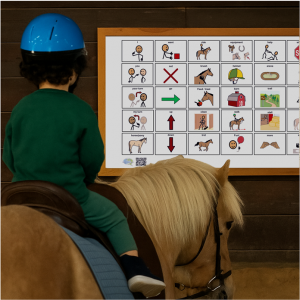
Therapeutic riding Communication Boards

Empowering Every Athlete: The Definitive Guide to Using a Communication Board in Therapeutic Sports and Recreation

At Resources at Lakeshore Speech, we believe that every individual deserves a voice, regardless of their physical or cognitive setting. The right tools can bridge the gap between “participating” and “thriving.” In the world of adaptive athletics—from therapeutic riding arenas to soccer fields—the most vital piece of equipment isn’t always a specialized saddle or a modified ball. Often, it is a communication board.

“The Why” behind our mission is simple: communication is a human right. In therapeutic sports and recreation, the stakes are high. When an athlete cannot express pain, joy, or a need for a break, their safety and autonomy are compromised. By implementing Augmentative and Alternative Communication (AAC) tools, we move away from guessing and toward true inclusivity.

What is a Communication Board in a Therapeutic Context?

A communication board is a form of AAC that uses symbols, pictures, or photos to help individuals express their thoughts, needs, and feelings. In the context of therapeutic sports and recreation, these boards are often large-format, weather-resistant signs placed strategically where the action happens.

Whether a participant uses a high-tech speech-generating device at home or relies on gestures and facial expressions, a permanent AAC board on-site ensures that communication is always “available” and “normalized.” It removes the burden of carrying expensive electronics into dusty arenas or splash zones, providing a reliable, “low-tech” backup that everyone—coaches, volunteers, and peers—can understand.

The Activity Communication Gap: Moving Beyond Interpretation

A recurring challenge observed during therapeutic sports practices and events: The Activity Communication Gap. You have likely seen it yourself:

  • A rider at a therapeutic center who begins to melt down because they cannot say “stop” when sensory input becomes overwhelming.
  • A soccer player who stands frozen because they can’t signal “ready” or “wait.”
  • A camper who passively follows instructions but lacks the means to say “different” when they want to try a new craft.

When a participant lacks a functional way to speak, instructors often resort to interpreting behavior. While well-intentioned, interpretation is not communication. Interpretation is a guess; communication is agency. By installing a communication board, we provide the participant with the power of self-advocacy.

Where to Implement an AAC Board for Maximum Impact

To foster true inclusivity, a communication board should not be tucked away in a therapist’s office. It needs to be where the life of the program happens. Leading programs are implementing these tools in five key zones:

1. Arena and Field Entry

This serves as a pre-activity check-in. Participants can point to symbols to indicate their mood, their readiness to start, or even which piece of equipment they feel like using that day.

2. Activity Zones

During the heat of the game or the height of a lesson, communication needs to be instantaneous. Boards placed on the sidelines of a court or the fence of an arena allow for mid-activity choices, such as “faster,” “slower,” or “my turn.”

3. Rest Areas and Regulation Stations

Therapeutic recreation can be taxing. Having a communication board in a “cool-down” zone allows a participant to ask for “water,” “break,” or “quiet time,” helping them regulate their nervous system before a breakdown occurs.

4. Equipment and Tack Rooms

Involvement in the “prep” phase of sports builds vocational and life skills. Using a board to identify a “helmet,” “vest,” “saddle,” or “ball” encourages vocabulary growth and independence.

5. Transition and Reflection Zones

Post-activity reflection is crucial for cognitive processing. A board at the exit allows a participant to tell their parents or caregivers, “I liked it,” “It was hard,” or “I want to do it again.”

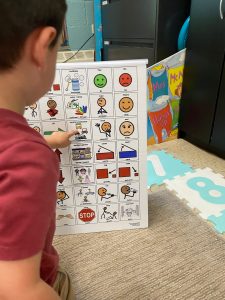
Clinic communication board in sensory gym
emotional regulation balance communication board

People Also Ask: Common Questions About Communication Boards

How do I know which symbols to include on an AAC board?

The selection of symbols should never be random. In the field of Speech-Language Pathology, we follow Evidence-Based Practice (EBP). According to the American Speech-Language-Hearing Association (ASHA), effective AAC should include a mix of “core vocabulary” (high-frequency words like go, stop, want, help) and “fringe vocabulary” (activity-specific words like horse, ball, kick).

Can adults use these boards, or are they just for children?

Inclusivity means everyone. These boards are designed for individuals with autism, Down syndrome, cerebral palsy, aphasia from a stroke, or even temporary injuries. The use of universal symbols (like Boardmaker/PCS or SymbolStix) ensures that the message is clear regardless of the user’s age or literacy level.

Will using a communication board stop my child from talking?

This is a common myth. Decades of SLP research show that AAC actually supports and encourages natural speech development. It reduces the frustration of being misunderstood, which often opens the door to more vocal attempts.

Material Considerations for Activity Environments

When choosing a communication board, the environment dictates the material. You wouldn’t use a cardboard box as a hurdle, and you shouldn’t use paper for an outdoor arena.

Outdoor Fields and Arenas

For environments exposed to the elements, Aluminum Composite is the industry standard.

  • Durability: 15+ year lifespan.
  • Resilience: Temperature stable from -20°F to 120°F.
  • Quality: UV-cured printing ensures the symbols don’t fade under the sun.
  • Cost: Typically ranges from $550-$675.

Indoor Gyms and Protected Areas

For tack rooms or indoor courts, Coroplast (corrugated plastic) is a budget-friendly alternative.

  • Lifespan: 5-7 years.
  • Cost: Typically ranges from $200-$400.
  • Utility: Lightweight and easy to mount on walls or portable easels.

Evidence-Based Practice: Why It Matters

As SLPs, our practice is grounded in the “Participation Model.” This framework suggests that we must identify barriers to communication and then provide the necessary supports to overcome them. A communication board is a direct intervention that addresses the “opportunity barrier.”

When we provide an AAC board in a public or recreational space, we are practicing Universal Design for Learning (UDL). This means we are creating an environment that is accessible to the greatest number of people without the need for adaptation or specialized design. It benefits the non-speaking child, the senior with hearing loss and even the volunteer who might be a non-native English speaker.

Symbol Selection: The Vocabulary of Play

A successful communication board for therapeutic sports and recreation focuses on functional communication. Here are the categories of words we prioritize at Resources at Lakeshore Speech:

Category

Key Vocabulary Examples

Safety

STOP, WAIT, HELP, SLOW, HURT

Readiness

READY, NOT READY, MORE, DONE

Activity-Specific

WALK, TROT, THROW, KICK, CATCH

Feelings/Comfort

GOOD, DIFFERENT, AGAIN, HARD, EASY

Equipment

HELMET, BALL, BAT, VEST, GLOVE

By providing these specific words, we allow the athlete to be a partner in the process, not just a recipient of a service.

Funding Pathways: How to Pay for Your Communication Board

One of the most frequent hurdles programs face is the budget. However, we have seen that therapeutic sports and recreation programs rarely have to pay for these boards out of pocket. Many “stack” their funding through these common pathways:

  1. Adaptive Sports Grants: Many state and federal agencies offer funding specifically for “accessible equipment.”
  2. Therapeutic Riding Associations: Organizations like PATH Intl. often have small grants for facility improvements.
  3. Community Foundations: Local Rotary Clubs or disability advocacy groups love funding tangible projects like a permanent AAC board.
  4. Donor Campaigns: “Give a Participant a Voice” is a powerful message for a capital campaign. A single donor can often sponsor one board for the cost of a few hundred dollars.

The Human Cost: Why Waiting Isn’t an Option

When program directors ask about the return on investment for a communication board, the most valuable question isn’t about the $600 for the aluminum or the $300 for the Coroplast.

The real question is: What is the cost of not doing this?

It is the cost of the participant who spends an entire hour in a riding lesson unable to say “I’m scared.” It is the cost of the athlete who never learns that their opinion matters. It is the cost of the student who goes through your program without ever experiencing the thrill of self-advocacy.

When we fail to provide a communication board, we are inadvertently telling the participant that their voice is only welcome if it sounds like ours. Inclusivity demands better.

Conclusion: Empowering Your Community

Implementing a communication board is a transformative step toward a truly inclusive therapeutic environment. It shifts the power dynamic, giving the athlete the tools to lead their own journey. It provides volunteers with the confidence to assist and parents with the relief of knowing their child is understood.

At Resources at Lakeshore Speech, we are dedicated to helping organizations navigate the complexities of AAC and therapeutic communication. Whether you are a small riding center or a large-scale adaptive sports complex, your participants deserve to be heard.

Ready to give your participants a voice? Contact Resources at Lakeshore Speech today for a professional consultation on selecting, designing, and implementing the perfect communication board for your facility. Let’s build a more inclusive world, one word at a time.

Clinic communication board in sensory gym
communication boards $550
Therapeutic riding Communication Boards

Communication Board for Pool Safety and Inclusivity Guide

pool communication boards

Splashing into Inclusivity
The Definitive Guide to the Pool Communication Board

At Resources at Lakeshore Speech, we believe that every individual deserves a voice, regardless of the environment. Whether it’s in a classroom, at home, or in the middle of a community swimming pool, communication is a fundamental human right.

The “Why” behind our mission is simple: aquatic environments—while designed for joy and fitness—are often sensory-heavy and linguistically demanding. For individuals with communication differences, the absence of a communication board isn’t just an inconvenience; it is a significant barrier to safety and social inclusion. In this guide, we will explore why these boards are the gold standard for accessibility, how they support AAC (Augmentative and Alternative Communication) users, and the evidence-based reasons your facility needs one.

What is a Pool Communication Board?

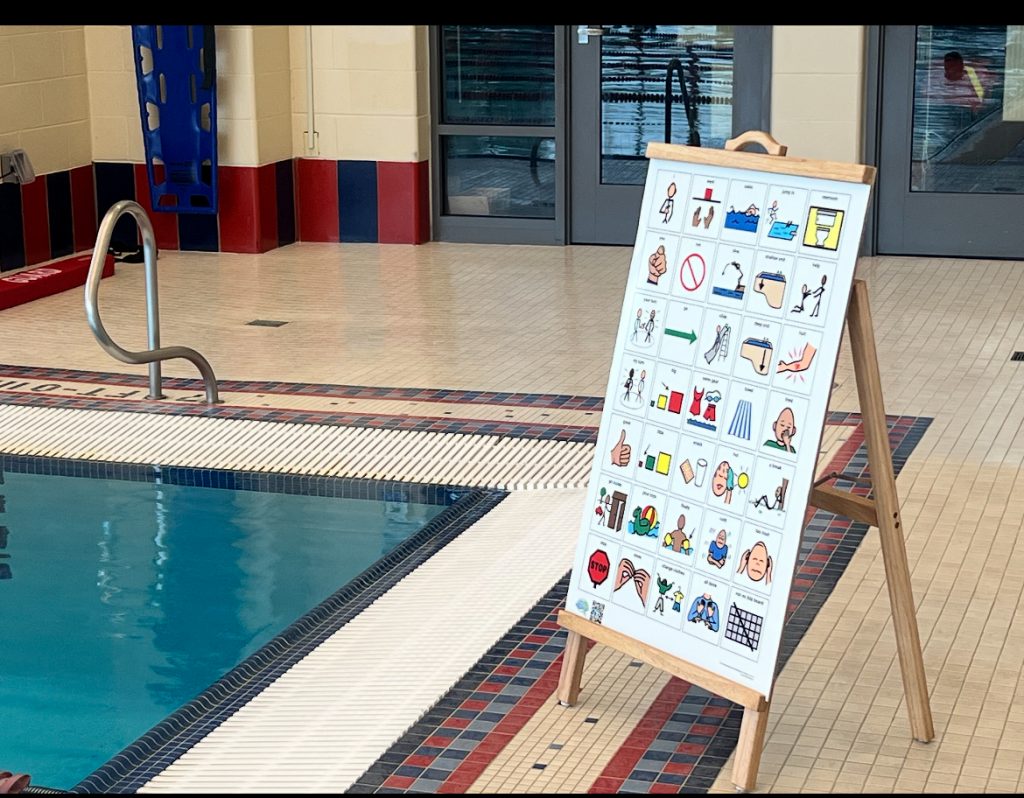
A communication board is a form of AAC that uses symbols, pictures, and text to allow individuals who are non-speaking or have limited verbal speech to express their thoughts, needs, and safety concerns. In an aquatic setting, these boards are typically large, weather-resistant signs mounted on the pool deck, near locker rooms, or at the water’s edge.

The Role of AAC in the Water

AAC stands for Augmentative and Alternative Communication. “Augmentative” means to add to someone’s speech, while “Alternative” means to be used instead of speech. In a loud, echoing pool environment, even verbal swimmers might find their voices drowned out by splashing and whistles. Consequently, a communication board serves as a universal tool that enhances inclusivity for everyone—from a child with autism to a swimmer with a temporary vocal strain or a hearing impairment.

Why Aquatic Facilities Must Prioritize Inclusivity and Accessibility

Aquatic facilities, including public pools, swim schools, and therapeutic centers, are community hubs. However, standard safety protocols often rely entirely on auditory processing (listening to a lifeguard) or verbal output (shouting for help). This creates an “access gap.”

Safety First: The SLP Perspective

From a clinical standpoint, the American Speech-Language-Hearing Association (ASHA) emphasizes that communication is successful only when the sender and receiver have a shared means of understanding. In a pool, if a swimmer cannot say they are “dizzy” or “tired,” the risk of a submersion incident increases.

Research indicates that 75% of drowning incidents involve witnesses. Often, the tragedy isn’t that no one was looking, but that the swimmer could not effectively signal distress. By installing a communication board, facilities provide a visual “voice” that can be “heard” even in the most chaotic moments.

Key Safety Vocabulary to Include:

  • HELP: An immediate distress signal that requires no explanation.
  • STOP: Vital for halting unsafe play or transitions.
  • SCARED: Allows lifeguards to address emotional distress before it leads to a physical panic response.
  • TIRED/COLD: These are early warning signs of physical exhaustion or hypothermia.
  • DEEP/SHALLOW: Essential for water depth awareness and boundary setting.

The Anatomy of a High-Quality Communication Board

Not all signs are created equal. Because a pool is a harsh chemical environment, the materials used for a communication board must be as robust as they are functional. At Resources at Lakeshore Speech, we advocate for specific “SLP-approved” material standards to ensure the longevity of your accessibility investment.

Material Requirements: Why Standard Signs Fail

If you use standard vinyl or plastic, the chlorine will eat through it within a year. Furthermore, UV rays from the sun will fade the symbols, rendering the board useless for those with visual processing needs.

The Gold Standard Specifications:

  1. Aluminum Composite: This is required for its chlorine resistance. It offers a 15+ year lifespan and is waterproof, meaning it won’t warp or delaminate.
  2. UV-Cured Printing: This ensures the symbols remain vibrant and “readable” for the brain, even under the harsh glare of the afternoon sun.
  3. 316 Marine-Grade Stainless Steel Hardware: Standard screws will rust and streak your pool deck. Marine-grade hardware is essential for maintaining structural integrity and aesthetics in a damp, chlorinated atmosphere.

Feature

Standard Material

Aluminum Composite (Recommended)

Lifespan

6–12 Months

15+ Years

Chlorine Resistance

Poor (Brittle)

High

UV Protection

Fades quickly

Fade-proof (UV-Cured)

Warping

High (Heat + Moisture)

Temperature Stable

Common Questions: “People Also Ask” About Pool Boards

1. Who actually uses a communication board at the pool?

While designed for AAC users (such as individuals with Autism, Down Syndrome, or Apraxia), these boards are used by a surprisingly wide demographic. This includes:

  • Toddlers who are just developing language.
  • English Language Learners who rely on visual symbols to understand pool rules.
  • Lifeguards who need to give clear, visual directions to a distracted swimmer.
  • Seniors with hearing loss who benefit from visual reinforcement.

2. Where is the best place to install them?

Strategic placement is key to inclusivity. We recommend three primary locations:

  • The Entrance: Sets the tone for an inclusive environment immediately.
  • The Shallow End/Steps: Where most instructional teaching and initial transitions happen.
  • Lifeguard Stations: This ensures the symbols are within the sight line of the person responsible for safety.

3. Does it replace a child’s personal AAC device?

Ideally, no. However, many high-tech AAC devices (like iPads with speech apps) are not waterproof. Families are often terrified of bringing an expensive piece of technology near the water. Consequently, a permanent, mounted communication board provides a “waterproof voice” that ensures a child is never without a way to speak, even when their primary device is safely tucked away in a locker.

How Do Communication Boards Benefit Communities?

When a facility commits to accessibility, the ripple effects extend far beyond the water’s edge. Transforming a public space with a communication board doesn’t just assist one individual; it strengthens the social fabric of the entire neighborhood.

1. Enhancing Public Safety and Rapid Response

From a clinical and safety perspective, the most immediate benefit is the reduction of risk. Because aquatic environments are high-stakes, the ability to relay information quickly is life-saving.

  • Immediate Distress Signaling: Swimmers can signal “PAIN,” “DIZZY,” or “CRAMP” before a physical struggle begins.
  • Clearer Lifeguard Instructions: Lifeguards can use the board to visually reinforce verbal commands, ensuring that swimmers with auditory processing disorders or hearing loss understand safety boundaries.
  • Prevention of “Silent” Emergencies: By providing a “voice” for the tired or overwhelmed swimmer, the community sees fewer escalations that lead to active rescues.

2. Promoting Social Inclusivity and Peer Connection

Inclusivity is about more than just physical access; it is about belonging. When a communication board is present, it acts as a bridge between speaking and non-speaking peers.

  • Collaborative Play: Children can use the board to ask each other to “PLAY” or “SPLASH,” fostering friendships that might not have formed due to a language barrier.
  • Normalized Diversity: Having AAC tools in plain sight teaches the entire community—especially children—that there are many valid ways to communicate.
  • Community Pride: Families of children with disabilities are more likely to frequent and support facilities that demonstrate a visible commitment to their needs.

3. Fostering Swimmer Independence and Self-Advocacy

For many AAC users, the pool has historically been a place where they must rely entirely on a caregiver to interpret their needs. A communication board changes that dynamic entirely.

  • Autonomy in Action: Swimmers can advocate for themselves, choosing when they want to “EXIT” or move to the “SHALLOW” end without waiting for an adult to guess.
  • Reduction in Frustration-Based Behaviors: Many “meltdowns” at the pool are actually results of communication frustration. When a swimmer can point to “COLD” or “WANT WATER,” the need for a behavioral outburst vanishes.
  • Confidence Building: Mastering the ability to communicate in a challenging environment like a pool builds a swimmer’s confidence that carries over into the classroom and home.

The investment in a communication board is an investment in the dignity and safety of every community member who enters the water.

Best Practices for Implementing AAC in Aquatic Programs

Installing the board is only the first step. To truly achieve inclusivity, staff and families must know how to use it. Here are the SLP-recommended steps for successful implementation:

1. Model, Model, Model

“Modeling” is the practice of pointing to the symbols while you speak. If a lifeguard says, “Time to stop,” they should simultaneously point to the STOP icon on the communication board. This teaches the swimmer what the symbol means in real-time.

2. Staff Training

Lifeguards should be trained on the basic layout of the board. They don’t need to be experts in AAC, but they should know where the “HELP,” “PAIN,” and “EXIT” icons are located. This preparation can shave seconds off emergency response times.

3. Customization

Every pool is different. A therapeutic pool might need icons for “STRETCH” or “WEIGHTS,” while a water park needs “SLIDE” and “WAIT.” At Lakeshore Speech, we emphasize that the vocabulary should reflect the specific activities of the facility to maximize accessibility.

The Investment: Funding Your Communication Board

We understand that budget is always a consideration for community leaders and park directors. Typically, a high-quality, chlorine-resistant communication board with marine-grade hardware ranges from $550 to $675.

While this may seem like a significant upfront cost compared to a standard plastic sign, the “cost per use” over a 15-year lifespan is pennies. Furthermore, many facilities find funding through:

  • ADA Transition Grants: Designed specifically to improve accessibility in public spaces.
  • Community Fundraising: Local Lions Clubs or Rotary groups often jump at the chance to fund a visible, high-impact project.
  • Swim School Fees: A small “inclusivity fee” can quickly cover the cost of the equipment.

Conclusion: Empowering Every Swimmer

The installation of a communication board is a powerful statement. It tells your community that you see them, you value them, and you are committed to their safety. By prioritizing inclusivity and providing robust AAC support, you transform a simple pool into a sanctuary of expression and independence.

At Resources at Lakeshore Speech, we have seen these boards change lives—one point, one symbol, and one splash at a time. We have moved past the era where “silence” in the water was the only option for non-speaking individuals. Today, the technology and the materials exist to ensure that every swimmer can say, “I am here, I am safe, and I am having fun.”

Take the Next Step Toward Accessibility

Are you ready to make your facility a leader in inclusivity? Don’t navigate the technical requirements alone. Our team of experts is here to help you select the right vocabulary, choose the best materials and train your staff on effective AAC implementation.

Contact Resources at Lakeshore Speech today. Let’s work together to ensure that no swimmer is left without a voice.

Key Takeaways for Community Leaders

  • Safety is the priority: A communication board provides a critical distress signal for non-speaking swimmers.
  • Durability matters: Only use aluminum composite and 316 marine-grade stainless steel to withstand chlorine.
  • Universal Design: These boards benefit everyone, from toddlers to seniors, not just AAC users.
  • Proven Impact: Facilities across the country report higher participation and fewer safety incidents after installation.

“Communication is the heartbeat of inclusion. When we give a swimmer a board, we aren’t just giving them symbols; we are giving them the power to belong.” — The Resources at Lakeshore Speech Philosophy

communication boards $550
communication board
Waterproof and UV-resistant pool communication board
symbols system - symbolstix

Where to Buy Communication Boards for Outdoor Playground Use

benefits of communication boards
Where to buy playground communciation boards
customizing communication boards

The Ultimate Guide: Where to Buy Communication Boards for Outdoor Playground Use

 As Senior Speech-Language Pathologists at Resources at Lakeshore Speech, we’ve spent our careers bridging the gap between clinical therapy and real-world play. We often see families and schools spend thousands on accessible swings and ramps, only to realize that the children using them still have no way to say, “My turn!” or “Look at me!”

The playground is a high-stakes social environment. For a child with complex communication needs, it can be overwhelming without the right tools. This guide serves as the definitive resource for understanding the landscape of communication boards, why they are essential for inclusive play, and where you can acquire a board that meets the highest clinical and durability standards.

Introduction: Why the Playground Needs a Voice

Communication is a fundamental human right, yet it is often the “missing piece” of playground accessibility. While many children use high-tech Augmentative and Alternative Communication (AAC) devices—like speech-generating tablets—these devices aren’t always suited for the sandbox, the splash pad, or the top of a sun-drenched slide. 

A permanent, outdoor communication board provides a “low-tech” fail-safe. It ensures that even if a device is left in a backpack or runs out of battery, the child’s voice remains present. Furthermore, these boards act as a visual bridge for the entire community, teaching neurotypical peers and adults how to interact and model language in a way that is inclusive of all processing styles.

Where to Buy Communication Boards: Navigating Your Options

When you are ready to move from “advocacy” to “action,” knowing where to source your equipment is vital. Not all signs are created equal. To ensure your investment is both clinically effective and “park-tough,” consider these primary sourcing avenues:

1. Clinical-Grade Turnkey Providers (The RLS Standard)

For organizations that want a “set it and forget it” solution that is rooted in evidence-based practice, a turnkey provider is the gold standard. At Resources at Lakeshore Speech, we specialize in these communication boards because we know that a sign is only as good as the vocabulary on it.

  • The Benefit: You aren’t just buying a piece of plastic; you are buying a layout designed by SLPs. These communication boards use researched-based “Core Vocabulary” (words like Go, Stop, Help, More) that allow for the greatest variety of expression.
  • The Durability: Our boards are engineered specifically for the “playground gauntlet.” They utilize high-density, UV-stabilized materials that resist fading, cracking, and even graffiti.
  • The Integration: These communication boards come with a QR code demonstrating how to use a board, to ensure the board is actually used once it is installed.

2. Inclusive Playground Equipment Manufacturers

Many large-scale playground equipment companies have begun adding communication boards to their catalogs as an “add-on” feature.
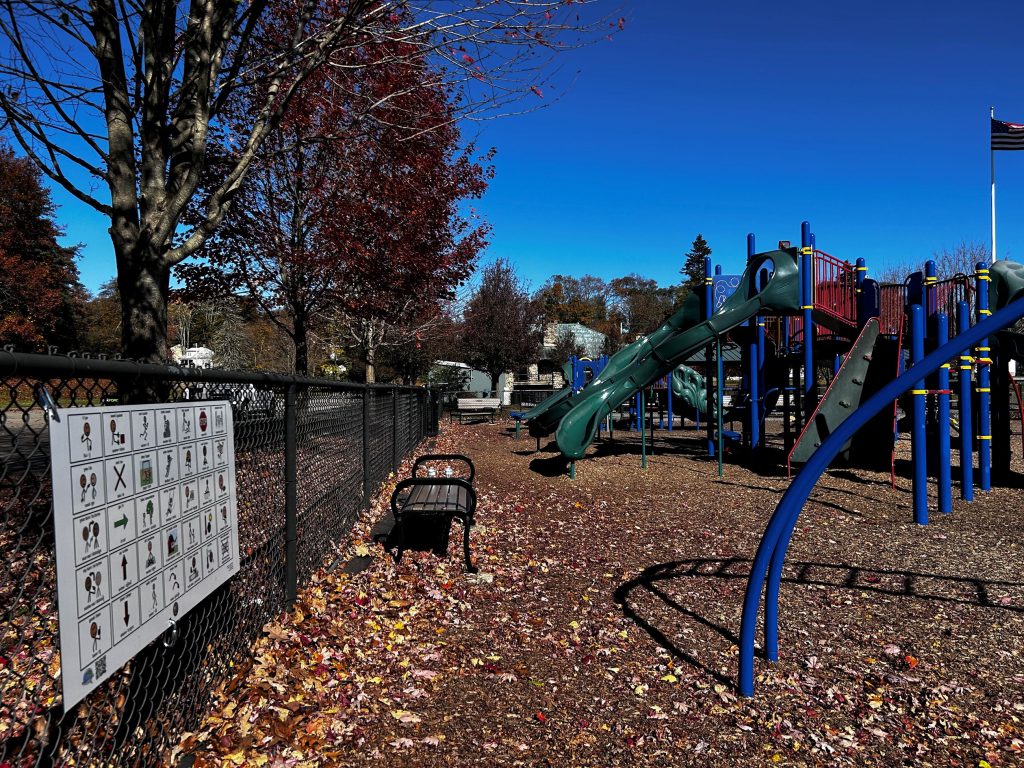
  • What to look for: While these are convenient if you are already doing a $100,000 playground renovation, ensure the vocabulary isn’t “noun-heavy.” Many general manufacturers focus too much on labels (e.g., “Slide,” “Swing”) rather than functional communication (e.g., “I want to go fast”).
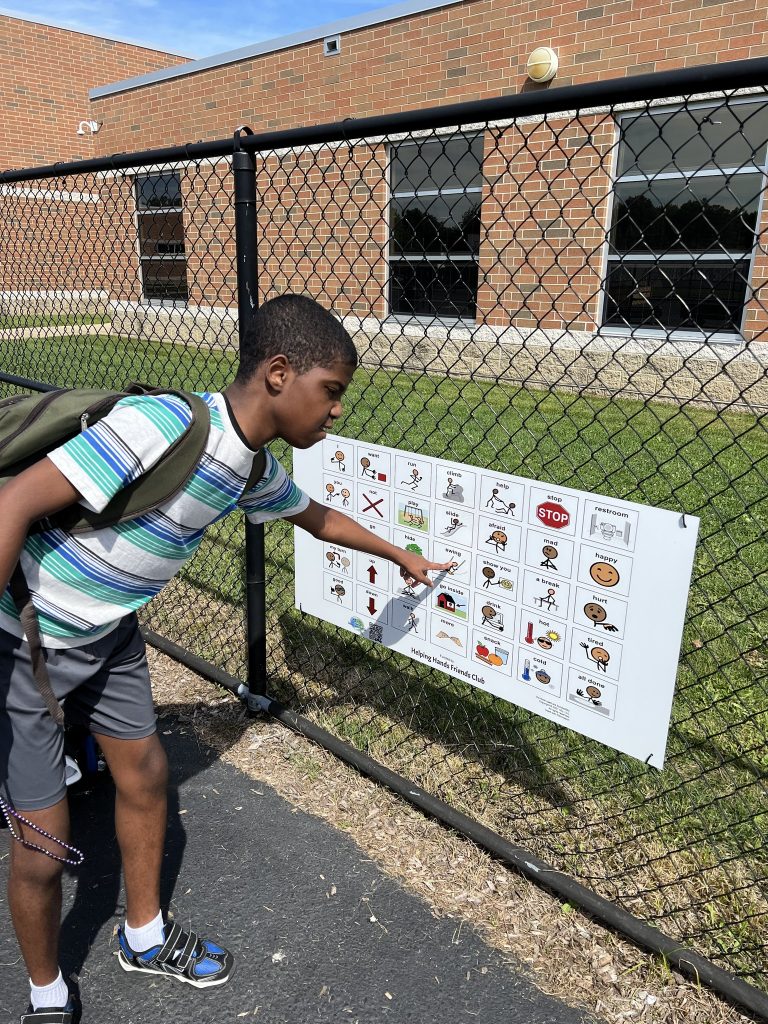
  • The Gap: Often, these companies lack the clinical staff to provide training or support for the families using the equipment.

3. Grant-Funded Community Cooperatives

In many cases, the “purchase” happens through a partnership with local non-profits or civic groups like the Lions Club or the Junior League.

  • The Strategy: These groups often look for specific, tangible items to fund. Providing them with a direct link to a vetted communication board provider allows them to handle the procurement while you ensure the quality meets SLP standards.

The Deep Dive: Features That Make or Break a Board

What Vocabulary Should Be Included?

A common mistake in DIY or low-quality communication boards is focusing on “Fringe Vocabulary.” If a board only has pictures of playground equipment, a child can only label what is in front of them.

  • Core Vocabulary: These are the “power words” (like Go, Help, Want, Stop, Like, Mine). They make up about 80% of what we say and can be used in almost any situation.
  • Social Scripts: Including phrases like “My turn” or “Want to play?” facilitates immediate peer interaction, which is the primary goal of the playground experience.

How Do We Choose the Right Size and Placement?

A communication board that is too small will be ignored; one that is too high will be inaccessible.

  • Visibility: The board should be large enough (typically at least 3 feet by 2 feet) so that it can be seen from the main play structures.

What Materials Can Actually Survive the Outdoors?

We’ve all seen faded, peeling signs at local parks. To avoid this, look for:

  • Aluminum Composite Material (ACM): Provides 7–10 Year UV & Weather Rating in direct sunlight and High Vandal and Impact Resistance (Rigid / Dent Resistant)
  • Sub-Surface Printing: This ensures the ink is protected by a thick layer of clear material. Fade resistant.
  • Non-Glare Matte Finish: This is crucial for children with sensory sensitivities or visual impairments who may be blinded by a “shiny” sign in direct midday sun.
  • Graffiti-Resistant Coatings: In public spaces, this is a must. You want a surface where permanent marker or spray paint can be removed without dissolving the communication symbols underneath.

Frequently Asked Questions (People Also Ask)

Are these boards only for children with Autism?

Answer: Absolutely not. While communication boards are incredibly helpful for autistic children who may be non-speaking or minimally verbal, they serve a much wider population:

  • Children with Apraxia or Phonological Disorders: They may use the board to “clarify” their speech when a peer doesn’t understand them.
  • English Language Learners (ELL): The symbols provide a universal language that helps children from different linguistic backgrounds play together.
  • Late Talkers: The visual support can reduce the frustration of a toddler who can’t yet express their needs.

Can we customize our communication boards?

Answer: Yes, and we often recommend it! A board at a “Splash Pad” should have different fringe vocabulary (e.g., wet, cold, splash) than a board at a “Nature Trail” (e.g., bug, bird, dirt). Customizing the board makes the language more relevant and motivating for the child.

How much do playground communication boards cost?

Product Option / SizePriceKey Features & Specifications
3′ x 2′ (or 2′ x 3′) ACM Board$550Horizontal or vertical orientation; SLP-designed 35-cell vocabulary; anti-graffiti coating.
2′ x 4′ ACM Board$675Horizontal orientation; SLP-designed 35-cell vocabulary; anti-graffiti coating.
Complete Hardware & Post Kits$2,500 – $4,500Includes posts and tamper-proof hardware (NOT SOLD by RLS: installed by facility/park maintenance).
Custom Vocabulary & Layouts+$50 startingCustom icons, Modified Fitzgerald/Goossens color coding, up to 3 languages per cell.
Agency / Funder Logo BrandingFREEAdd up to 4 school, municipal, or sponsor logos to the board layout.

Evidence-Based Practice: The Clinical “Why”

At Resources at Lakeshore Speech, our recommendations follow the guidelines of the American Speech-Language-Hearing Association (ASHA) regarding “Augmentative and Alternative Communication.“

Clinical research shows that:

  • Visual Supports Promote Literacy: Seeing a word paired with a symbol consistently helps build the “sight word” recognition necessary for future reading.
  • Modeling Facilitates Acquisition: Children learn language by hearing it. For children who use AAC, they need to see it. When parents and teachers use the communication board to “talk” to the child, they are providing the necessary input for the child to eventually use it themselves.
  • Behavior is Communication: Many “problem behaviors” on the playground stem from an inability to express a need. By providing a clear way to say “STOP” or “NEED BREAK,” we significantly reduce playground incidents.

Why Buy from Resources at Lakeshore Speech?

We aren’t just a sign company; we are a team of practicing clinicians. When you purchase from us, you are getting:

  • SLP-Vetted Vocabulary: We’ve done the research on which words get kids talking.
  • Implementation Support: We don’t just ship you a sign; we provide the training resources your staff needs to make it a success.
  • Durability Guarantee: We know schools and parks are on tight budgets. We build our boards to last through snowy winters and blistering summers.

Conclusion: Empowering the Next Generation of Play

Inclusive play is about more than just physical access; it’s about social connection. By installing high-quality communication boards, you are giving every child a seat at the table—or a spot on the slide. You are telling your community that every voice deserves to be heard, regardless of how that voice is produced.

The time to wait for “perfect” is over; the time to build “inclusive” is now. We are ready to equip your playground so it is truly inclusive. Request a quote today!

outdoor communication board
happy to create sentences

Inspiring Connections: Communication Board Design for Fun

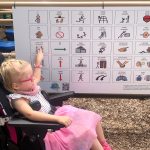
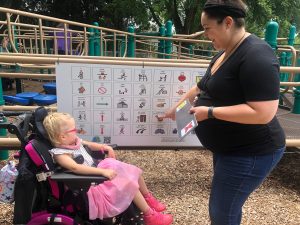
Teacher communicating with student using playground communication board.

Communication Board Design:
A Speech Pathologist’s Guide to Inclusive Play

At Resources at Lakeshore Speech, we’ve seen firsthand that a child’s “voice” doesn’t stop at the classroom door. As SLPs, we know that the playground is where some of the most vital social-emotional learning happens. However, for many children, these spaces can feel isolating without the right tools.

Communication board design is one of the most effective ways to bridge that gap. By bringing Augmentative and Alternative Communication (AAC) into the sunshine, we aren’t just providing a tool—we’re validating a language. This guide explores how to design these boards so they truly serve the families who need them most.

As we enter the “Spring into Action” season, many park departments and school boards are looking for ways to refresh their outdoor spaces. In our clinical experience, there is no better way to “spring into action” than by ensuring the very foundation of your community—the playground—is accessible to every single child, regardless of how they communicate. When we look at a park, we don’t just see equipment; we see opportunities for connection, and communication boards are the physical manifestation of that opportunity.

What exactly is a Communication Board?

We refer to these as a form of “Light-Tech” AAC. These boards use symbols and pictures to help children—especially those with Autism, apraxia, or Down syndrome—express their thoughts when verbal speech is difficult.

On a playground, a board acts as a “point-and-talk” station. Instead of a child feeling frustrated because they can’t ask for the “swing,” they can simply point to a symbol. This reduces the “communication breakdown” and invites neurotypical peers to interact in a way that is natural and visual.

It is important to remember that AAC is not a “replacement” for speech; rather, it is a tool that supports and enhances it. For many of our clients, having a visual representation of a word actually reduces the cognitive load required to produce speech. When a child isn’t struggling to find the motor plan for the word “slide,” they are free to focus on the joy of the activity itself. This is why communication board design must be intuitive—if a child has to hunt for a symbol for more than a few seconds, the “teachable moment” has often passed.

The Shift Toward Universal Design

Historically, we kept communication aids in small, portable folders. But as we move toward Universal Design, we are seeing these tools installed as permanent fixtures in parks. This shift tells our families: “We didn’t just build a park for some kids; we built it for yours, too.”

Universal Design is a framework that suggests environments should be usable by all people to the greatest extent possible, without the need for adaptation or specialized design. By integrating communication board design into the initial blueprint of a park, we move away from “special needs” being an afterthought and toward “human needs” being the primary focus. It turns a segregated experience into a shared one.

Why do Communication Boards Matter in Public Spaces?

As clinicians, we look at the playground as a “naturalistic environment” for language growth. Here is why inclusive playground design is so impactful:

  • Modeling in the Wild: For a child to learn AAC, they need to see others use it. When a parent points to “go” while pushing the swing, they are modeling language in real-time.
  • Reducing “Behavior” via Expression: We often say “behavior is communication.” When a child has a functional way to say “help” or “all done,” the frustration that leads to meltdowns often melts away.
  • Normalizing Neurodiversity: When every child in the neighborhood sees a communication board, AAC becomes “normal” rather than “different.” It builds a community of empathy from the ground up.

Furthermore, these boards serve as a safety net. Imagine a child who wanders or “elopes” (a common safety concern in the neurodivergent community). If that child is non-speaking and becomes separated from their caregiver, a communication board at the park entrance can be a literal lifesaver, allowing the child to point to symbols like “lost” or “mom” to communicate with a helping adult. This safety aspect is a frequently overlooked but vital component of communication board design in public infrastructure.

For specific mounting height, clear floor space, and visual contrast guidelines, read our guide to designing ADA-accessible park communication boards.

SLP Tips for Effective Communication Board Design

When you start planning, it’s easy to get overwhelmed by materials. Here is what we recommend focusing on to ensure the board is actually functional for the kids.

1. Durability and “Play-Proof” Materials

Since playground communication boards live outdoors, they need to be tough. We look for:

  • High-density polyethylene (HDPE) or heavy-duty aluminum.
  • UV-resistant coatings so the symbols don’t fade (if the “Stop” sign turns white, it loses its meaning!).
  • Non-glare surfaces to help children with visual processing needs see the icons clearly even in midday sun.

From an SLP perspective, the “tactile” feel of the board matters too. Children often “tap” or “slap” the icons with enthusiasm. We need materials that can take the vibration of a heavy-handed “Point” without rattling or degrading. We also have to consider the “cleaning” factor. Playgrounds are high-germ environments; effective communication board design ensures the surface can be wiped down with industrial-grade disinfectants without the ink running or the symbols peeling away.

2. The “Gold Standard” of Layout: Core Vocabulary

The most important part of communication board design is the vocabulary. We advocate for a “Core Vocabulary” approach.

  • Core Words: These are high-frequency words like want, more, stop, go, help, I, you. They should take up the bulk of the board because they can be used in almost any situation.
  • Fringe Words: These are specific nouns like slide, swing, ball, or snack.
  • Consistency: Symbols should be placed where a child can reach them—ideally with the most used icons at chest height for a child or someone in a wheelchair.

In the world of AAC, “Motor Memory” is everything. Think about how you type on a keyboard without looking—that’s motor memory. If we change the location of the “Help” button every time we design a new board, the child has to relearn the “map.” Professional communication board design respects the user by keeping core words in consistent, predictable grids. This allows a child to become a “fast” communicator, which is essential when they are trying to keep up with the fast-paced world of playground play.

Can I Customize My Board for My Community?

Yes! One size rarely fits all in speech therapy, and the same goes for playgrounds.

  • Bilingual Support: If your neighborhood has many Spanish-speaking families, your board should absolutely be bilingual.
  • Site-Specific Symbols: A board at a pool needs different “fringe” vocabulary (like splash or cold) than a board at a wooded nature trail.
  • Symbol Sets: Whether you use Boardmaker (PCS) or SymbolStix, try to match what the local school district uses so the children have a “fluent” transition from school to play.

We also suggest thinking about the “Social-Emotional” vocabulary. Inclusion isn’t just about asking for a turn on the slide; it’s about making friends. Does your communication board design include icons for “My turn,” “Your turn,” “Play with me,” or “I like that”? These are the building blocks of friendship. By including social bridge words, we give neurodivergent children the tools to initiate play, which is one of the hardest—but most rewarding—social skills to master.

Let’s Build a More Inclusive Playground Together

Transitioning from a traditional playground to an inclusive one is a big step, and it’s okay to have questions about the clinical side of the process. At Resources at Lakeshore Speech, we don’t just “sell” boards—we partner with communities to make sure the communication board design is linguistically sound and culturally relevant.

As you look to “Spring into Action” this month, think about the voices in your community that are currently unheard.

Are you curious about which symbols would work best for your specific park or how to fund an installation? We’d love to chat!

communication board design at Fairview Park Ohio
benefits of communication boards
static communication boards
communication board design

Inspiring Connection Through Weatherproof Communication Boards

static communication boards

Engineering Inclusion for the Outdoors with Weatherproof Communication Boards

The playground is a child’s primary laboratory for social development, a space where negotiation, cooperation, and friendship are forged through play. However, for many children with complex communication needs, these vibrant environments can feel like silent islands. At Resources at Lakeshore Speech, our mission is to provide functional communication tools and expertise that empower families and communities to foster inclusion. We believe that true accessibility requires more than just a physical ramp; it requires a voice. This is why we are advocating for a shift in community design through the strategic implementation of a weatherproof communication board.

As Speech-Language Pathologists (SLPs), we write from a collective perspective of experts, advocates and peers. We view the “anatomy” of a communication tool through a clinical lens, ensuring every design choice facilitates functional connection. By integrating outdoor AAC boards into public spaces, we bridge the gap between classroom learning and real-world play, allowing children to communicate their needs and feelings in real-time. In this analysis, we explore the clinical foundations, technical durability, and transformative community impact of these essential tools.

The Clinical Blueprint: Why AAC Belongs Outdoors

In the world of Speech-Language Pathology, a primary goal is “Generalization”—the ability of a student to take a skill learned in a quiet therapy room and apply it in a loud, chaotic environment like a park. A weatherproof communication board is the ultimate tool for this transition.

The Power of Aided Language Stimulation

When a weatherproof communication board is present, it allows for “modeling,” a professional term for when a communication partner points to symbols on the board while speaking. This practice helps children understand how symbols represent spoken words in natural contexts. For a child using Augmentative and Alternative Communication (AAC), seeing others use a communication board validates their way of speaking. It moves AAC from a “special education” tool to a community-wide language.

Breaking Down Barriers to Social Play

Without a dedicated tool, a child who is non-speaking may struggle to initiate play. A durable communication board acts as a social “anchor,” providing a shared visual language that all children—regardless of their abilities—can use to interact. When a communication board is available, a child can point to the “swing” or “slide” symbol to invite a peer to play, removing the frustration of being misunderstood.

Technical Specifications: Engineering for Longevity

Not all signs are created equal. To withstand the elements—from the salty air of Rhode Island to the intense heat of California—a weatherproof communication board must be engineered for extreme durability. Our designs are rooted in over 60 years of collective SLP experience to ensure they are as functional as they are tough.

Material Excellence: Aluminum Communication Boards

We prioritize aluminum communication boards because of their resilience. Unlike plastic or wood, high-grade aluminum does not warp, crack, or fade significantly under UV exposure.

  • Vandal Resistance: A weatherproof communication board should feature protective coatings that allow for the easy removal of graffiti, ensuring the “voice” of the community stays clear.
  • UV Protection: High-quality inks ensure that symbols remain vibrant and legible for years, which is critical for visual processing.
  • Safety First: Rounded corners and smooth edges are non-negotiable for a communication board placed in play areas.

Symbol Consistency: SymbolStix and Boardmaker/PCS

A key differentiator for Resources at Lakeshore Speech is our commitment to symbol consistency. We offer both SymbolStix and Boardmaker/PCS systems to match exactly what students are using in their local classrooms.

  • The Clinical Benefit: When a communication board matches the symbols a child already knows, the cognitive load is reduced, making communication spontaneous rather than exhausting.
  • Integrated Education: Every communication board we produce features a QR code. When a parent scans this code, they are instantly linked to a “how-to” modeling video for immediate caregiver support.

Understanding the Anatomy of Symbol Systems

To engineer a truly inclusive space, one must understand the “why” behind the symbols chosen for a weatherproof communication board. Much like the blog on symbol systems, we categorize language into two main groups to maximize functionality:

Core Vocabulary: The Foundation of Play

On a communication board, core vocabulary consists of high-frequency words that make up about 80% of what we say daily. These include:

  • Verbs: Go, stop, want, play.
  • Prepositions: Up, down, in, out.
  • Social: Hi, help, more, my turn.

Because these words are versatile, they allow a child to communicate across different playground activities without needing a different board for the swings than they do for the sandbox.

Fringe Vocabulary: The Specifics of the Park

Fringe vocabulary refers to words that are specific to a particular topic or setting. On a communication board, this might include:

  • Equipment: Swing, slide, monkey bars, tunnel.
  • Descriptive: Fast, high, loud, fun.

By combining core and fringe vocabulary, the communication board provides a robust linguistic environment that supports both basic needs and complex social interactions.

Deep Dive: People Also Ask

How do we choose the right symbol system for our weatherproof communication board?

This choice often depends on what the local school districts use. If most students in your area use Boardmaker in the classroom, installing a weatherproof communication board with those same symbols ensures a seamless transition from school to community play.

Can a weatherproof communication board be customized for our city?

Yes. We believe in 100% customization. We offer agency or donor logo additions at no extra cost, allowing local Rotary Clubs or school districts to take pride in their contribution to community inclusion through the communication board.

Why is a weatherproof communication board better than a personal tablet?

While personal AAC devices are vital, they are often fragile and expensive. A communication board provides a permanent, stationary backup that won’t run out of battery or get damaged by sand and water. Furthermore, the communication board allows multiple children to interact simultaneously, fostering group play.

Establishing Topical Authority: The SLP Perspective

As SLPs, we don’t just care about the hardware; we care about the “why”. Research in the field of Speech-Language Pathology consistently shows that environmental supports increase the frequency of communication attempts. We rely on clinical evidence and the real-world impact seen across the country. The decision to install a communication board should be based on the validated challenges families face.

Feature of a Weatherproof Communication Board

Professional Rationale

Community Impact

Clinical Roots

Designed by SLPs with 60+ years of experience.

Reliable, evidence-based tools.

Symbol Consistency

Matches school-based AAC systems.

Seamless transition from school to play.

QR Integration

Provides immediate modeling support.

Empowers parents as communication partners.

Durable Materials

Uses high-grade aluminum.

A long-term investment in accessibility.

Conclusion: Engineering a More Inclusive Future

The installation of a weatherproof communication board is a powerful statement. It tells every family in your community that their child’s voice is valued and protected. By combining clinical expertise with durable engineering, we can transform public spaces into inclusive havens where communication is celebrated.

Resources at Lakeshore Speech is proud to be your partner in this mission, providing the functional tools and expertise necessary to foster true inclusion. Whether you are an educator, a parent, or a community leader, we are here to support your journey toward a more accessible world.

Would you like us to help you advocate for a communication board in your local park?

Contact Resources at Lakeshore Speech for a consultation on which symbol system fits your community best.

multi-lingual communication boards
AAC social script
weatherproof communication board - winter
communication board

Communication in Spring: Boosting Playground Engagement

communication board design at Fairview Park Ohio

Why Now is the Time for Playground Communication Boards

As the winter frost recedes and the first signs of spring emerge, communities across the country begin to look toward their local parks as hubs of connection, movement, and joy. However, for many families, a trip to the playground can be a reminder of the barriers that still exist for children with complex communication needs. At Resources at Lakeshore Speech, we believe that communication is a human right that should never be paused because a child stepped outside.

This guide marks the kickoff of our “Springing into Action” series. Our goal is to provide families, educators, and community leaders with a comprehensive, evidence-based roadmap to implementing playground communication boards before the peak summer season arrives. As Speech-Language Pathologists (SLPs) with over 60 years of combined experience, we are here to move beyond “marketing fluff” and provide the logical, professional solutions your community deserves.

Understanding the Foundation: What are Playground Communication Boards?

To “spring into action” effectively, we must first define our tools. A playground communication board is a large-scale, durable outdoor sign featuring symbols, icons, and text that allow non-speaking or minimally verbal individuals to communicate. In clinical terms, these are a form of Augmentative and Alternative Communication (AAC).

The Science of AAC Playground Boards

While some might see these as “just signs,” they are actually sophisticated clinical tools designed to facilitate motor planning and language acquisition. At Resources at Lakeshore Speech, we focus on Core Vocabulary—the set of words that make up approximately 80% of our daily communication. By placing these symbols (such as “more,” “want,” “help,” and “go”) in a functional play environment, we provide children with the building blocks of expression.

Why “Light-Tech” Works Outdoors

Unlike high-tech speech-generating devices (tablets), AAC playground boards are “light-tech.” They don’t require batteries, they don’t break when dropped, and they are visible to everyone in the area. This creates a “Universal Design” environment where communication is modeled for everyone, not just the child with a diagnosis.

The Case for Inclusion: Why Your Park Needs One Now

As we approach the warmer months, the “why” becomes urgent. Inclusion isn’t just about physical access (ramps and rubber surfacing); it’s about social-emotional access.

Breaking the Silence of the Playground

For a child who cannot use their voice to say “My turn” or “I’m scared,” the playground can be a frustrating place. Consequently, we often see “behaviors” that are actually just unmet communication attempts. Communication boards for parks offer a logical alternative, allowing a child to point to a symbol to express a thought immediately.

Clinical Roots and Evidence-Based Practice

At Resources at Lakeshore Speech, we don’t use “revolutionary” or “unbelievable” adjectives to sell our boards. Instead, we rely on ourClinical Roots. Research in our field consistently shows that visual supports reduce frustration and increase peer-to-peer engagement. When a neurotypical peer sees a communication board, they are often the first to use it to invite a non-verbal friend to play.

Key Differentiators: The RLS Standard

Not all boards are created equal. When you are advocating for inclusive playground signage, it is important to understand the technical standards that ensure long-term success.

Symbol Consistency: SymbolStix vs. Boardmaker/PCS

A child’s “voice” shouldn’t change when they leave the classroom. One of our non-negotiables is offering both SymbolStix and Boardmaker/PCS. This allows a community to match the symbol system already used in their local school district, ensuring the child doesn’t have to learn a new “language” just to play.

communication symbol system - SymbolStix
SymbolStix icon for "slide"
communication symbol system
Boardmaker icon for "slide"

100% Customization and Donor Support

Getting a board funded is often the biggest hurdle. To help, we offer 100% customization, which includes adding agency or donor logos at no additional cost. This is a key differentiator from our competitors and allows local businesses or rotary clubs to see their contribution permanently recognized in the community.

Integrated Education via QR Codes

The board itself is only half the battle; the caregivers need to know how to use it. Every board we produce features a QR code that links to a “how-to” modeling video. This provides immediate, professional SLP support to a parent standing in the park, right when they need it most.

AAC social script
Design consultation with certified SLP

People Also Ask: Addressing Community Concerns

“Who actually benefits from these boards?”

While primarily designed for children with Autism, Down Syndrome, or Cerebral Palsy, outdoor AAC boards help a much wider demographic. This includes toddlers who are “late talkers,” English Language Learners who may not know the specific word for “swing,” and even adults with aphasia or other communication disorders.

“Are they durable enough for our weather?”

We have a proven track record in 24 states, from the coastal humidity of Rhode Island to the intense heat of California. Our boards are designed to be “park-tough,” standing up to UV rays, rain, and the general wear-and-tear of a busy public space.

“How do we start the process?”

“Springing into action” starts with advocacy. We recommend contacting your local Parks and Recreation department or Town Council. You can approach them as a peer, using the evidence-based benefits of communication access to make your case.


Implementation Strategy: How to “Spring” into Action

If you want a board installed by summer, the time to start is now. Here is a professional checklist to guide your community:

  1. Site Selection: Choose a location that is central and visible, such as near the main play structure or the park entrance.
  2. Symbol Alignment: Talk to local school SLPs to see which symbol set (SymbolStix or Boardmaker) is most common in your area.
  3. Funding and Sponsorship: Identify local donors. Remember, we add their logos for free to help you secure that partnership.
  4. Order and Install: Once the design is finalized, our team at Resources at Lakeshore Speech handles the production to our high clinical standards

A Collective Mission for Inclusion

At Resources at Lakeshore Speech, we view ourselves as your partners in this journey. We aren’t just selling a product; we are providing a tool for inclusion that has been refined through 60+ years of professional practice. We validate the challenges families face, and we are here to provide the logical, professional solution that helps every child find their voice.

As the seasons change, let’s ensure that our playgrounds evolve too. Let’s move away from silent parks and toward communities where every child—regardless of how they communicate—is invited to the conversation.

Ready to get started?

Would you like us to help you advocate for a communication board in your local park?

Whether you need a consultation on symbol systems or a formal proposal to take to your city council, the team at Resources at Lakeshore Speech is ready to help. Contact us today to see how we can bring communication access to your community this spring.

communication board
SymbolStix Icon System
communication board Boardmaker
Boardmaker Icon System