
Why Now is the Time for Playground Communication Boards
As the winter frost recedes and the first signs of spring emerge, communities across the country begin to look toward their local parks as hubs of connection, movement, and joy. However, for many families, a trip to the playground can be a reminder of the barriers that still exist for children with complex communication needs. At Resources at Lakeshore Speech, we believe that communication is a human right that should never be paused because a child stepped outside.
This guide marks the kickoff of our “Springing into Action” series. Our goal is to provide families, educators, and community leaders with a comprehensive, evidence-based roadmap to implementing playground communication boards before the peak summer season arrives. As Speech-Language Pathologists (SLPs) with over 60 years of combined experience, we are here to move beyond “marketing fluff” and provide the logical, professional solutions your community deserves.
Understanding the Foundation: What are Playground Communication Boards?
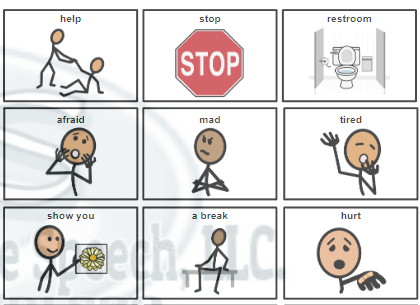
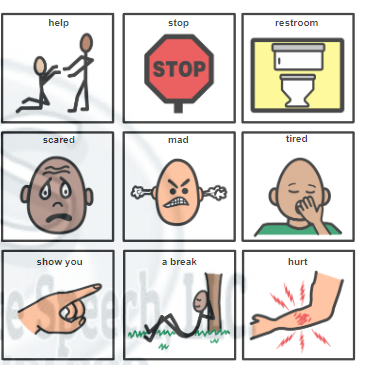
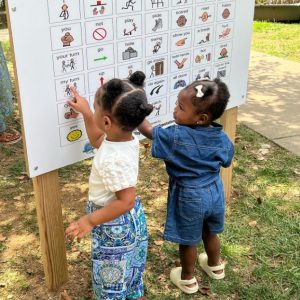
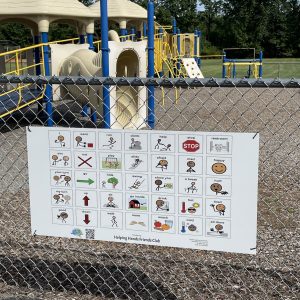
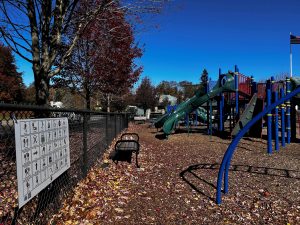
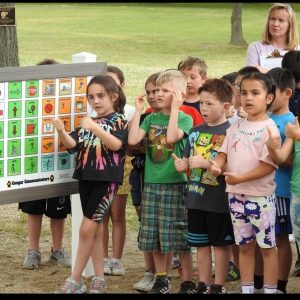
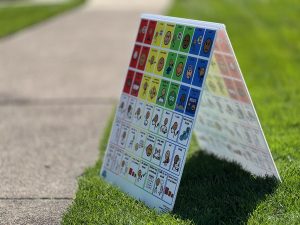
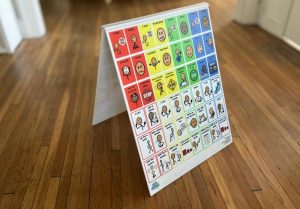
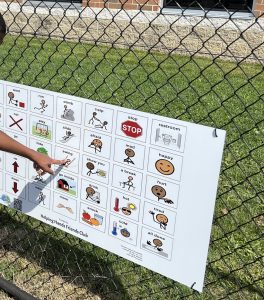
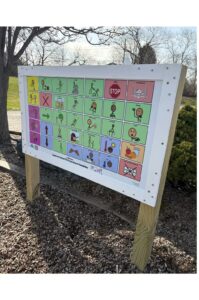
To “spring into action” effectively, we must first define our tools. A playground communication board is a large-scale, durable outdoor sign featuring symbols, icons, and text that allow non-speaking or minimally verbal individuals to communicate. In clinical terms, these are a form of Augmentative and Alternative Communication (AAC).
The Science of AAC Playground Boards
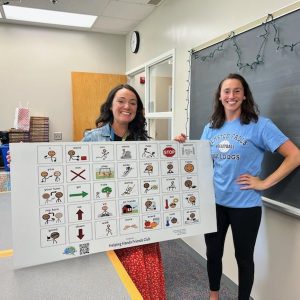
While some might see these as “just signs,” they are actually sophisticated clinical tools designed to facilitate motor planning and language acquisition. At Resources at Lakeshore Speech, we focus on Core Vocabulary—the set of words that make up approximately 80% of our daily communication. By placing these symbols (such as “more,” “want,” “help,” and “go”) in a functional play environment, we provide children with the building blocks of expression.
Why “Light-Tech” Works Outdoors
Unlike high-tech speech-generating devices (tablets), AAC playground boards are “light-tech.” They don’t require batteries, they don’t break when dropped, and they are visible to everyone in the area. This creates a “Universal Design” environment where communication is modeled for everyone, not just the child with a diagnosis.
The Case for Inclusion: Why Your Park Needs One Now
As we approach the warmer months, the “why” becomes urgent. Inclusion isn’t just about physical access (ramps and rubber surfacing); it’s about social-emotional access.
Breaking the Silence of the Playground
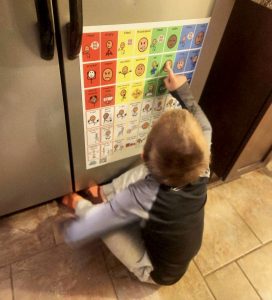
For a child who cannot use their voice to say “My turn” or “I’m scared,” the playground can be a frustrating place. Consequently, we often see “behaviors” that are actually just unmet communication attempts. Communication boards for parks offer a logical alternative, allowing a child to point to a symbol to express a thought immediately.
Clinical Roots and Evidence-Based Practice
At Resources at Lakeshore Speech, we don’t use “revolutionary” or “unbelievable” adjectives to sell our boards. Instead, we rely on ourClinical Roots. Research in our field consistently shows that visual supports reduce frustration and increase peer-to-peer engagement. When a neurotypical peer sees a communication board, they are often the first to use it to invite a non-verbal friend to play.
Key Differentiators: The RLS Standard
Not all boards are created equal. When you are advocating for inclusive playground signage, it is important to understand the technical standards that ensure long-term success.
Symbol Consistency: SymbolStix vs. Boardmaker/PCS
A child’s “voice” shouldn’t change when they leave the classroom. One of our non-negotiables is offering both SymbolStix and Boardmaker/PCS. This allows a community to match the symbol system already used in their local school district, ensuring the child doesn’t have to learn a new “language” just to play.

100% Customization and Donor Support
Getting a board funded is often the biggest hurdle. To help, we offer 100% customization, which includes adding agency or donor logos at no additional cost. This is a key differentiator from our competitors and allows local businesses or rotary clubs to see their contribution permanently recognized in the community.
Integrated Education via QR Codes
The board itself is only half the battle; the caregivers need to know how to use it. Every board we produce features a QR code that links to a “how-to” modeling video. This provides immediate, professional SLP support to a parent standing in the park, right when they need it most.
People Also Ask: Addressing Community Concerns
“Who actually benefits from these boards?”
While primarily designed for children with Autism, Down Syndrome, or Cerebral Palsy, outdoor AAC boards help a much wider demographic. This includes toddlers who are “late talkers,” English Language Learners who may not know the specific word for “swing,” and even adults with aphasia or other communication disorders.
“Are they durable enough for our weather?”
We have a proven track record in 24 states, from the coastal humidity of Rhode Island to the intense heat of California. Our boards are designed to be “park-tough,” standing up to UV rays, rain, and the general wear-and-tear of a busy public space.
“How do we start the process?”
“Springing into action” starts with advocacy. We recommend contacting your local Parks and Recreation department or Town Council. You can approach them as a peer, using the evidence-based benefits of communication access to make your case.
Implementation Strategy: How to “Spring” into Action
If you want a board installed by summer, the time to start is now. Here is a professional checklist to guide your community:
- Site Selection: Choose a location that is central and visible, such as near the main play structure or the park entrance.
- Symbol Alignment: Talk to local school SLPs to see which symbol set (SymbolStix or Boardmaker) is most common in your area.
- Funding and Sponsorship: Identify local donors. Remember, we add their logos for free to help you secure that partnership.
- Order and Install: Once the design is finalized, our team at Resources at Lakeshore Speech handles the production to our high clinical standards
A Collective Mission for Inclusion
At Resources at Lakeshore Speech, we view ourselves as your partners in this journey. We aren’t just selling a product; we are providing a tool for inclusion that has been refined through 60+ years of professional practice. We validate the challenges families face, and we are here to provide the logical, professional solution that helps every child find their voice.
As the seasons change, let’s ensure that our playgrounds evolve too. Let’s move away from silent parks and toward communities where every child—regardless of how they communicate—is invited to the conversation.
Ready to get started?
Would you like us to help you advocate for a communication board in your local park?
Whether you need a consultation on symbol systems or a formal proposal to take to your city council, the team at Resources at Lakeshore Speech is ready to help. Contact us today to see how we can bring communication access to your community this spring.