
Love Without Limits: Meaningful Communication on Valentine’s Day Through Connection and Inclusion
Valentine’s Day is a season that naturally turns our hearts toward connection, friendship, and the joy of telling someone they matter. For many of us, it involves the rustle of paper cards, the sweetness of a candy heart, and the warmth of a simple “I like you.” At Resources at Lakeshore Speech, we believe that every individual has a beautiful message to share, but we also know that for some children, the traditional ways of speaking those messages can be a challenge.
Ensuring successful communication on Valentine’s Day isn’t just about the words spoken; it’s about opening doors so that every child—regardless of their verbal abilities—can participate in the magic of the holiday. Whether your child is navigating autism, a speech delay or simply needs a little extra visual support, communication boards serve as a gentle bridge to connection. In this post, we’ll explore how these tools create a more inclusive world where every “expression of love” is heard and celebrated.
What Are Communication Boards? A Tool for Every Heart
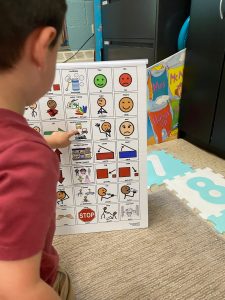
If you are new to the world of Augmentative and Alternative Communication (AAC), you might wonder exactly how a board helps. Simply put, a communication board is a collection of symbols, pictures, or words that a child can point to in order to express a thought. As we often discuss in our community guides, these boards provide a “visual anchor” for language.
When we focus on communication on Valentine’s Day, we use these boards to lower the pressure. Holidays can be overwhelming! Between the noise of classroom parties and the social expectations of card exchanges, a child’s verbal speech might “take a break” due to sensory overload. A communication board remains a steady, reliable tool. It allows a child to point to a picture of a “heart,” a “friend,” or the word “more” to stay engaged without the stress of finding the right sounds in a busy moment.
Expressions of Love: Beyond the Spoken Word
In one of our favorite past blog posts, Expressions of Love, we shared a truth that sits at the core of our practice: expression cannot be limited to talking. Love comes in a variety of shapes, colors, and sounds.
When we prioritize communication on Valentine’s Day, we are validating all the different ways children show they care. Here are some of the beautiful ways children can express themselves using tools and strategies we love:
- The Power of Sign: Teaching a child the sign for “I love you” is a portable, silent, and deeply personal way to connect.
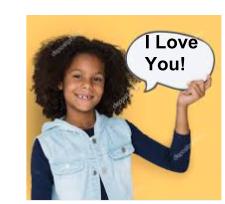
- Speech Bubble Photos: As shared in our Expressions of Love post, having a child hold a heart or a speech bubble with a written message for a photo is a wonderful way to send a Valentine to a grandparent or friend.
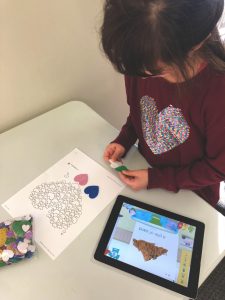
- Lip Print Art: Using lipstick or chapstick to make “kisses” on paper isn’t just adorable—it’s also a great oral motor exercise that supports the physical side of speech development!
By expanding our definition of “talking,” we ensure that no child is left out of the celebration.
Enhancing Social Interaction and Communication on Valentine’s Day
The social landscape of mid-February is filled with opportunities for growth. For educators and parents, the goal is often to help a child move from being a “bystander” to a “participant.” Utilizing specialized tools for Communication on Valentine’s Day makes this transition smoother.
Creating a Language-Rich Environment
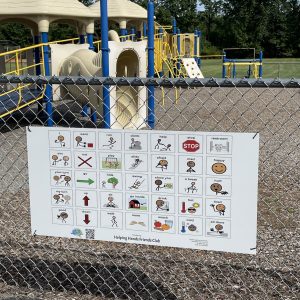
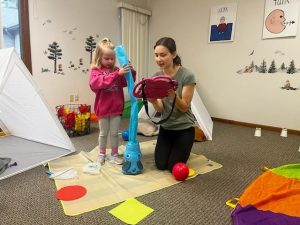
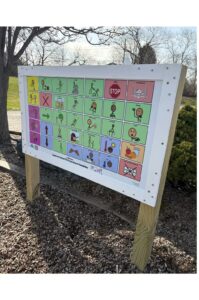
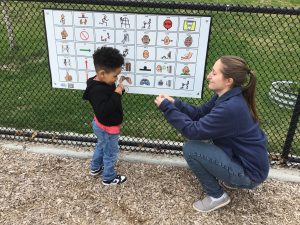
Whether you are using a portable board from our clinic resources or a large-scale playground board, the key is to model the language. If you are handing out valentines, point to the “give” or “friend” symbol on the board as you do it. This shows the child that the board is a real, living part of how we interact. As we noted in our recent post about Enhancing Holiday Joy, providing these visual scaffolds during festivities reduces frustration and invites the child into the heart of the activity.
Supporting Educators in Building Inclusive Classrooms
Educators have the incredible task of making sure every student feels like they belong. When a teacher integrates communication on Valentine’s Day into their classroom, they are teaching empathy to the entire class.
We recommend setting up “Communication Stations” near Valentine’s Day mailboxes. These stations can feature:
- Core vocabulary boards with words like “like,” “you,” “me,” and “happy.”
- Visual schedules that show the steps of the Valentine’s party.
- “Choice boards” for selecting which treats or crafts a student prefers.
Create easy-to-clean boards that can handle the sticky fingers and high energy of a school party to ensure that the tool is always ready when the child has something to say.
Empowering Families to Communicate at Home
Some of the most meaningful moments happen at the kitchen table or during a bedtime routine. To keep the momentum of communication on Valentine’s Day going, families can practice “Expressions of Love” in low-stress environments.
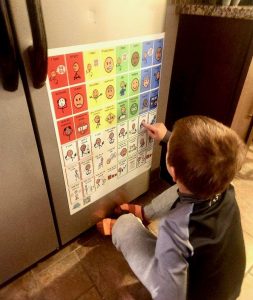
Try creating a “Family Code” or a special ritual. As suggested in our Expressions of Love blog, you might use a Valentine’s-themed communication board as part of your bedtime routine, allowing your child to pick a “sweet dream” symbol or point to “I love you” before they go to sleep. Practice doesn’t have to be a chore; when it’s wrapped in the love of a family tradition, it becomes a permanent part of the child’s communication toolkit.
Building Inclusive Communities and Public Spaces
At Resources at Lakeshore Speech, we are passionate about taking communication supports out of the clinic and into the world. When we see communication on Valentine’s Day being supported in libraries, parks and local businesses, we know we are moving toward a more compassionate community.
Inclusion in Every Season
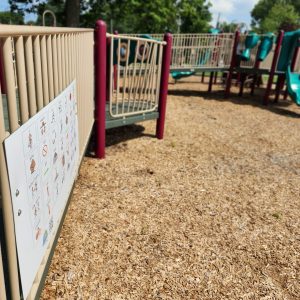
Whether it is a playground communication board that helps a child find a playmate in February or a pool board for the summer, these tools tell families: “You are welcome here. Your child’s voice is heard here.” Community leaders who install these boards are laying the foundation for true inclusion, ensuring that every public space is accessible to those who communicate differently.
Selecting the Right Tools for Your Journey
Choosing the right way to support communication on Valentine’s Day depends on your child’s unique needs. At Resources at Lakeshore Speech, we offer a variety of resources designed to fit different environments:
- Clinic and Therapy Boards: Perfect for focused practice sessions.
- Playground and Community Boards: Large, weather-resistant displays that foster peer-to-peer interaction.
- Emotional Balance Boards: Helpful for checking in on how a child is feeling during the excitement of a holiday.
Every resource we provide is rooted in the belief that communication is a human right. When a child has the tool they need, they can finally let the world hear their message “loud and clear”.
A Season of Growth and Connection
The research behind AAC is clear: providing children with multiple ways to communicate—through signs, pictures, and boards—actually supports their long-term language development. It gives them the “wins” they need to stay motivated. When a child uses a board to successfully navigate communication on Valentine’s Day, they aren’t just getting a piece of candy; they are gaining the confidence that comes from being understood.
We’ve seen it time and again a child who was once frustrated by their inability to share a thought begins to blossom when they realize they have a “voice” on their board. This Valentine’s Day, we invite you to join us in celebrating those breakthroughs.
Final Thoughts: Let Love Lead the Way
As we celebrate this month of affection, let’s remember that the most loving thing we can do is listen. communication on Valentine’s Day is about more than just a holiday; it’s a reminder that every day is an opportunity to help someone express their heart.
Whether you are a parent, a teacher or a community member, your support of inclusive communication makes a difference. You are helping to build a world where “I love you” can be spoken, signed, or pointed to—and where every version is equally beautiful.
Communication boards are more than just boards; they are tools of empowerment. They allow for meaningful communication on Valentine’s Day by providing a visual path for children to share their feelings, interact with friends, and participate in traditions.
We invite you to explore the resources and stories on our blog for more inspiration. From parent guides to community success stories, we are here to walk this journey with you.
How can we help you today?
If you’re looking for the perfect tool to support your child’s voice, or if you’re a community leader ready to make your park more inclusive, reach out to us.
Click here to request a free quote or learn more about our communication boards.
Let’s work together to give everyone a way to express their love. Happy Valentine’s Day!